John Cooper: Navigating Truth in a Confused World

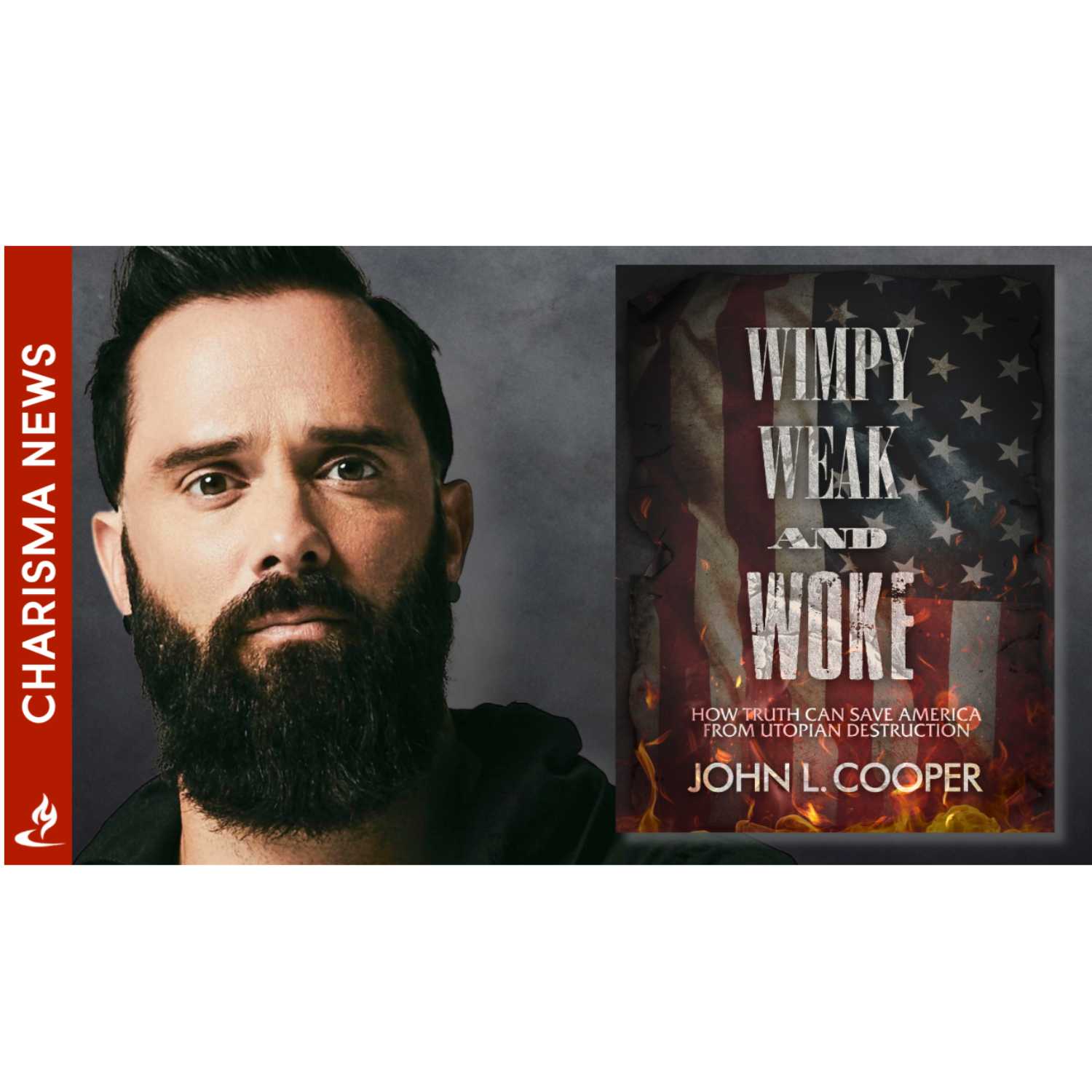


Watch the interview: https://youtu.be/r8zcp4Cpg4Q
Join us in this thought-provoking conversation with John Cooper as we delve into the pages of his latest book, "Wimpy, Weak, and Woke: How Truth Can Save America from Utopian Destruction." In this insightful discussion hosted by Charisma News, we explore the challenges facing the American church, examining the subtle influences of secular society on its beliefs. 🌐 Key Points Covered: Unpacking the concept of an unknowingly polytheistic American church. Analyzing the generational dynamics labeled as "wimpy, weak, and woke." Investigating the impact of societal ideologies on the church's moral compass. Discussing the challenges of navigating social justice issues within a biblical framework. Examining the role of truth in countering perceived utopian thinking and potential societal destruction. 🔍 Book Insights and References: John Cooper provides a deep dive into the roots of societal challenges, drawing on extensive research with 650 footnotes. Gain access to the original words of influential figures like Marx, Hegel, and Freud, and understand why these ideologies may be at odds with biblical principles. 🤔 Join the Conversation: Share your thoughts on the issues discussed and engage in a dialogue on the role of truth in navigating the complexities of today's cultural landscape. How can the church stand firm in its beliefs while addressing societal challenges? 📖 Get Your Copy: For those seeking a comprehensive understanding of the issues discussed, John Cooper's book offers an in-depth exploration. Grab your copy and equip yourself with the knowledge to discern truth in a world filled with conflicting ideologies. 👍 Subscribe, Like, and Share: If you appreciate conversations that challenge and inspire, subscribe to our channel, like this video, and share it with others. Let's foster a community that seeks truth and engages in meaningful discussions. 🙏 Connect with Us: Connect with Charisma News for more enlightening conversations, and stay tuned for future interviews and discussions on navigating faith, culture, and truth in our ever-changing world. https://www.charismanews.com/culture/93816-monster-unleashed-skillet-s-john-cooper-takes-a-stand-against-cultural-compromise https://mycharisma.com/culture/monster-unleashed-skillets-john-cooper-takes-a-stand-against-cultural-compromise/ #JohnCooper #WimpyWeakWoke #TruthInCulture #CharismaNews #BookDiscussion #SocialJustice #ChristianityInSociety
0:00 I think the American church is sort of unknowingly polytheistic. Christ is Lord of the heavens, man is Lord of the earth. And so we're looking to whatever secular society tells us is the way that we have to do justice. John Cooper, it's great to have you here on Charisma News to be able to talk about your book Wimpy, Weak and Woke. And I just got to say that title alone reminds me of this saying, and I forget who first said it. You probably actually have quoted this in your book, but hard times create strong men. Strong men create good times. Good times create weak men. Weak men create hard times.
0:41 And that cycle just continues over and over again in world history. And right now we are in the midst of a generation where I can, sadly I have to say it, where we are wimpy, weak and woke as a generation. And I know myself and guys like you and some of our friends, we're trying to stand up, but sometimes it feels like we're all alone with that. But let's just talk about your book and the message that you have with that. So thanks for being here on Charisma News. Well, thanks John. I'm glad that we got to do this, you know, but for people watching, they don't know behind the scenes we met a few months ago and a handful of months ago and we were talking about doing it and we're finally doing it.
1:26 And it's great and that is a really fantastic quote. It's so absolutely true. I think most people at this point, I think most people would recognize that as being true, you know, even a handful of months ago when we met back in April, there were still people that were still like unsure. Yeah. That when we talk about the insanity of the world, like the kind of impending destruction that could happen to America like that, there are still people saying, I think that's a little alarmist. That's a little, you know, culture worry. And I think we're to the place now that most people are like, okay, yeah, things are pretty weird. Yeah.
2:07 And, you know, if you, if you have a kid, people watching, if they have children and your kids have come home from school with like a gender unicorn or something or with information where they were taught there's 32 plus genders or your son can actually be a girl if he wants to or that your gender fluid or that there are drag queens coming into the school, what's happened with the conflict with Israel and Palestine. And then the subsequent amount of Americans or even people in Western civilization, the shocking amount of people really on the side of Hamas in the conflict or doing this sort of like a kind of moral equivalency, but from like just the terrorism of Hamas.
2:49 And then, well, yeah, but you really are dealing with Israel and occupation, colonialism, things like that. All of these things happening, we're all going, what in the world's going on and we could keep going. We haven't talked about crime that's happening or globalization or a one world socialist government. We haven't even talked about that. Most people see these things happening now and they're just saying what's going on. And I wanted to write a book that encapsulated all of those things under the rubric, if I could, of being wimpy, weak and woke. And the subtitle of the book is How Truth Can Save America From Utopian Destruction. Because really to me, all this is under the rubric of utopianism in one form or the other.
3:33 Well, I find it interesting that people are looking for a utopia, but as you look at the history of that word and what it actually means is it literally translates to nowhere. People are looking for this utopia, but it's nowhere. It's nowhere to be found because we're looking away from the cross. If you're trying to look for your own version of paradise, that utopia is nowhere because we're not united around the cross. When you're united around the cross of Jesus Christ, you can find that utopia or that paradise that God has created for all of us in heaven. And that we're supposed to be advancing His kingdom here on earth and to be His representatives.
4:15 But I find it really interesting that it's nowhere. Yeah, it's a great… it's so wonderful because I've been writing it in my book and I was showing it to a couple of people. Only a few people had read it when I was finishing it. I was showing it to my drummer. She was like… my drummer in my band skill. And she was like, I didn't know that utopia meant nowhere. And I said, that's the irony of the thing. You know, is there's this… I mean, the two things we should recognize when she just mentioned. Number one, we all long for utopia, don't we? We all long for a… is there ever going to be a time when there is actual peace, love, joy, justice, and all the wrongs will be made right?
5:01 Is that a possibility? The Bible says that God has put eternity in the hearts of men. We know we're supposed to be living for forever, for that eternal state. The problem is that we cannot get to that place without Jesus Christ. The good news is that Christ has made a way for us to live forever in love, joy, peace, the Kingdom of God. You know, the Bible says, righteousness, peace, and joy in the Holy Spirit is the Kingdom of God. Well, that's what we have waiting for us and that's really wonderful. The other side of the coin that I think we should just mention as we start, the world right now is so desperate for utopian now, so heaven on earth, basically.
5:50 If you understand their worldview, it begins to make sense of what they're doing because they don't believe that humans are born into sin. They don't think that humans need a savior. They think that we're actually capable of perfection. It's the reason that when you see progressivism and things, you know, and sometimes people say, John, how come they're just letting criminals back out? How come they don't want to punish people or they don't think they really did anything wrong? It's not their fault. It's society's fault. Why do they do that? That is all to do with what they believe is the perfect ability of man.
6:31 The only reason somebody steals something from somebody else is because society has traumatized them in one way or the other. Maybe they were born into a bad family situation or whatever it may be. They were deprived. They were traumatized. They were abused. They were oppressed. That's the only reason that people do anything wrong. If you just fix their oppression and you just make sure they have everything they need, economically, emotionally, whatever, then humans are going to stop doing bad things to each other and then we've ushered in utopia. They don't understand that sin is bound up in the heart of a child of Bible says, we are born into this and we need a savior.
7:16 That's what, of course, Jesus Christ did for us when he died on the cross. Absolutely. As we're talking about this whole concept of utopia, I'm reminded of the song Imagine by John Lennon, which I think it's very ironic that anytime that there's a world tragedy or normally it's celebrities that like to get around and make videos about this song. There's no rich. There's no poor. There's no heaven. There's no hell. All these different things. It's like none of this actually sounds good if you think about it. That's a nice little melody, but people are very easily able to just get caught up in the flow or actually I'm going to call it the winds of doctrine, the winds of false doctrine because something sounds nice or it's put in a nice package.
8:10 I think that that's what this whole woke agenda is all about. The Bible says that the devil goes around like a roaring lion seeking whom he may devour. If we're not accepting the fact that there is a devil out there that wants to kill still and destroy us, then we're not ready to defend ourselves whenever that attack comes to our doorsteps. Absolutely. I think that's absolutely right. In fact, maybe that's a good springboard for me to define what I mean when I say wimpy week in woke because I think that encapsulates a little bit of what you're saying.
8:52 Let me explain. I know it's a provocative title. Every time somebody says it, it makes me laugh. Every time somebody says, what's the name of the book? I started laughing when I say it, wimpy week in woke and people are triggered one way or the other. They either really love it or they're half offended or they're super offended. Here's what I mean by that. I say we are wimpy because I think that I'm really talking to Christians mainly, but I am talking, I mean, there's such a correlation between our culture and then what is happening that I believe is wrong in the church because the culture is so influencing the church right now and it's supposed to be the way around.
9:33 It's supposed to be the light of Christ that we are sought and light into the world. Right now what's happening is these secular ideologies are infecting us. I say that we're wimpy. Why are we wimpy? Because we have decided that we want to be winsome more than we want to tell the truth. That is absolutely horrible. Now we see that in the church right now because the church doesn't want to say things that are true or afraid we may offend the world. We want to try to win the world so we're not going to talk about lots of stuff, hell, sex, gender, you name it, we're not talking about it because we don't want to offend people. It's happening in the world as well though, even in our schools, which is the reason that you're not allowed to have, like you go to colleges, you won't be able to have actual discussions about things like gender theory, sexuality, social justice.
10:26 If any of your opinions are in line with traditional Christianity, your opinions will not be welcome in there because they're harmful opinions. So we become wimpy and what that's made the church do is that we think that Jesus was wimpy and it's caused us to be apologetic about who God is, apologetic about the character of God, which is a shocking thing. We have become weak. What does weak mean? Weak means we have become philosophically and theologically weak. We do not know what's come before us. We do not understand political philosophy. We don't understand worldview. And so we just start saying things that we don't know are absolutely ridiculous because we just don't know the Bible nor do we understand the world that we've grown up and it's actually hurting people because as you said, it's actually strength that leads to a peaceful world when you were talking about the quote earlier about the circle of weak and strong men.
11:25 So that's why we're weak. And here's what I mean when I say woke and I say this because I get pushed back from Christians and they say, I'm sorry, but my God says I'm supposed to take care of the poor. And I say, of course we're supposed to take care of the poor. That's a command from the Lord. I don't know any Christians that actually disbelieve we are supposed to help feed the poor in the need. What being woke is, as you just alluded to, it's secular social justice and it creates an entire world based not on biblical righteousness or biblical wickedness, but it creates a world based on power, power and oppression. And so it creates these new groups of oppressed people that's not actually accurate to biblical justice or even to what I would say like the American constitution or how many people are looking at it like that.
12:17 But it creates these brand new categories of who is oppressed and then what happens is because the Christian is weak philosophically and theologically, the Christian can no longer discern what is right and wrong. What is moral? What am I supposed to stand up for? And so when the world says no, that trans person, that is the person who is oppressed, then the Christian goes, well, Jesus says I'm supposed to take care of the oppressed. And the world just told me that the trans person is oppressed. That means I need to be fighting for trans rights. And that's why you get Christians as we speak, well, not as we speak because this is coming out later, but what has just happened here recently isn't an unprecedented amount of Christians making moral equivalency between what Hamas did to Israel as they butchered babies, they beheaded babies, they raped, gang raped women, they're stealing children.
13:18 And you have Christians say, well, yeah, but also Israel is an occupier nation and they've been oppressed for 70 years, and of course that's their procedure. Anybody that calls themselves a Christian and doesn't know that the Bible is basically the deed to that land for the children of Israel, then we've got a bigger issue that's called biblical illiteracy. Yes, we have a lot of— Actually the land of Israel that the Bible talks about is supposed to be even larger than what it is on the map today. And there's another conversation about why Israel hasn't reached its potential yet, but the deed is in the Word of God.
14:02 And so illiterate Christians aren't reading the Word of God, and if they're calling Israel the occupying nation. There's really a lot to unpack there. But I think the biggest point that's on my mind is we saw this happen with COVID. We saw it happen with the BLM riots. We saw it happen with just with so many things when Christians are very confused about morality. And so that is what happens, I think. That's what I call wokeness. It is secular political correctness on steroids, and it really actually leads to a society that is actually not more just.
14:47 It is less just. And not only is it less just, it actually hurts the very people they say they care about the most. That's who actually it hurts the most. And we saw that, I believe, as you look at the statistics, as you look at what the BLM protests and riots actually did, it has led to now is a 29% rise in homicides in America from 2019 to now 29% rise in homicides disproportionately happening in major cities, which are disproportionately people of color are the ones suffering the most from this, from the BLM stuff, from the defund the police stuff, to the letting people out of prisons, to what do they call it, no cash bail and all this.
15:37 It's just hurting the very people they say they care about. So we're in a moment right now where the Christian has to stand up for biblical justice whilst being called unjust from the world, because the world has reached that place, like we see in the book of Isaiah, woe to those who trade evil for good and good for evil who cast light for darkness and darkness for light. That's the 2020s. And if you stand up, if you stand up for truth, you're going to be called a bigot. And that's just the way it is. But that we do it anyway, because we don't do it to please the world. We do it to obey Christ. Yeah. You mentioned that term bigot. People don't want to be called a bigot. And that is something that actually, I believe, is one of the things that starts people down a path to deconstruction, leaving the faith.
16:27 And they're really not looking for the truth. They're just looking for a way out. And I've had some friends that have gone down that path and haven't come back yet, and I'm praying for them. But it seems that as you deconstruct your faith, you get more into these strange ideologies. And we'll talk about that in a little bit, because I know, especially with Hegel, I'd like to talk about that, because that's one I'm not familiar with so much. But let's just talk about deconstruction, because I know that that's an issue that you care about greatly as well. And so that's something that we need to know why we believe what we believe.
17:09 And it's OK to ask questions, but you got to know where to get the answers from. So let's talk about some deconstruction issues here. Oh, yeah. I'd love to. And jumping on what you just said and tying it back into why I'm so passionate about writing this book. If we are weak philosophically, if we don't understand what came before us in biblical worldview, then we won't understand this very important thing. And it is that the world's philosophies are always going to be at odds with biblical morality. It's always going to be.
17:50 The reason that so many Christians didn't know that, frankly, is because we grew up in an amazing country. We grew up in a country that was experiencing the benefits, the fruits of a Christian worldview. We are a nation that was built on Christian morality, the Bible. And it was so in our DNA that 20 years ago, 30 years ago, maybe even 10 years ago to a degree, even atheists had a sort of Christian worldview. I don't mean that they were saved, but we kind of agreed on what was right and wrong. And so when I was growing up, my friends that were Christians, they would sin.
18:34 They would get drunk. They would have sex outside of marriage. They do all the things that sinners do. But never once did I hear anybody ever say that they were quote unquote being virtuous or living their best life or that they were somehow a good person for doing this. They were like, hey, I know it's maybe not the best thing, but I don't care. It feels good. This is the way I want to live my life. Now it's changed. And so what I think happened with deconstruction, Christians were not used to the idea that the world was going to hate us. Now we should be, because Jesus said that to his disciples, don't be surprised when the world hates you. They hate you because they hated me first.
19:14 Get over it. But we didn't know that because the world didn't hate us. They looked at us as the goody-gooders, like, well, I know what they're doing is right. I just don't have the discipline to live like that, they might say, or I don't have the whatever to live like that. And so what happens for the, I understand this in the 2010s, the Christians started going, wait a minute, my friends are calling me the bad person. And I'm not used to being the bad person. I'm used to being the goody-gooder. I'm the good guy that does the nice stuff. And I'm the Jesus guy and I treat my friends good and I help the poor. I'm the one that's nice. Now they're calling me the bigot because I don't support whatever.
19:57 Maybe 2013 it was same-sex marriage, so-called same-sex marriage. I don't want to support that or I don't support abortion or I don't support whatever. I don't support this whole transgender, radical gender theory being taught to children in schools. I don't support the drag queen stuff. All of a sudden, if you're a Christian, you are enemy number one. And Christians, I understand why, who were not really grounded in the word, began to say, I don't know what to do about this. Maybe there's a way. I can still say that I'm a Christian, but also be liked by the world. And they started going on and Googling, looking for any voice that could tell them, basically could affirm what they wanted to be true.
20:42 And there was a lot of those voices. There was, back then it was Rob Bell and that whole movement. That group that sort of was, they sort of led us into the progressive Christian movement. You can't remember their names right now. But that's sort of what led into that. And I understand why Christians followed down that path because we were not used to being hated. So I went a different way. I went on the, wait a minute, what's going on? People, Christians are saying crazy things. Rob Bell was saying crazy things and people are like, he's the new, he's the new great Christian leader. And he was one of the people saying, really, it's not biblical to believe in hell. It's not biblical to believe in like judgment of God.
21:24 God's not a God of judgment. He's kind of love only. And so I started going, there's something deeply wrong with this. And I started digging into the word of God. And I will tell you, from 2013 to 2018, I became much more sure of what the book of Proverbs says, the end of Proverbs says, every word of God proves true. I became more sure of that than I'd always believed that. But as I started looking into it and I started seeing the results of people deconstructing and I started seeing the results of me studying the word of God, I started going, oh my gosh, the Bible is even more true than I ever thought it was. And God began to give me such a passion for truth and a passion to speak about it so that people don't get destroyed.
22:11 Yeah. You know, there's a big push for this deconstruction thing still. And it's more and more popular. I know a lot of people that were former Christians that are on YouTube, it's almost like a big thing for them to share their coming out testimony as a deconstructionist. It's very trendy and it's almost compassionate to do that in a lot of ways. They try to make it come out that way. But we are supposed to know why we believe what we believe and it's important. And I can't remember who I talked to recently about this.
22:52 But they said, it's okay to deconstruct a little bit but let your faith be built up. Don't look for just a way out but say what are the things that you're looking for? What are the questions that you have that are causing you to go down this path? Write down those questions. Put it in a book somewhere because if you just have all these ambiguous questions or thoughts and you're not actually getting the answers to those things, then you're going to stay in this state of confusion. And God is not the author of confusion. He doesn't want anybody to be out there lost in the world. Jesus came to seek and save that which it was lost. And if we are allowing ourselves to just be caught up in this, it's okay to not know.
23:39 Well figure out some answers. Write down the questions that you actually have. Anybody that's dealing with wanting to deconstruct, write those questions down. I just want to give some clarity to that because their answers are in the book. Go to the right people. Talk to the right people and they will help you for sure. Yeah, I think that's a good point. I just remember the name of the church. It was called the Emergent Church. That's what the movement was called, just to clarify that. And yeah, I think, yeah, write the questions down as you just said. And I think it's really important for people so that we are all not weak philosophically.
24:21 People should be reminded that any crazy, psychotic, the most demented thought you could ever have, you will find somebody on the internet that will affirm that thought. Okay? Very true. So, I mean, right now we have people giving reasons why it's okay for, again, to be able not to keep going back to the well of Hamas and Israel, but there are people giving reasons why it's okay that they went and butchered babies. You're finding people right now say why it is okay to, let's see, give a, to cut the healthy breast off of a 14-year-old girl so that she can try and become a man, all right?
25:08 I'm not trying to be shocking to cut the genitals off of a 15-year-old boy so that he can identify as a woman. In fact, they're not only saying that it's okay, they're saying that you're a bigot. If you, if you, what I just said is bigoted to them. You will find somebody that will agree with you. So I would say this, don't go trying to find somebody to agree with you. Find out what the Bible says about it. You need to pay attention to who you're listening to because the enemy, the devil, hates your guts. He wants to ruin your life. He wants to, he doesn't need you to say, I no longer believe in God. He doesn't care if you believe in God or even if you believe in Jesus. He wants to take you away from the truth so that you become ineffective for the gospel, so that you do not believe that the Bible is real, so that you can become your own God, so that your own opinions will become more supreme to you than the opinion of Almighty God in the Bible.
26:07 That's what he wants to do. So sure, write those things down. It's okay to ask questions. You need to pay attention. You need to like, there's an old Amy Grant song when I was growing up. You got to know who and who not to listen to. That's pretty good advice because there's a lot of people that want to ruin your life. And there's a lot of these philosophies that are out there in different thoughts and thought leaders. And you mentioned one about Hegel, H-E-G-E-L, Hegel's formula of synthesis. That's something that I don't think I've ever heard of, but I'm pretty sure that I've seen the effects of that in our culture today. Let's talk about that a little bit because that seems a bit out there for me.
26:49 You know what? It is so important, and I've hardly talked about this in any interviews because the book covers so many things. This is so very important. So Hegel was a German philosopher. Hegel was before Karl Marx. In fact, Karl Marx, when he was in college, there was a group of guys, they all got together and they called themselves the young Hegelians. They were disciples of this philosopher called Hegel. Hegel is really the one that kind of came up with this idea. Some people have heard of it when they maybe studied Marx. And the idea, he calls it thesis, antithesis, and synthesis.
27:33 And all that it means is this. Basically, if you take something, you take a thesis and then you take its opposite, say, which is your antithesis, and then you synthesize those ideas together into something new. The idea with Hegel that a lot of people don't really know, and the reason I covered it in the book, it's so very interesting, is that Hegel was actually very interested in a lot of really, we call it alchemy, you can call it magic if you want to. Many and things like that at the time. And this idea, I don't expect a whole lot of Christians know a lot about alchemy. I didn't know anything about alchemy until I started studying this to understand what it was.
28:16 This idea of creating the Sorcerer's stones and all this kind of stuff is that you take an element and then you take a different element and you try to, you put them in the cauldron or whatever. And the idea is that you are putting these elements in together. They were melded into one. And if they melded into one, it's not like you're burning one element up completely. So it's not like you're getting rid of one. So if you think about it, if they burn into something new, then they both, how do you want to say it? You're burning both of them, but they both stay in.
28:58 Does that make sense? So you're not getting one element. They're both still the same. And that's how he came up with this idea of thesis, antithesis, and synthesis. And when I look at that, this idea of magic, that is where, to me, we are in the 2020s. Everything in the 2020s is a synthesis of contradictions. And it's the reason we are so absolutely confused. It's the reason that we see progressives. They go on TV and they yell about women's rights. But then you see the very same progressives say that men can be pregnant. Men can have periods.
29:39 And they can't define what a woman actually is. And so all of us normal people are going, you can't say you're fighting for women's rights and also you can't define what a woman is. You can't do both of those things at the same time, yet they are. So we see the same thing on abortion. You're trying to use it when Roe got overturned. They say, this is an attack on women. You're taking away their rights and the patriarchy. But at the same time, the same people are fighting for biological men to play women's sports. Or in some cases, they're taking their jobs away and things like that. Because in that sense, a trans person is higher up on the level of the oppression ladder or the victimized ladder.
30:24 And they're looked at as more of a victim than women are. So in a patriarchal society, the same people saying, it's patriarchal and you're hurting women, those same people want to hurt women in order to lift trans people up. All of these things are a contradiction. But they never jettison one of the ideas. They just keep trying to blur them together. And this is where this idea of Marx, Marx's kind of version of utopia comes in. So Marx says, okay, so here's what we need. We need a revolution of the working class against the business owners. Because his whole thing was economic, of course. And so if we have that revolution, then what's going to happen is that man is going to then be melded into a new super being.
31:11 And a lot of people don't know this about Karl Marx. All they know about is his economics. But it's a religion. It's a very spiritual idea that if this revolution occurs, man is going to recreate himself into a new super being. And that new super being is not going to want to own things. That new super being is not going to try to steal from his neighbor. Why? Because he's a new being. He has no more needs anymore. So this idea of utopia is very mystical. And since Karl Marx, they took those ideas, of course, into what we call neo-Marxism. And that just basically says the same thing as Karl Marx, except with sex, gender, you name it, you know, all the things we see now, race and all the things happening.
32:01 That's all based on that. So really, we are living in a very Hegelian world, meaning based on Hegel, who was a philosopher. And here's the last thing I'll say about it that is really sad. All the philosophers I talk about in my book, Marx, Freud, the critical theorist, all the way up to the postmoderns, all of them are atheists, except for Hegel. And Hegel is where it starts. And Hegel called himself a Lutheran. Now he was certainly a heretic. But he was more of a sort of like a Gnostic. And I talk about it extensively in the book.
32:42 The religion is actually called Hermeticism. And it's sort of like Gnosticism. But the idea was that as God and man, man being the antithesis of God, as God and man wrestled together, they will be synthesized into one. So there will not be any difference between God and man, man and God. That's his whole synthesis. So what we have to look at is some of the reason this wokeness seems sort of like atheistic mystical Puritans, like ready to kill everybody that doesn't agree with the secular woke. It seems like a religion because it really was based on a Gnostic religion for Hegel.
33:26 And I don't know anybody else that's written about this in their books. Maybe they have. But like making the connection to me was kind of mind blowing. And that reminds me of syncretism. And I know you talk about that in your book as well. And that's something that I've seen in my missionary journeys around the world and how you have the gospel will come to a culture. And rather than speaking out the whole truth and repenting of those other beliefs, they just say, oh, well, let's just bring those in and we'll just add that. And then we end up with a giant mess. And, you know, John, I want to just ask you, what are some things that you've seen the church today really become syncretistically unaware of or become unaware of that they've allowed syncretism in?
34:17 And then what can we do about it as we're wrapping up here? Sure. Well, since we are wrapping up, I want to make really clear to people, if I can, that my book does not leave you depressed. My book does not leave you hopeless because we are not hopeless. We have the hope of all of the world, Jesus Christ living inside of us. And namely, actually, we have the Holy Spirit living inside of us, which is the power of Christ, all right? So we are not hopeless. We have the answers. We have the light. And so in the end of the book, I am giving some very positive, this is how we can change this.
34:59 And for me, it is from turning away from everything the world says into a radical obedience to the Word of God, which gets us into syncretism. Because what I think we're seeing here, when I try to lay out in the book, I think that the church is sort of, do you mind if I give you a long answer? Would that be okay? Go for it. Go for it. Here's my long answer. I think that the church, our modern Christianity America has said this. We have said, I think that Christ is Lord of my heart. He's Lord of my soul. He's Lord of heaven. So when I die, I'm going to heaven and that's good.
35:40 And that's the things that God tells me how to do. He tells me how to pray. He tells me how to be holy and that's all good. But I think the church does not believe that Christ has the answers for the earth. So Christ has answers for heaven for after I die. But he does have the answers for how I'm supposed to parent my kids. How do I act as a husband? How do I act as a wife? How do we do politics? How do we do treating your next door neighbor? I don't really think God has anything to do with that. That's what I think has happened. So we sort of split heaven and earth, if you will, in a way.
36:20 And so in my book, I say basically, I think the American church is sort of unknowingly polytheistic, Christ is Lord of the heavens, man is Lord of the earth. And so we're looking to whatever secular society tells us is the way that we have to do justice. How do we do racial justice? BLM will tell us. How do we do politics? Cultural people will tell us. How do we do morality when it comes to, I don't know, you name it, abortion, the death penalty, taxes, blah, blah, blah, blah, blah. We're just looking to the world. We're not looking to the Bible. That is the way that we have sort of syncretized. You say, we brought the ideas of the world in and then we just kept these principles from the Bible.
37:03 So a principle from the Bible would be God is love, which is true. God is love. But we don't dig down any deeper than that. And because God is love and because BLM tells me that I have to go march with BLM as they burn down a building and that that's what it means to love my neighbor, then I go, well, God is love, so I guess we have to do that. That's what's happening and it's not good. So the church has done that on social justice. And just so people don't think that I'm a complete moron, I will be the first to say that I think the reason we're in this problem we are in is because historically, the Christian church did not stand up like we were supposed to stand up for racial justice of slavery, redlining, Jim Crow.
37:50 I mean, you name it, I agree with that. So if anybody's going, John, don't you know what the church, yes, I do. And I think it's a shame. So let's applaud the Christians and the abolitionists who because of the word of the Lord and the spirit of God said, we have to do something about this evil. We applaud those people and we say it's a shame that the rest of the church didn't. But we're in the 2020s, we're not in the 1820s. All right? So I would say social justice, we've missed it. By the way, it's very ironic that the Christians, I usually call them the Christian left and I don't mean that. I'm not trying to be derogatory.
38:30 I'm just trying to describe people. It's usually the Christian left who are the first people to berate the Christian church for slavery and for redlining and for civil rights and not standing up. Have you noticed that it's the same Christians that do not have that same passion to fight abortion? It's an amazing thing if you ask me. So we've given up actually on abortion. There's a lot of Christians that still fight it, but we're beginning to see a shift happen in the whole, they call it pro-life womb to tomb movement. And what they really mean is no, no abortion actually is bad, but it's no worse than the fact that we don't give free healthcare.
39:11 I would say that they do this moral equivalence thing sort of like people do with Hamas and Israel. So that's happening. The number one thing that is making Christians deconstruct, the number one thing is biblical sexuality. That's it. It's biblical sexuality. And if the church does not stand its ground on who, what God says is moral and what God says is immoral when it comes to sexuality, that we're going to lose. That's just the way it is. It all hinges on sexuality because if we give up that, then guess where we give up? It begins in Genesis three, all the way from the beginning.
39:55 And so I think that those are the biggest things that are happening. And then I would say to a lesser degree, I would say feminism. I think feminism has seeped into the church, not nearly as drastic as it has the world. And I think that Christians no longer have the moral, they don't feel they have the immoral authority to stand on what the word of God says about there are differences between men and women and they are wonderful differences. And in fact, those differences glorify God. So we glorify God when we recognize them. So the book is not depressing. It just gives you their 650 foot notes.
40:35 So if you want to know the original words of Marx and Hegel and Freud and the critical theorists, the reason for all this insanity, all the original stuff is in there so you can make up your own mind if I'm telling the truth or not. And then I tell you why those sayings are at odds with the word of God. Because I believe if the church just begins to do what the word of God says, I believe the blessing of God would fall on the church to such a degree that the world would say, how is that happening? There must be something true about their God, which by the way, is what God promised Israel in the Old Testament. Amen. Amen.
41:15 John Cooper, author of Wimpy, Weak and Woke and lead singer of the band Skillet, which is we didn't even touch that aspect in this interview. So we're going to probably have to do another interview with you at some point. Let's do it. We'll do that one next time. Let's do it then. That'll be great. That'll be great. And I really just want to encourage everybody to go out and get your copy of your own book, Wimpy, Weak and Woke, and you can get that at johnlcooper.com. Is there any other place that you want to send people, John? The book comes out November 14th, and at that point it will be available on Amazon as well. All right. All right. Well, John Cooper, it's great to have you here on Charisma News.
41:56 Thank you, John. Our next interview by preoc 요 we really wanted to do a talkative interview with you. We want you together to make the wide-eyed gallons find quite typical games, such as to explore better social and economic horizons, and discover more locations that hungry folks can isolate themselves, and so the game plays a role in not only doing what, but what we really try to do.


