

 Spotify
 Youtube Music
 “Stay Faithful, No Matter How Hard It Gets” (We Live in Dark Times)
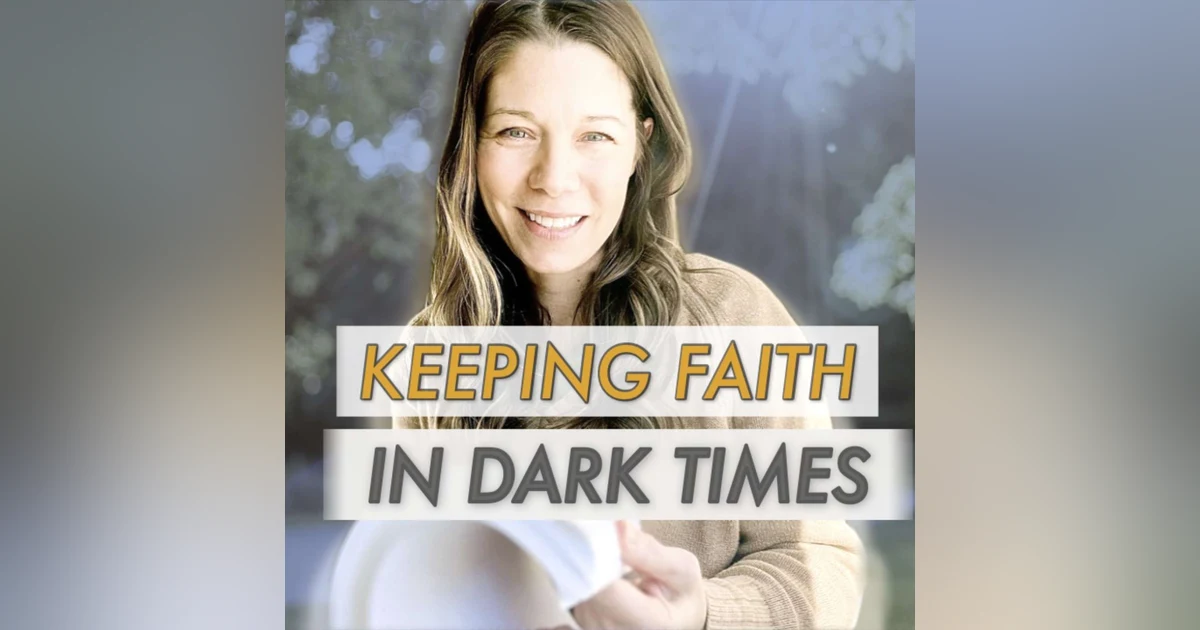
The world today is difficult.
Each week there are more headlines that shock us. Confusion abounds in society, and the Bible is scorned by many.
How do we stay faithful in the midst of this? What can we do in the relative ‘simplicity’ of our homes to counter the culture and make disciples?
Author and YouVersion Bible contributor, Shalene Roberts, joins us on RISE RADIO PODCAST to discuss what she’s learned while raising a family amidst the challenges of navigating these uncertain times and pursuing Biblical faith in Jesus Christ.
Check out Shalene Robert’s books here: https://shaleneroberts.com/
Hello, and welcome to this week's episode of the Rise Radio Podcast, where we discuss the latest in world events, social narratives, and spiritual discoveries. Today, we're joined by Dr. Staley and Roberts to dig deeper into what it truly means to be counterculture in this generation and to live out our faith. Don't forget to like and subscribe to the channel and share this episode with anyone who may find it helpful. Join us each week for more impactful conversations right here on Apple Podcasts, Spotify, iHeartRadio, and YouTube. Rise above the noise. You're listening to Rise Radio.
SPEAKER_02You're listening to Rise Radio. Rise Radio. So hi Shaylene, welcome to the show. I really appreciate you joining us today to discuss some of these important topics. In terms of the times they're in, they're very challenging for many people across the world, and society is difficult, let's be honest today. So how do you see people can be faithful and serve God in the simplicity, it might seem of their own home?
SPEAKER_00We are definitely living in challenging times. All you have to do is open up the news or turn on the TV and you just read the headlines. And sometimes it's almost too much for one person to even bear. You kind of just want to, you know, go put your head in the sand and ignore it because there's there is a lot of grief, there is a lot of hardship, and there is a lot of evil in our current day and age. And so the inclination sometimes is just to withdraw and not to want to engage culture because it feels easier just to withdraw within ourselves. But one of the best ways I believe that we can engage culture and make an impact for the gospel is by focusing on what is right in front of us within our homes. So in my book, When Mothering is Hard and No One Sees, I talk a lot about motherhood. And we're just going to talk about parenting in general today, but parenting as a role of making disciples. So culture really tells us that we are supposed to parent and raise children so that they can be successful and get a good job and contribute to society and all of these things that aren't necessarily bad in and of themselves. But if we only focus on that, we miss the most important crux of parenthood, which is in fact to raise up children who will eventually go out and tell a desperate hurting world about the good news of Jesus Christ. And we do that by starting with the people who are right within our own home. If we look at the culture and we're discouraged and we want to change the culture, we need to start within our homes. Because if we can focus on our homes and raise disciples in our homes and we can send those disciples out into our communities and our nations and eventually the world, we will eventually see some kind of culture shift.
SPEAKER_02What are some of the main challenges that you see today when it comes to outside influences that, you know, are against the Bible that are creeping into the home?
SPEAKER_00Well, there's so much. You know, just I would say from a general perspective, our society has a very self-seeking attitude. So, you know, you and I live in a day and a and an age where everybody's trying to make a name for themselves. So people are trying to glorify their own platform or their own name. There's a self-seeking sense. But there's also, man, I mean, we're gonna just get into it deep right off the bat, aren't we? There is a very real, there's a very real growing evil in the world. And um, again, all you have to do is pull up the headlines to see that. But we see families being fractured, we see, you know, families, teens, kids turning away from the word. We see infiltrations of different views into school systems and philosophies that are beginning to take hold. And that is frightening. And especially as a parent, I will tell you, I have five children. My oldest is 18. He just entered his freshman year at a university, my youngest is eight. And if you had asked me 10 years ago how I felt about sending him off into the world, I would have told you I was terrified because of everything that I was seeing and these voices and influences that were affecting the younger generation. I now have started to have a little bit of a different shift because I feel like I have moved from the defense to the offense. I'm not as scared anymore. I feel like I'm emboldened because I see what's happening to the younger generations and to our youth. I see the rates of, you know, suicidal ideation, of anxiety, of depression, of addictions. I see all these rates. And as a mom who is raising kids, that has actually made me mad. It's angered me because I realize there's a very real enemy. There is a very thin veil between heaven and earth. And the spiritual realm is so much more real than even our tangible physical world. I'm looking out my window and I can see, you know, I can see grass and I see the wind blowing, the leaves on the trees. There is a spiritual world that is even more real than what I can, than what I can see. And that spiritual world, that spiritual world has an impact in our physical world. And we see it. And when you realize that, when you realize raising kids today, parenting, this is not just, I mean, we are in a spiritual battle. And as believers, we have to be willing to pick up our cross daily and to put on the armor of God and be willing to go out and fight. Because our battle is not against flesh and blood, it's against the principalities of the spiritual world.
SPEAKER_02Yeah, I was gonna say it reminds me of that verse that Paul wrote the our battle is not against flesh and blood, but against principalities and powers in high places. And do you think maybe in our culture, because it w it has been quite materialistic at times, uh do you think that that has shifted our society's understanding that uh there is more to life than than just what we see?
SPEAKER_00Oh, absolutely. Yeah, I mean, when you when you start looking at what's going on in Africa and Nigeria and some of these nations where you know they don't have nearly the level of materialism that we do. There many of them are living in extreme poverty. And yet these people have more tangible experiences with the Holy Spirit and things that are happening. They're seeing miracles because I think they are so desperate every single day for Christ to sustain them and provide for them. You and I in the Western world, you know, most of us, even if we are living in poverty, most of us in the Western world do have our very basic needs met. You know, there are governmental systems that can clothe people who need that and feed us. All of that is in place in first world countries. But when you look at third world countries where they actually do not have the same material resources that we do, they are dependent upon Christ in ways that you and I, honestly, may never understand this side of heaven. And so I do think, yeah, materialism in many ways is it's a it can be a huge hindrance to understanding how deeply we need and have to rely on Christ.
SPEAKER_02And actually, they there's both worlds in in places like Africa, isn't there? I've I've had missionary friends who have been out there and they've just seen stark spiritual things on both sides that amazing trust that Christians have and on the gospel, but also some very dark things as well, where they've seen things you you wouldn't even believe in our culture, you know, where um there's witch doctors going around door to door and and things like that. So in a way, we've been quite sheltered from that, haven't we, in our world today, in the West?
SPEAKER_00Yeah, I would agree. And um and our Western media outlets do not report on that often. And you know, I would just encourage people to research what's going on in Nigeria right now. I mean, it's an atrocity what's happening to the believers in Nigeria, and I would just encourage people research that, read articles about it, and pray for those people because they are under a level of persecution that you and I have have never even begun to fathom.
SPEAKER_02So, in terms of the the culture as well, we we do see in our Western culture a gradual increase in hostility towards Christianity, at least true biblical Christianity. So what do you think you can do to prepare your family at home for these days as they develop? Because it seems like over time this might get worse in the West as well.
SPEAKER_00Yeah, I think I think we're we're living in a really interesting time because I do agree, I do think it's going to get worse. But also as that darkness gets darker, I'm also seeing the light penetrating even more and getting brighter. So the darkness is continuing to get dark, but the light is getting brighter. And so we're living kind of at this period of tension where we feel that darkness, but we also sense that, you know, God is really on the move. I don't, I don't know if you've been aware of the statistics of Gen Z and what is going on with that generation. I alluded to it a little bit in the beginning of the conversation, but I look at the people that my teens have surrounded themselves with and our church and and just other believers that I know, and I am really encouraged by the fact that it seems like, to answer your question more specifically, it seems like those who maybe had a casual faith and casual Christian Christianity, those people seem to maybe be dropping off. And those who have an impassioned true faith and want to know the person of Jesus Christ, that seems to be growing. I think in the Western church specifically, for a long time, we had a tendency to water down the gospel. And we were trying to bring in people who didn't necessarily know Christ with this, isn't this a I'm saying this generally, this of course was not every single church experience, but there was this tendency to try to draw people in with music and lights and you know, pomp and circumstance. Yeah. And I think that has gone away because people are realizing that doesn't last. That type of faith that is seeking some kind of emotive response is not grounded in the truth. You know, Christ said, They persecuted me. You will ex you will face persecution. We are to expect hardship. He did not promise us an easy life. When he said, pick up your cross and follow me, he meant pick up your cross. I mean, the cross took him to the grave, which he ultimately triumphed over. But that was the torture that he endured at the cross. And he commands us to pick our cross up too. So we are not promised an easy road when we follow Christ. But I think for so long, so many of us in the Western Church have kind of been fed a lukewarm Christianity that I think that is starting to shrink off a little bit. And those who want to experience Christ and really know him are going deeper and are really seeking the person of Christ and trying to have a real, honest, authentic relationship with him. And so when it comes to that in your own family, I think it is so important that we are completely honest with our children and that we are living out our own faith in front of our kids and that we make that a pattern within our own homes. So many, especially in the US, you know, so many of us tend to go to church on Sunday and we check it off our box, and then we go on with our week without really giving Christ and Christianity and faith and what that means for us personally and for our family and our communities. Many of us don't even give it a second glance throughout the week. It has to be the essence of Christ and the gospel is transformative, and we have to allow it to transform us personally before we can allow it to transform our family. So the most important thing for any family is for a mom or dad, we have to get into the word ourselves. And we have to be on our knees praying for our family and our communities and our nations and the world. Because I will tell you, we just went through an experience with my son, not necessarily about a spiritual warfare, but he was making his university decision and he had multiple universities to choose from. And we really felt, my husband and I felt like there was one place where the Lord wanted him. And it was a very difficult decision for my son. And we went through a period of about four weeks where I fasted and prayed with my face to the floor on his rug in his bedroom for this decision because I felt so strongly that the Lord was leading him somewhere. And God showed up in the most miraculous ways through that. Now that's just one tiny example. As parents, I say this in the book, the word for church, you know, in the New Testament is ecclesia, which refers to a small gathering of people. It's not necessarily referring to a structure or a building or an organization, it's referring to a gathering of people. And so I say in my book, families really are little microcosms of an ecclesia. And if we can understand that, if we can understand that we ourselves are little ecclesias, little churches within our homes, and that our responsibility really is to live out the gospel in front of our children and then tell them of the good news of Jesus Christ, his saving grace, transformation, and what it means to live for him. If they are raised up in that environment, of course they have free will. Our children can make the choice. But if they are raised up within that environment and we give them that foundation and then encourage them to go out and tell a desperate and hurting world, I really think that is ultimately what we as parents are called to.
SPEAKER_02Well, that also reminds me of the picture in in the New Testament of marriage itself being Christ and the church, symbolic of that relationship. So yeah, that's that's very interesting. Um it makes a lot of sense. And do you think uh because on this show we talk a lot about apologetics to the culture of being able to have discern uh what is scripture and what isn't, uh speaking into the culture with some of the uh things that people are exposed today, especially Gen Z and all of that. So we feel it's quite important to be able to engage with this because people, as you say, they know the difference between something, maybe a spirituality, a spiritual life that is shallow, uh, that is just smoke and music, as opposed to something that is deeply authentic.
SPEAKER_00I would 100% agree. So my children actually go to a classical school. The crux of classical schools really is teaching right thinking. So everything is trying to teach children how to critically reason. Unfortunately, we have raised a generation of children who do not know how to think. They were taught, they were given information and they were taught just to regurgitate it for a test. And so we as a generation or as a culture have moved away from being able to look at an argument or to look at text or to look at information and critically think about what we have been given or an argument that has been presented to us. We have unfortunately moved away from the ability to be able to do that. And so I do think it's very important. Well, you know, the Bible tells us be transformed by the renewing of your mind. So I think the apologetics are very important. It's a very important tool because our kids are going to be faced with arguments that are counter to things that we have taught them. Their belief in the Bible is accurate and reliable, is going to be challenged by society. They are going to hear arguments that are going to make them question what they have been brought up to believe. And so we have to be able to give them the tools where they have right thinking about what they know and about their faith so that they are able to engage a culture that really is desperate for the good news of Christ. So I would absolutely agree. I don't are you guys familiar with Wes Huff? He leads Apologetics Canada.
SPEAKER_02Yes.
SPEAKER_00Okay, he's fantastic. If your listeners, you know, most of them, if you talk about apologetics, I'm sure most of them have a lot of tools, but I would just encourage them. He has some great tools. If you're a parent, there is a book called Tiny Theologians that teaches apologetics for little kids. That is a great resource. And then um, actually, Hilary Morgan Ferrar, who wrote the foreword for my book, she has um a ministry called Mama Bear Apologetics. And Mama Bear Apologetics is all about equipping parents to be able to know why they believe what they believe and then to teach that to their kids. So, yes, I agree. Apologetics are it's a it's a very important factor in this conversation.
SPEAKER_02Yeah, and I want to speak to you about your book uh soon on the show, just briefly. You I know you wrote a couple of books, and one of them uh teaches the the concept of facing fear, but then finding the solution to it in God. And I just uh it'd be great to talk about that soon. I I just wanted to ask you as well, uh, in terms of this, because when I went to school, we were not given the tools to learn how to think but told what to think. And it comes to things like evolution and all of these uh ideas that now as a Christian I realize were just not true. How do you think we could help people get out of this state of mind to actually think objectively and to be able to wrestle with these ideas and come to the truth of the Bible and this this generation?
SPEAKER_00Yeah, uh man, that's such a good question. I I think the most important thing is just to start with asking questions. I agree with you. I was taught that, you know, evolutionary theory is fact, which is funny because the terms theory and fact are contradictory. But uh, we I was essentially taught that that is that is fact, that that is truth. And we took that information, we internalized it, you know, and then it has formed our opinions about the world. And I think it's so important to just start asking questions. We need to start looking at our own beliefs and our own worldviews and ask ourselves, what do I believe and why do I believe that? Um, I mean, there's so many resources now that we're finding out through, you know, architectural discoveries, scientific discoveries, historical discoveries that show that evolutionary theory is a theory. I mean, everything in creation points to an intentioned, intelligent creator. And it's interesting because you know, we all learned about the big thing. I'm assuming, have you read C. S. Lewis?
SPEAKER_02Yeah.
SPEAKER_00And the chronicle. Okay, so in the Chronicles of Narnia, he has this portion in the book. It's one of my favorite pieces of literature of all time, where he's talking about the creation of the world and how Aslan spoke everything into creation. And the way that C.S. Lewis paints this picture, and of course, Aslan is a, you know, he's an allegory for Christ. The way C.S. Lewis paints this picture is that Aslan is just speaking. And these trees, these massive oaks, you know, are growing from this teeny tiny seed into its full height as an oak within a matter of seconds. And it just gives this beautiful picture of what may have happened when God spoke creation into existence. So it's science tells us there was a big bang. Well, the question we have to ask, so this goes back to what do we do, start asking questions. If there's a big bang, there had to have been a big banger. I believe that was the voice of God speaking creation into existence. And so I would just challenge you, start asking questions about what you believe and why you believe what you believe, and then just start have conversations with other believers. Ask them what they believe and why they believe. Start listening to voices that are, you know, that are experts in these kinds of topics and experts in apologetics and just be curious. Christ gave us the most incredible intricate minds that are capable, the things that the human brain can do. I mean, a surgeon can operate on a baby in utero and fix a heart defect while that baby is in its mother's womb. The fact that the human brain can do that, it's just it's incredible, the brain that God the Father gave us. And so we need to start stretching that muscle and asking questions. And I think some of the answers that we'll find will surprise us.
SPEAKER_02Because when you talk about reasoning, I know there's a verse in the Bible that I often come to that says, Come, let us reason together, says the Lord. So your sins were like scarlet, they'll be white. I know paraphrasing that. But yeah, do you think that reasoning is important here? Because it seems like when I've grown up in this culture there's been uh a sense of uh being sheltered uh from doing that in a way that that we can't face uh difficult questions. And so especially spiritually, I've felt kind of sheltered as as I've been growing up. So do you think it's important uh to expose uh people to uh the raw ideas themselves and then learn how to reason with them? Because I n I know that in your second book. Which is called Bruce the Brave. I've got it on h on the screen here. That's kind of what you convey in this book you've written. Could you explain a bit about that in Bruce the Brave that you have on your website?
SPEAKER_00Yeah. So that book deals specifically with fear and just facing that's a children's book, but it was my way of explaining to parents and children both that fear is not of the Lord. He's given us a spirit of power, not a spirit, not a spirit of fear. And so just helping them to understand from um a mindful and an intellectual perspective that yes, fear is an emotion, but we can reason with scripture that tells us that God does not give us a spirit of fear, but he gives us a spirit of power. And when we take that reason and we take that truth, then we can internalize that and it can help us to face our fear. But it's not just fear, that works with that works with anything. So to answer your question specifically, yes, I think if we do not at least um make our children aware of some of the current philosophies and ideas, you know, in academia or in the world today, we are doing them a major disservice. Because if we do shelter them, and shelter is not a bad thing. When your children are young, they do need to be sheltered to a point because there is a lot of wrongdoing and evil from the world that they need to be protected from. But as they grow up, it's kind of like an onion, right? We're just slowly peeling away those layers. And as they get more maturity and more wisdom and they're able to handle some other things, you expose them to different ideas that are currently in the world and then tell them the truth about those ideas. So, you know, there are some really hard social issues that the current generation is facing, very unbiblical things that the current generation is facing. If we do not, as a family, if we do, if we just say we're not going to talk about those at all, we're gonna shut those off, we are not going to engage with them, we are doing our children a disservice because once they are then aware of those ideas, they're going to be hearing perspectives from other voices that we may not necessarily agree with. And so we have to be very careful that we're giving them just enough information about these topics so that we can have honest conversations and so that our children can come to us. You know, I am doing my children a disservice if I do not talk with them about the fact that God very clearly made two sexes. He made male and female. And if I do not talk with my children about that biblical design, when they go out in the world, if they have never heard that word and they have no idea what I'm talking about, they are going to be blindsided. I do not want my children to be blindsided by some of the issues that our culture is dealing with right now. I want them to know this is out there, but we are told the Bible told us that we are to be salt and light. And we cannot influence a culture with salt and light if we do not know what the culture is dealing with. Again, you have to do all of this on an age-appropriate level. And you know what's okay for your children. And you have to understand that there are going to be some topics that you will not be able to talk with your children about until their teens. However, I do think that we need to be mindful, we need to have discernment. I would encourage parents just to pray for a discerning spirit so that they would know what we should talk with our children about? How should we engage some of these topics and then pray about it? You know, God is so faithful. When we seek him and we ask him, Lord, empty me of myself, make me a vessel for you, give me the words, give me a discerning spirit, he will answer those prayers. And so I would just encourage parents, pray about what it is that maybe your children are facing in school or on sports teams or whatever it is, and then have honest conversations with them that are constantly pointing them back to the truth. What does scripture say about this? What was God's design for this? What should our response be? We are told to speak the truth in love. So there is this balance of truth and love. And so we have to do that with our children, and we have to be willing to do that with culture and society.
SPEAKER_02And some of these topics are particularly poignant, aren't they? They're not things that people were necessarily dealing with uh about 100 years ago, even 50 years ago. So we're living in quite a unique space in this uh generation. So it's quite got its own challenges, but as we say, it's also got its own amazing blessings to be living in this time and to be able to do this and to try and stand in the gap for the Lord and be there for others. And I think sometimes the family is maybe overlooked. I know it really is a beddrop of society. There was a quote from I think it was Lenin who said, if you want to destroy the country, destroy the family. You've written a book called When Mothering Is Hard and No One Sees, where gritty meets glorious in God's eternal plan for mums. Do you think that this uh ministry at home with our families is overlooked? Because I know that there's a lot of push today that people need to be a social media influencer, they need to stand up and and on TikTok and and various places in order to be making a difference, but that's just not true, is it? And God sees these things that we might deem smaller in our own homes, um, but actually they are vital in themselves.
SPEAKER_00Oh, absolutely. I actually, so in the book, we start in the beginning of the book, I go all the way back to the Garden of Eden, and we talk about the design of the family. And it's really interesting when you look at Adam and Eve. So when God spoke Adam, when he created Adam from the dust, and then he created Eve, the Bible says that he said, Let us make man in our own image. And that word us, many theologians believe, actually referred to the Trinity. So it was referring to Father, Son, and Holy Spirit. And so what we see all the way back in the very beginning, when God first created man, is we see man being created within the context of a family. And so Christ, God the Father, and the Holy Spirit have existed, they've eternally existed within the context of a family unit. And when God created man, he created man within the context of a family unit as well. He created Adam and then he created Eve. So the family is a sacred reflection of God the Father, God the Son, and God the Holy Spirit. And so it's only natural that when the enemy attacked, he attacked the family. And I believe that what we are continuing to see, I mean, it started all the way back in the Garden of Eden when he tempted Eve, when he put lies into her head and caused her to doubt God's good will and his good purpose all the way back in the garden, the enemy spoke deceit into Eve's ear so that he could destroy the family. And I believe that still that same enemy who spoke all the way back then is still to this day speaking doubt and deceit into our ears and trying to destroy the family because the family is the reflection of God the Father. He created man to exist in family. And when that's destroyed, I would agree with that quote by Lennon. I have said, if you can, if you can destroy the family, you can destroy the community and you can destroy nations and you can destroy the world. So it starts with the family. So the family is absolutely under attack. And it's important that we understand that. Because when you understand that you're under attack, then you're willing to put on the armor of God and you're willing to get on the, you know, on the offense and start fighting back. But if we don't understand that and we just go through the motions, then in many ways we are we are very vulnerable to attack.
SPEAKER_02So do you think some of the brokenness we see then today is maybe partly due to broken homes?
SPEAKER_00Oh, I think much of it is due to broken homes. And I also I do want to be careful. I don't want to overspiritualize. Not every broken home is the result of a spiritual attack. I I'm not saying that, but there is a very real spiritual influence. You know, people we have free will. And so there are broken homes that are the result of one person choosing a sinful desire or a selfish desire and then walking away from the home. There are broken homes because somebody, you know, there was a tragic circumstance and um, you know, it caused, it caused a fracture. So I'm not saying everything is a spiritual battle, but I do think that in the Western world, we tend to overlook the spiritual component, the fact that we are in a war. But I do believe that many of the social issues that we are facing are the result of not just one broken home or one generation of broken homes, but decades and decades and decades of broken homes.
SPEAKER_02So for those listening that might resonate with some of the things you're saying, um what advice would you give to people? Firstly, let's let's do two questions and and finish this uh interview. And I really appreciate you coming on to discuss this. Firstly, what advice would you give to people that have encountered broken homes and are searching for hope in this time?
SPEAKER_00I think the first thing I would say is, I'm so sorry. That is not God's goodwill for the family or for you. And the hurt that you've experienced through that is not wasted. God sees it all. And one day his word promises that he will wipe every tear from every eye. And so I just want to first acknowledge the pain and say, I'm sorry for the suffering that you have walked through. And then I also want to say, if you feel despairing or despondent, you are never too far from the crypto of grace. If you are, if there is breath in your lungs, you are not too far from a miraculous redeeming story. God can reach in to the deepest, most miry of pits and pull you out and use your trial for good. Use your trial, he can turn your trial into a testimony. The Bible tells us that what the enemy meant for evil, God meant for good. So the result of your what has happened with your brokenness is tragic, and I am so sorry. God sees it, and if you will allow him, he does have the ability to turn that into something good. And no matter the mistakes that you have made, or no matter how far you have run from Christ, you are never too far from the grip of grace to return to him. He went to the cross on your behalf so that he could go to the grave and then eventually be resurrected so that you might have a resurrection in life in your own might. So I think that's what I would tell people uh who are in a broken situation.
SPEAKER_02Thank you very much. That's really uh wise words there. And we will pray, I think, at the end of this for those uh finding this difficult. So it's just come on my heart to do so. Um and just the second point in that question, I would ask what practical steps just maybe two or three simple steps would you recommend for maybe others listening to this who have heard what you've said about trying to steer the home in the right direction uh with God in the picture. What maybe one of the first few steps you would practically recommend that they do that?
SPEAKER_00Yeah, so I give a few steps in my book, and they're they're re they're actually really simple. Um, but it's just abiding in the Lord. So it's just learning how to get into scripture and let scripture fill you up again so that we are looking at everything with a right thinking and so that we're getting to know the Lord. You know, the He gave us Scripture as a gift, getting into the Word, that is a gift that we get to unpack anytime that we want. And so I talk about abiding and I talk about prayer, and then I talk about rest. And I talked a little bit about prayer earlier, but I just want to encourage you. I I personally, as a mom, I've been a mother for 18 years. I've walked through, you know, we've walked through a lot of highs and we've walked through some lows with my kids. And I have personally seen how impactful prayer can be in the life of a family. We have we have some friends walking through a really hard circumstance right now. And I don't know what the results are going to be, but I will tell you that I know that the most important thing that I can do for this family right now is to get on my knees and pray. Because I don't pretend to understand what happens in the spiritual realms when we pray. But I know that something happens. I know that something changes. And I know that because of the blood of Christ, we are invited to come before the throne of grace and to lay all of our requests before God and He will pick those up. And again, I don't know what the result will be, and I don't know how it all works, but I know that we're invited to come into his presence. You know, when when Christ was crucified, the veil in the temple, you know, that separated the Holy of Holies from everywhere else, that veil was ripped in two, and the veil was not thin. It wasn't a thin curtain. That thing was thick. I mean, I think it, I think it was 12 to 18 inches thick, and that curtain ripped into is separating it. You and I now, because of the blood of Christ, have access to God the Father. And that is a privilege that we should not take lightly. And I think sometimes we tend to, we tend to just think of prayer as something, you know, we're just gonna throw up a little breath prayer and then move on with our day. We have the invitation to enter into the presence of God the Father and submit our requests, and he will hear and answer from heaven. That should absolutely astound us every time we come into his presence. And so if there is nothing else you hear from me today, I would encourage you as a parent, as a family, maybe you're not even a parent, maybe you're a child and you're listening to this, I would encourage you to get on your knees every single day and pray over your family. And I believe that God will answer those prayers. So it's prayer, it's getting in the scripture, and then it's rest. You know, we live in a frenetic culture that follows a chaotic pace. And Christ has given us the gift, God has given us the gift of rest. He gave us the gift of Sabbath. He does not, New Testament, the New Testament does not mandate Sabbath, but it does give us the gift of entering into that. And so finding different ways to enter into not just a physical rest, but a mental and a spiritual rest as well, so that we can fill up on the rest of Christ that Christ gives us, and then we can go out and influence the culture. So those are the three things I mainly talk about in the book. I know sometimes as a parent that's really hard. I do have some really simple tips, like I suggest put a Bible in your kitchen. And you know, if you're preparing dinner or getting ready to sit down for dinner with your family, open up and read a psalm. There are simple ways that you can incorporate all of these into a busy day, but I would just encourage families to start there.
SPEAKER_02And people can look at these resources on your website, shailenroberts.com.
SPEAKER_00That's correct, yes.
SPEAKER_02Okay, I encourage people to go and check that out. And uh thank you so much for sharing your insights and and what you've learned about this uh subject. So if you wouldn't mind, would you be able to just finish us in uh a prayer about what we've talked about today so that people listening can uh draw close to God in response?
SPEAKER_00I would love to. Thank you. Dear Father, I just want to thank you for today. I want to thank you for this opportunity to have this conversation because we know that this was not about us and we know that these words were not our words, but that you have brought to mind questions that need to be asked and um things that need to be discussed. And so, God, I just ask that you would open the hearts and the ears of the listeners, Lord. God, I pray specifically for every single person listening. I pray that your Holy Spirit would fall thick upon them and that they would know beyond a shadow of a doubt that you are who you say you are. Your word is true. You sent your son to die in their place for their sins so that we all might have a relationship with you. And we are called to go and make disciples to a desperate hurting world, Lord. Lord, we look around us at society and culture and we see so much hurting. We see heartbreak, we say, we see evil, Lord. And sometimes we just want to withdraw into ourselves and not engage. But you have called us to be salt and light. And so I pray, Lord, that you would equip those who are listening to fill up on your word and know that you, we are not able to do this by ourselves, Father. It's only by the power of your Holy Spirit that we can go out and engage a culture with the good news of the gospel, Father. But I pray right now for everyone listening that you would help them to know how deeply loved they are by you and that you have purposed and intentioned them for good works. And even if they've never heard that before, if they are hearing that for the first time today, I pray that today would be the start of something new. You came to give us life and give it to us abundantly. I pray for every single listener that you would pour out your abundant life upon them right now, God, so that we may go forth and be salt and light. In your son's name we pray. Amen.
SPEAKER_02Amen. Thank you, Shailen. Really appreciate you coming on today.
SPEAKER_00Thank you. Thank you for the opportunity.