(312) “Just Look!”

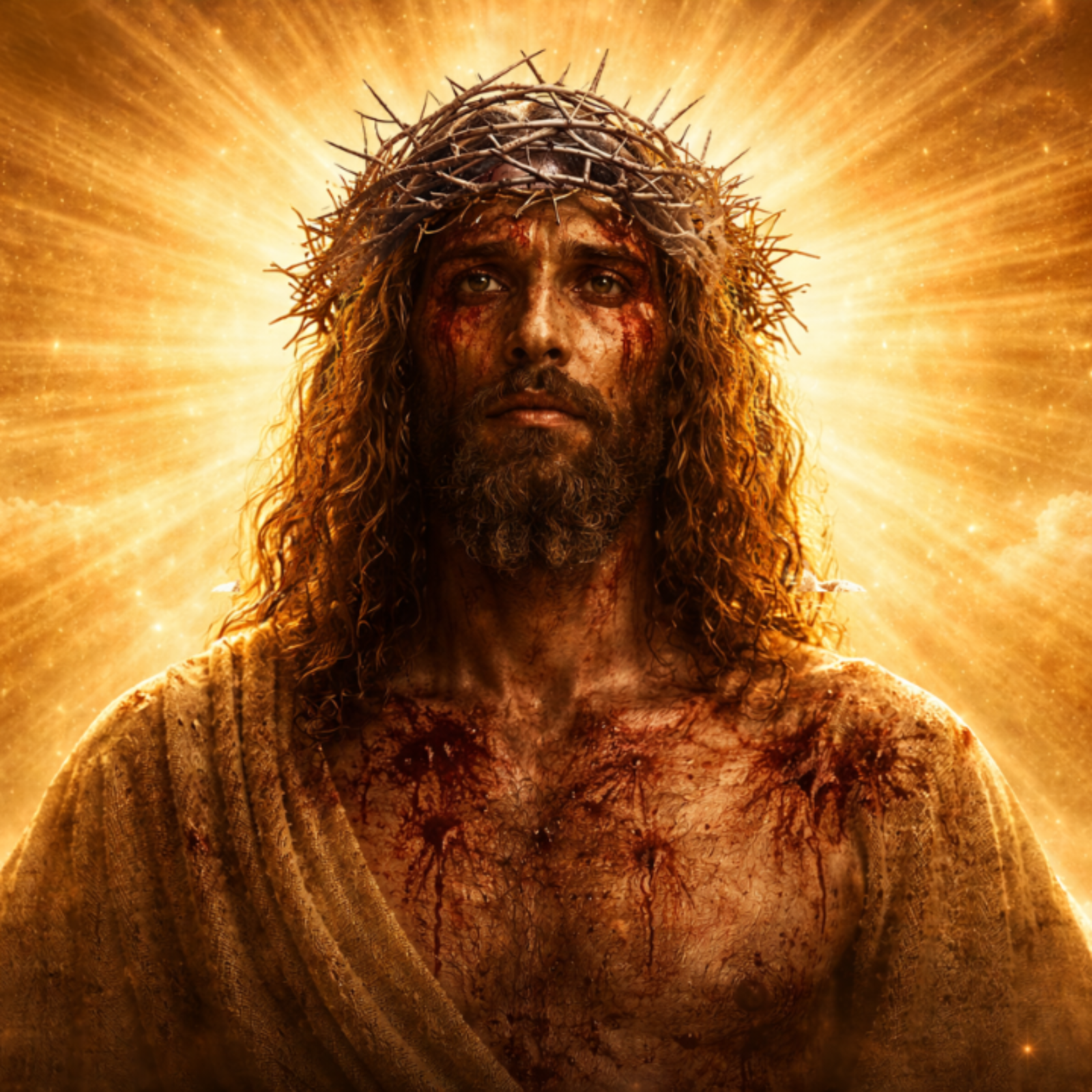


Sometimes, seeing is believing!
Lately, the Busses have been reflecting on expanding their capacity to see what God is doing in the spirit realm. Throughout Scripture, we are commanded to look, behold, see, and consider Jesus. Join the Busses as they dive into the Scriptures and discuss what it really means to leave distractions behind and become more like Jesus as we keep our eyes on Him.
EMAIL: feedback@globaloutpouring.org
WEBSITE: https://globaloutpouring.net
Related Links:
Convention 2026: May 21-24, 2026
Podcast Episode 311: “Get Ready for the Glory!” with Ana Werner
Podcast Episode 306: “The Capacity Code” with Pastor Tony Kemp
CONNECT ON SOCIAL MEDIA
Global Outpouring Facebook Page
Global Outpouring on Instagram
0:00 So you have to look at him. You have to look at him. And once you look and you're convinced that he's really true, you can trust him. Yes. Because it's all about trusting him. It's all about being who you are in him, letting him make in you, make out of you the thing that he designed you to be. He designed you to be like him. God promises in Joel 2 .28 to pour out His Spirit on all humanity. Welcome to Global Outpouring, where we contend for that promised outpouring, we equip for that outpouring, so that we may engage in that very outpouring. I'm Philip Buss.
0:43 And I'm Sharon Buss. Welcome to the podcast today. We have been pressing into God ever since we heard the message that Pastor Tony Kemp gave us in episode 306. And we've been pressing into God since we've had the interview with Anna Werner and with Dean Braxton. We're just pressing into God to get ready for what he's about to pour out. But there's something about... Wanting to go deeper in seeing, in seeing the things of the Spirit, in getting revelations and seeing the unseen realm. But in order to see, you really just have to look. Thanks so much for joining us today. We're so glad that you're with us.
1:27 We're excited to see what God is going to do in the days that are coming. But before we get started, we want to encourage you, if you haven't already done so, to go to our website, globaloutpouring .net. Make sure that you're on our mailing list. There's a subscribe button there. teal green. It says subscribe on it. You can subscribe to our email list so we can stay in touch with you. And you can cruise around on our website. There's so much out there and so many, many things that you can avail yourself of. So much resource. We have a wonderful bookstore and all kinds of videos on our YouTube channel. And we have a Facebook page and just lots and lots of things that you can connect with us. Getting on our mailing list helps us to really connect with you more personally so that we can reach out to you and give you more information than what you've already got just going to the website.
2:18 And there's also a place to click if you want to donate, if you want to help us pay this forward. We'd be so, so very grateful. And just help us to reach the nations. We feel like this is kind of a missionary outreach too, because even though we're being heard by lots of people in the United States and Canada, but... We're seeing that it's going out into many, many nations. And if you want to help us reach the nations, you could help us with making a donation for this podcast. So we also want to encourage you. to attend the Convention 2026, if you possibly can, May 21st through 24th. It's coming right up, and you need to get your reservations in, and you need to register. All of that is available on our website, globaloutpouring .net, then click on Events.
3:08 And you'll see the convention 2026. All the details are there. The schedule is there. And the meetings begin the evening of the 21st, and we go through Sunday night, the 24th. You fly home or you drive home on Memorial Day, which is Monday, and just enjoy a time of fellowship and worship and intercession and deep, deep teaching and just flowing with the Holy Spirit. We don't go in there with a huge agenda. Our agenda is to get onto his agenda. So we hope you can join us in person. If you can't, you can watch it online. But there's just something about being in that atmosphere that changes your life. So let's talk about just look.
3:52 Let's just talk about getting into a place where we're going to look. into the things of God and looking at God and keeping our focus. One of the things that Pastor Tony was talking about in the capacity code in episode 306 had to do with increasing your capacity so that he can give you the things that you're asking God for. If you haven't heard that, if you haven't watched that, please go back to episode 306 and... and grasp it. I feel like it's going to make a difference, especially in this convention, that we prepare ourselves and expand our capacity so that God can do greater things for us. Don't you agree, Philip? Yeah, I agree. And if this quite fits or not, it's like we use the expression capacity.
4:42 Oh, yeah. Papa Jim used to say that. Yeah, capacity. I've arrived at capacity. I've arrived at capacity. He would say that when he was at the table and he had finished his meal and he was fully tanked up. And he would say, I've arrived at capacity, meaning he couldn't eat anymore. He was full. So, sorry. It's great when God does that if he makes you so full. Yes, but I want to get to the point where I just want him to flow through me without any, it's like a pipe rather than a vessel. I just want to be connected to him like a pipe so that it can just keep flowing and flowing and flowing and flowing. And I don't get full. If you're a pipe, you're not going to get full. You're just going to keep flowing.
5:28 So that's really my heart. We're talking about the idea of seeing in the Spirit and getting revelation. And you have to look in order to see. That was what I was hearing in my spirit when we were getting ready to prepare this podcast. And so the word that came into my mind as I'm considering this is the word behold, because, you know, we grew up on the King James. And so it's kind of a familiar thing, but we don't really say behold in the 21st century. Most of our vernacular, unless we're just King Jamesers or, you know, some of the earlier versions. Doesn't it say like on the spine, the authorized King James version? Right, it's authorized. But there's lots of translations, and you almost need all of them in order to get all the nuances of what's in the original languages. So don't feel like you can only read just one translation. It's good to read various translations, and I like listening to them. You can get Bible apps that do that, but I like listening to get other...
6:40 nuances, other pictures. So the idea of behold, I looked it up in my Blue Letter Bible app. I use that all the time. I highly recommend it. And it says that in the King James Version, the word behold is in there 1 ,275 times. So it must be kind of important. And in many cases, the word behold means look. You know, that's one thing that we do say in our vernacular, in our modern language. You know, you're talking along and you just say, look, and you go on to say something else, you know, especially if you're having a discussion back and forth. And in Spanish, they'll say, mira. And it means look, look, look at my point of view. It's a view. We're saying something, but it's something that we see. And seeing and saying really go together. You know, I remember years ago at our little Methodist church in Jasper. we would have a Heritage Sunday.
7:43 And there was a man there that had a Civil War cannon. Civil War cannon, yeah. And on Heritage Day, he would bring his cannon and blow it off. It was just part of the heritage. Yeah, he'd just put the explosive packet in there, and when he lit that thing off, you'd see the flash, then you'd hear the sound. Yes, and that's my point. You've got seeing and hearing. as it's one event. And there's a little bit of gap between them because sound doesn't travel as fast as light does. So what you're seeing, the sound comes a little bit later. So seeing and hearing go together so, so much. And there's that scripture in Habakkuk that talks about, I will stand upon the ramparts and see what the Lord will say.
8:28 So seeing and hearing go together. So if we want to have more, capacity for what God wants to do, we need to stop to see and hear and listen. You're not so likely to hear if you don't listen. I mean, some things you can't help but hear, even if you're not really listening for them. And there's some things you can't help but see that you didn't intend to see, but it just jumped up in front of your eyes. But my point is, when we're trying to look at something, God says, behold. Okay, so what does that look like now? What does that look like in Scripture? What does that really mean? And so I started looking at, okay, so where do we get the word behold anyway?
9:14 So I looked in etimonline .com. Okay, I have an etymology online app, so I used that, but preparing the notes, I went to their website. which is edimonline .com. And it comes from the old English. I won't bother trying to say it, but it means to give regard to, to hold in view and keep hold of or belong to. So something that you're beholding, you want to look at it and pay attention to it, hold it in your view. So when like the angel of the Lord appears to someone and says, behold, in the old. the vernacular, in the older translations. He's trying to say, look at this. Yeah, I think it was in the garden tomb. When he was in the tomb, the angels said, behold, the place where he lay. Yeah. In other words, take a look. Take a look. Take a look.
10:10 Just look at it. So much of the time, we're so distracted. And there's lots of things around to distract us, sounds and visual things. These smartphones complicate things even more. Oh, yes. Because it gives you more to look at. Oh, yes. Oh, yes. And it's listening to you and it starts feeding you ads based on what it's hearing you say. It's kind of scary. Remember back when we had World Book Encyclopedia? Oh, sure. Or you had to go to the library when you did your research paper. Yeah. Now we can research with what's in our pocket. Without even driving to the library. Yep, that's true. So one of the translations of this word in Hebrew, one of the words that's translated behold is hine. And this particular word is used 855 times. So it's another one of these really important words. And it's translated behold or see or lo. Well, there's another word we don't use these days. And so I looked that one up. And, you know, unless we're reading scripture or Shakespeare, you just don't generally hear lo. But it also means look. It's an exclamation of surprise or grief or joy or mere greeting, probably merged or influenced in Middle English by lo, which is perhaps short for look or look. So when it says lo, it's meaning look. So just look. You have to look. Pay attention.
11:41 Focus. Focus. Get your focus in here. You know, cut off all of these other distractions so that you can look at what you're looking at, so that you can see what you're looking at. And we'll get it, you know. So if you look at Matthew 2 .9, for instance. In the King James, it says, this is where the wise men had come to visit King Herod, right? And they said, where is he that is born King of the Jews? So he's convincing them about, you know, you go and you visit and worship this little baby king, and you bring me word again, and I will come and worship him too, right? And it was a fake. So he's saying, In Matthew 2 .9, when they had heard the king, they departed, and lo, the star, which they saw in the east, went before them till it came and stood over where the young child was. Now, what does it say in the ESV, Philip? After listening to the king, they went on their way, and behold, the star that they had seen when it rose went before them until it came to rest over the place where the child was. Okay, so you've got the same word being translated in one place as low and in another place as behold. But now the Christian Standard Bible says this. After hearing the king, they went on their way. And there it was, the star they had seen at its rising. It led them until it came and stopped above the place where the child was. So it's another way of saying,
13:13 there it was. It's kind of an excitement. There's an excitement about, look, there's the star. So one of the words that is being translated as behold is ra 'ah in the Hebrew. And it means to see, look at, inspect, perceive. consider. Okay. So we're perceiving, we're considering. It can mean to have a vision and it can mean to regard or look at or see after, learn about, observe, watch, look upon, look out, find out, see, observe, consider, look at, give attention, give attention to something, discern it, distinguish it, gaze at it. You know, sometimes when you have an encounter with God, And everything else just kind of melts away. Yeah. You're just gazing at him. And all of a sudden, nothing is distracting you. Nothing. I remember an incident where I came under this tremendous anointing. Oh, it was back in the 90s when the move was going on in Toronto and with Rodney Howard Brown and in Pensacola. And I got a huge dose of the Holy Ghost. You got blasted. I really got blasted.
14:35 I really, really got blasted. And one of the things that happened to me, I think I've told this story before, but it bears repeating in this situation where we had Mary Audrey Raycroft come to our convention to speak, and she had an assistant with her. And we were just visiting before the convention started, and I think we were in her place there that she was staying. And I'm just chattering on about something. And I don't remember what it was. It must not have been very important. And the lady that was traveling with Mary Audrey reached over and put her hand on my head. And it was like the anointing just began to pour in. And the words I was thinking and speaking just began to drain out. And I had nothing more to say. Because all of a sudden it was the Holy Spirit. was impacting my life and moving the distractions away. And that's what we need. And that's what we need before we come to this convention, for sure. But we need it moment by moment. We need to learn to walk in the spirit and not in the flesh. Because that's definitely a fleshly thing where the things are trying to attract our flesh. They can't get a hold of our spirit, but they're certainly trying to attract our flesh. That's what's going on in life. It's just happening in life all the time. So, Philip, would you read Numbers 21,
16:06 4 through 9 for us? From Mount Hor, they set out by the way to the Red Sea to go around the land of Edom. And the people became impatient on the way. And the people spoke against God and against Moses. Why have you brought us up out of Egypt to die in the wilderness? For there is no food, no water, and we loathe this worthless food. Complaining. So then what happened? How did God react to their complaining? Then the Lord sent fiery serpents among the people, and they bit the people, so that many people of Israel died. And the people came to Moses and said, We have sinned, for we have spoken against the Lord Jehovah and against you. Pray to the Lord that he take away the serpents from us. So Moses prayed for the people, and the Lord said to Moses, Make a fiery serpent and set it on a pole, and everyone who is bitten, when he sees it, shall live. So Moses met a bronze serpent and set it on a pole. And if a serpent bit anyone, he would look at the bronze serpent and live. Okay. Yeah.
17:19 So I remember there's an old hymn that has a line in it. There's life for a look at the Savior. Hmm. So the bronze serpent was, it's kind of odd that God would say that. I really don't understand why he would have them make that. But he did. You know, I think really there is a thing that is used for the name Yeshua in Hebrew. In modern Hebrew, they call him Yeshu. And it's an acronym. And I think somehow it means snake or serpent or something like that. And so he actually, God used that picture of a serpent to get people used to calling Jesus that. Then when they find out who he really is. Here it is in John 3, 14 to 21. If you'd read that. And as Moses lifted up the serpent in the wilderness. Even so must the Son of Man be lifted up, that whosoever believes in him shall not perish but have eternal life.
18:23 For God so loved the world that he gave his only begotten Son, that whosoever believes in him should not perish but have everlasting life. For God did not send his Son into the world to condemn the world, but that the world through him might be saved. He who believes in him is not condemned, but he that does not believe is condemned already, because he has not believed in the name of the only begotten Son of God. And this is the condemnation, that the light has come into the world, and men love darkness rather than light, because their deeds were evil. For everyone practicing evil hates the light and does not come to the light, lest his deeds should be exposed. So there's something about this serpent that was lifted up in the wilderness that was a picture. So much of what was done in the Old Testament was pictures to help everyone recognize who Jesus is. You know, it's just like Dean. Every piece that he saw in... in heaven that is represented on earth, he says, it's Jesus.
19:38 It's Jesus. It's Jesus. The bread is Jesus, and the cup is Jesus. And we haven't gotten very far with all of the things that he saw, but it's all about Jesus. It's all about helping us to see God's plan to bring a Savior to the earth. All you have to do is look and believe. Look and believe. Now, I just want to go back to the Hebrew in the story of what happened in the wilderness when if a serpent bit anyone, he would look at the bronze servant and live. And that word look, it's the word nevat in Hebrew, and it means to look and regard, to look, to show regard to, to pay attention to, to consider, to look upon, regard, to show regard to. So you're not just a casual glance at the snake on the pole. Well, actually, this came as a result of our complaining.
20:35 We're loathing the thing that God has provided for us. You know, this worthless food that you're giving us is blech. And they became impatient and they're speaking against God and against Moses. So sometimes the things, the trials that come into our lives. are to help us to recognize that we've done something wrong that we need to repent of. They recognized it. And some of them died before they even put two and two together. And the ones that would look at the remedy that God gave were the ones that were healed. So God always has a remedy. And it's always Jesus. Jesus is the remedy for everything. He is the Savior.
21:22 That's what his name is. means. And one of the things that Dean Braxton also says is in heaven, there's no arguing about whether to pronounce his name Jesus or Yeshua or any other pronunciation that people have come up with in their various languages, because everybody, remember, it's thought to thought all the time, and everybody calls him Savior. Because that's what his name means. And that's how Hebrew names work, that the names mean something. And so you don't even really get it, that it's not a big issue. Demons will go out, whether you use the name of Jesus or Yeshua. What is it in Arabic? It's Isa. Isa, yeah. Isa. Right, exactly. So anyway, the idea is we have to pay attention. We have to look, pay attention, give regard to, like, what is that? And, you know, really examine it and really look, what is it that God is saying? Because, you know, going back to what Philip just read from John 3, you know, that's a really familiar verse. A lot of people who don't know any other Bible verses know John 3 .16. And it's about he who believes. So you're looking to him to believe in him. There is some truth to seeing is believing, okay? And in this case, it's about seeing Jesus. It's about seeing him for who he is. And this idea of this is the condemnation, that the light has come into the world and men
22:54 love darkness rather than light because their deeds were evil. For everyone practicing evil hates the light and does not come to the light, lest his deeds should be exposed. In other words, lest they should be seen. So you have to be looking to the light to see the truth. Looking out there in the darkness, don't go looking for stuff in darkness because darkness is going to lead you astray. Yeah, it'll find you. That's true. And it'll get into you if you give it half a chance. But he who does the truth comes to the light, that his deeds may be clearly seen that they've been done of God. So God is really trying to help us by giving us illustrations of things that we can see so that we will believe. Now, it's not so very long ago that we had the celebration of Good Friday and the Resurrection Day, and it's been several months, maybe a couple of years, that I've taken an interest in the evidence that's been coming out about the Shroud of Turin. If you don't know what that is, it is a linen cloth about 14 feet long that was wrapped around the body of a crucified man. It has his blood on it. It has this image that's in the fabric. The thing that... Let me see if I can... not go into too many details. There's so much. There's so
24:26 much detail. It's one of the most studied artifacts in the world, in history. Over 100 different kinds of science have been applied to it to examine what it is and what it's not. And what they've determined is it's not a forgery because there's no paint on it. There's no pigment of any kind. There's just this faint, almost like a scorch mark that is in just, you know, like a thread of linen has hundreds of fibers. And the image is only in the first one or two fibers of each one. The blood has soaked through the whole thing.
25:13 And it's got, you can tell that it has. pre -mortem blood, in other words, blood that was shed before he died, and post -mortem blood. And it has all the markings of the man that was crucified for our sins. It has the nails in his wrists and in his feet, and it has the piercing mark on his side. And what really got me, especially recently, is that the crown of thorns that the Bible talks about It wasn't just like a circlet or a ring of thorns around his head. It was like a cap. It was like a helmet. And when it was pushed down on his head, there are at least 50 notable blood marks on the head of this image, right? That gives me the idea of he was crucified for us to set us at liberty. Okay, jubilee is 50, right? 50 is jubilee. So we have this beautiful picture of jubilee for our minds. all of those things that are after our minds to try and keep us distracted. Jesus bore that horrific, horrific cap of thorns on his head. And I think we talked about this a few episodes back, but he suffered so much with that. And it's to set our minds
26:44 free. Our minds can be set free from all of the whatever kind of things are bothering your mind, memories of things, traumas, traumatic situations that you've had in your life, that you've got memories that are embedded in your brain. And Jesus bore those thorns in order to set you free and to set me free. So all of these things, the more you look at this shroud, the more you can become convinced and the more you can believe this is the real thing. There was one mathematician that, you know how mathematicians will do probabilities, right? If I recall the numbers correctly, he said that there is a one in two billion chance probability that it's not the burial shroud of Jesus. In other words, you can be pretty sure, you can be very sure that it is the burial shroud of Jesus. But the fact that it has this image marked on it, some scientists are speculating that it would take 34 trillion watts of vacuum UV light for like 40 billionths of a second.
28:11 If it went for longer, it would make the cloth disappear. And because there's been many shrouds wrapped, but there was no images in them. Oh, absolutely. No images. No images. And, you know, there are many shrouds from 2 ,000 years ago that have been found. And there are shrouds that have been around crucified people, but there's no image. You can maybe tell by the location of blood on them. And the thing about the blood. The thing about the blood, this is type AB blood. Type AB, there's A and B and O and AB. Those are the kinds of blood that people have. This blood is type AB, and type AB means that they are the universal recipient. That means if you give AB blood to someone who is a type O or just a type A or a type B, you can kill them because they can't receive the other parts. But a type AB person can receive blood from everybody. So Jesus could be the universal recipient of all of our sins. And when he shed his blood for us, it was so that we could be set free from all of our sins, right? And it's typical for Semitic people, in other words, Jewish people in particular, but Semitic people, and they have found other
29:41 remains from 2 ,000 years ago in Israel that they are able to test from the DNA, that 50 % of them had type AB blood. And in the whole world, I've heard different numbers. I've heard 1 % or 6%. or 4%. So it's a small number of people currently that have type AB blood, and most of them are probably Semitic. So it's so very clear that this is Jesus' shroud. And also, there was another man that, I think it was a criminologist, and he took sticky tape, and he put the tape on all over this shroud, and he took that back and examined the pollens. that were in the Shroud.
30:32 And I think he found 58 different pollens. And if I recall the numbers correctly, 30 or 38 of them are only found in Jerusalem in springtime. So Passover was when he was sacrificed. So it would have been at springtime. And the other pollens that were found there. you can trace the trail that the thing went. And some people say that it only just showed up in the Middle Ages. And that's not true. There is actually history of it going from Jerusalem to Edessa, and it was there for quite some time. And then it went, I think, to... Constantinople, and then there was two or three other places before it ended up in Turin, which is where it is now.
31:21 And so you can see the pollens along the way from those places. So it's just, it's so remarkable, so amazing. And I've seen so much of this information coming across at this season. from YouTube in particular. And maybe it's just because I'm fascinated with it that it's feeding me more of that because I ask for it. But you're seeing it on Facebook. You were seeing it in this season because it's the time for people to see and believe. So just pray for people to see and believe because it's important that we get the idea of believing.
32:06 And I'll just want to make one more statement about the Shroud, that the people who went there in 1978 to study it was the first time they opened it up for scientists to really study it. So that's why all of these scientists, you know, they just showed up. I think they had like 100 hours and they worked straight through and they just took naps because they had all these experiments to take, to try. Because most of them, most of them went in as skeptics. They thought, eh. In 15 minutes, we'll prove that it's a fake. It's not a fake. And in 1988, there was another experiment done where they decided to use carbon -14 dating.
32:47 And they took a little piece off of the edge of the shroud, and in three different places, notable places, they were given permission to do carbon -14 dating. Well, you know, they dated it. They said, oh, this is back from the 1200s. This is a medieval forgery. Couldn't be anything but that. And so that went all over the news in 1988. And so the skeptics shut the door. And the people who believed didn't have much of a leg to stand on, even though they believed. Turns out, in more recent years, Someone took those fibers and found that they were indeed from medieval times. It was a repair job that had been done.
33:35 The shroud had been through fires, several fires. And they had this way of doing an invisible weave and they found there was cotton in it and just all kinds of things that disproved the disproving. So, you know, the skeptics that came in 1978, Maybe there was one that left as a skeptic and everybody else says, there's no other explanation. And nobody has been able to recreate it. To get that 34 trillion watts of UV power, there's not enough power in our ability to generate that much power. It's just not possible. They did manage to get a little bit of a scorch mark in a small area. blasting it with a whole bunch of UV, and they couldn't generate enough to do an entire body in a 14 -foot thing. But it shows what Jesus suffered for us and how he was beaten.
34:38 The lashing that he took was so violent and so evil. You could see on the marks on the body that two different men were whipping him and taking turns whipping him. One would come from this side, the other would come from that side. And it was all over his body. The history of this cruel flogging is that they would flog them before crucifixion to help hasten the death. the cross, and 60 % of them never even made it past the flogging. They would die in the flogging. And we know that Jesus survived it. And I just heard another talk about it, somebody talking about it, that because Jesus hadn't slept, remember he was up in the night praying, and then he went from one place to the next to be tried, and so he didn't get any sleep. And sleep deprivation increases the pain. So you have at least 15, I think he said 15 to 30 % more pain will be involved if you're deprived of sleep. So he suffered for us so that we would believe that he paid for us because God so loved the world that he did this. He did this because he so loves us.
35:58 And if we can just look. Look at what he suffered for me. Look at what he suffered for you. He suffered this for you. He suffered this for you so that you can experience freedom, just like the crown of thorns is for our minds. All of these beatings that he took, and it was all over his body. They'd lash him on his back, and then he'd turn him around. And they had already stripped his clothes off of him. So everything was exposed and everything was hit. I don't want to go into too much detail. But it was horrific. Absolutely horrific. Why? Because he didn't want you to suffer more than he did. There was nothing that you suffer that he didn't suffer. And he suffered more so to show you how much he loves you. to deliver you from what happened to you, the things that happened to you, the things that were painful in your life. He suffered to deliver you and to love you and to let you know that He was there with you when you went through it. He was there for you. That's why you didn't die from what it was you went through. And He's there to heal you now. So just take a look. Take a look at
37:31 Jesus. Look at him. Look at how he's looking at you with love. He is beholding you. He is looking at you to bring you into a new place of a closer walk with him, a closer walk. It says in Micah 7 .7, it says, as for me, I will look. I will wait for the God of my salvation, the God of my Yeshua. My God will hear me. He does hear you. He hears everything you breathe. He hears every thought that goes through your mind. And he's there for you. He's there to help deliver you from whatever it is that's tormenting you. He's there for you. And Hebrews 12. 2 and 3. Philip, would you read that? Looking to Jesus, the founder and perfecter of our faith, who for the joy that was set before him endured the cross, despising the shame, and is seated at the right hand of the throne of God. Consider him who endured from sinners such hostility against himself, so that you may not grow weary or faint -hearted.
38:51 See, he challenges us to take up our cross and follow him. Our cross will never be as hard as the cross he bore. So that we don't become weary or faint -hearted. Oh, life is so bad. You don't want the snakes to bite you. Don't complain. Just stop complaining. One thing that the Lord has been doing for me, and I'm so, so grateful. Father, thank you for doing this. That as I'm formulating ideas in my mind, looking at situations, about ready to pronounce some kind of a judgment. to speak some kind of complaint, to speak some kind of thing that I shouldn't be speaking. I find myself praying in tongues instead. And when I find myself praying in tongues, it's like that whole thing kind of melts and goes away and it's not there anymore. It loses, you know, you shine the light on it and darkness flees. So God is doing that for us. Let me just look at John 6.
39:52 40. What does that one say, Philip? For this is the will of my Father, that everyone who looks on the Son and believes in him should have eternal life, and I will raise him up on the last day. So that burial shroud of Jesus wasn't really just his burial shroud. It was his resurrection shroud. And I've heard somebody said that it was the original selfie. It was the very first selfie ever. The very first. image of a person. Wow. Isn't that amazing? And, you know, the really amazing thing is it was like a photographic negative. The first actual photograph that was taken of it in the 1800s when they didn't have electricity in the building, you know, it was done on huge glass plates when the man took it into the dark room and began to develop it. What he thought was going to be a negative turned out to be a positive. And so that's why we have the picture that we have of the shroud that you can see what he's like. And, you know, AI is creating all kinds of possibilities of what did Jesus look like. That's really not the important part. But the important part is that he is and that he is the son of God and that he did rise from the grave and that he is there for us if we'll just look at him. Just look at him and believe. Psalm 119 .18 says, open my eyes that I may see. And that's that same word that was used in where
41:24 they're supposed to look at the snake. on the pole, that to look attentively, that word navat, that I may see wondrous things out of your law. Open my eyes that I may behold attentively wondrous things out of your law. Open, unveil, uncover my eyes. I need help. I need help. My eyes need help. Now, I remember when we had Michael Van Vlijmen here. He told us a story, and I think he's got it in one of his books, and I'm pretty sure we've got it in one of the podcasts we did with him, but I'm not sure which one. So Michael tells the story of how he was wanting to see more. You know, he just wanted to go deeper in his seeing gift because he had pressed into God and began seeing, right? So he wanted more. And so this angel appears to him. I don't remember exactly what the conversation was between them, but it goes something like this. The angel gets up in his face, up in Michael's face, and the angel's eyes turn blood red. And Michael goes, what? What is that? What's going on? And if I recall what the angel said correctly, it was something like, your eyes have been injured by some of the things that you have been looking at. And that made Michael kind of pull back and
42:56 take a look at, like, what kind of television programs are you watching? What is that doing to your eyes? Are you unable to see the way that you want to see in the spirit because you're putting things in front of your eyes that are not building you up in the spirit? And, you know, so that's a challenge to us. I've dialed way back on my YouTube consumption. God really, especially after Pastor, the Holy Spirit had already been dealing with me. But after Pastor Tony's message in 306, boy, I really dialed it back, way, way back. And I'm hardly watching anything on YouTube.
43:37 I mean, we're here to help you grow. So if you want to watch us, that's... That's between you and the Holy Spirit. Okay, just do what the Holy Spirit tells you to do. But, you know, dialing back on things that are superfluous, they're not helping you in eternal things. You know, some of those silly things, especially these days, so these silly things that are being created by AI. Give me a break. So just to go back to Hebrews 12, 2 and 3. In fact, I'm just going to read verse 1. Wherefore seeing we are all seeing, okay, seeing, we're seeing, we're all so compassed about with so great a cloud of witnesses.
44:22 So what great cloud of witnesses are we talking about? Well, the whole of Hebrews 11 is the Hall of Fame. That is the Hall of Fame of the faith people that have lived before. the writer of Hebrews wrote Hebrews. So this whole hall of fame of people who... lived by faith and walked in faith. And so that is the great cloud of witnesses. So let's lay aside every weight. Let's lay aside everything that is trying to easily set us aside and easily trip us up. Let's run with patience the race that is set before us, looking to Jesus, okay? Seeing that we're surrounded by a cloud of witnesses. Let's look. to Jesus, the founder and perfecter of our faith or the author and finisher. That's how it's put in the King James.
45:18 The founder and perfecter or the author and finisher of our faith, who for the joy that was set before him endured the cross, despising the shame and is seated at the right hand of the throne of God. Consider him. Okay. Remember how this word look. And behold, includes the idea of thinking about it and considering and discerning. Consider him who endured from sinners such hostility against himself that you may not grow weary or faint hearted. We are being challenged that no matter what's going on around us, that we keep our eyes focused on Jesus. And look what he did for us.
46:01 If he can do that for us. We can do just about anything for him, right? We can do anything for him because he's the author and the finisher. What he starts, he's going to finish. He's faithful. You can expect him to be faithful. What he authors, he's going to complete. What he starts, he's going to finish. So we're all on a journey to become like him. That's what this journey of the Spirit is all about. He does the work in us when we yield to him. So when we surrender, we've talked a lot about surrender. So you have to look at him. You have to look at him. And once you look and you're convinced that he's really true, you can trust him. Yes. Because it's all about trusting him. It's all about being who you are in him, letting him make in you, make out of you the thing that he designed you to be. He designed you to be like him. And all of these trip ups that we have when we have a flash flash. He designed us to be able to come back to him and say, I'm sorry, and go back to the people that we flashed on and apologize to them and say, I'm sorry, that wasn't like Jesus.
47:15 I'm trying to be like Jesus. Please forgive me. Okay. And Jesus in them will say, just like Jesus said from the cross, Father, forgive them. They know not what they do. So Father, we're asking you now in the name of the Lord Jesus Christ, that you will continue this wonderful work that you're working in us, this work that you're doing by the blood that you shed on the cross. Thank you, Jesus, for shedding your blood, for going through all that agony, that trauma. You went through more trauma than anybody else on the planet and everybody on the planet. put together. You suffered it for us so that we could be delivered and be delivered into a life of seeing you and walking with you and talking with you and hearing you and obeying you because that's how we show our love for you. That just like you said to your disciples the night that you were betrayed, you said, if you love me. Keep my commandments.
48:15 So, Lord, we're asking you to let us see your love in a deeper way so that we will love you the way you deserve to be loved. In Jesus' name, amen. Amen. If you enjoyed today's podcast, please subscribe, rate, and review this podcast on Apple Podcasts or wherever you listen to podcasts. Your review helps the podcasting platform suggest this podcast to other listeners who are also looking for a great move of the Holy Spirit. Check out our website at globaloutpouring .org to find out more information, read our blogs, connect with us, and donate. You can also browse our web store for life -changing anointed books.
49:00 Until next time, this is Sharon Buss. And I'm Philip Buss. God bless you with His overwhelming, loving presence.


