(323) The Truth about Bones
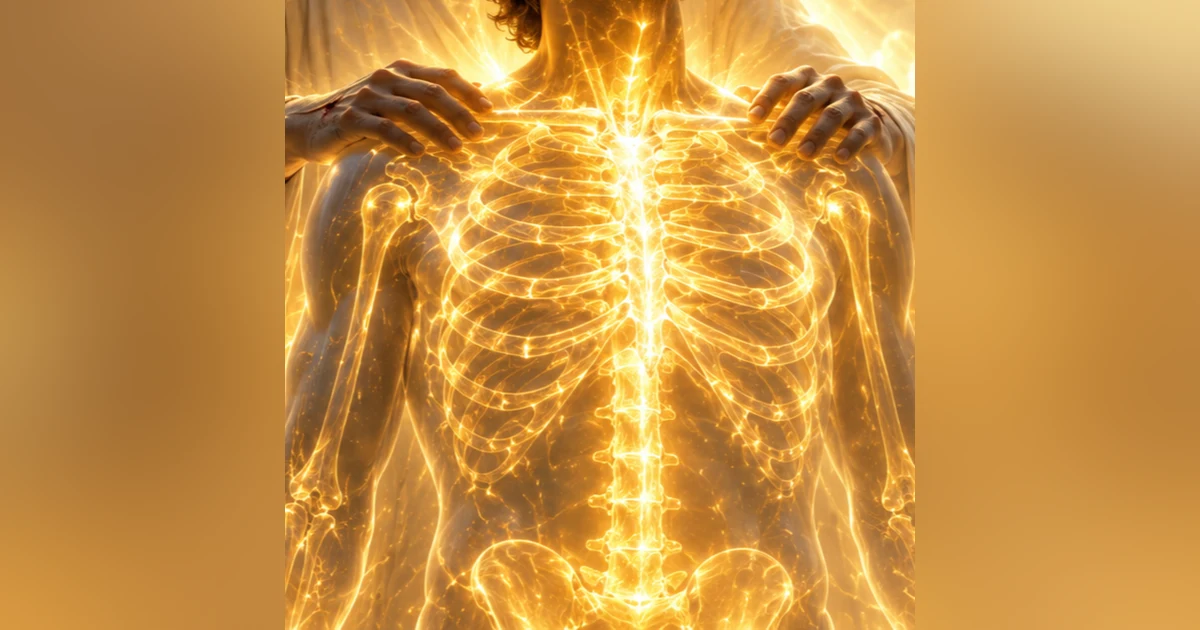


What is the spiritual significance of bones? The answer may surprise you!
In our modern culture, we tend to think of bones in connection with death and darkness. But what if bones actually pointed to eternal life instead? Join the Busses as they take a deep dive into the Scripture to explore what the Hebrew has to say about bones, and how these life-giving structures in our physical bodies hold deep spiritual truths about Jesus and who He is for us! This fascinating and unique discussion will help you to see the beauty of our total dependence on Jesus and His faithfulness to be all that we need. You will enjoy this!
EMAIL: feedback@globaloutpouring.org
WEBSITE: https://globaloutpouring.net
Related Links:
School of the Supernatural–Translation by Faith: September 7-12, 2026
Feeling led to give? Partner with us here!
Podcast Episode 322: Q&A with Dean Braxton Pt. 3
CONNECT ON SOCIAL MEDIA
Global Outpouring Facebook Page
Global Outpouring on Instagram
0:00 because he's trustworthy. He is true. He is the way, the truth, and the life. So he is that stability, and he becomes that structure like our bones. Jesus is the spiritual equivalent of our bones. God promises in Joel 2 .28 to pour out of his Spirit on all humanity. Welcome to Global Outpouring, where we contend for that promise outpouring, we equip for that outpouring so that we may engage in that very outpouring. I'm Philip Buss. And I'm Sharon Buss. Welcome to the podcast today. We're so glad that you've joined us. We are really excited about this episode because it's kind of a spinoff, sort of, of the last episode where we were talking with Dean Braxton about... Lots of things, but we're going to focus in about the truth about bones. We're so glad that you've joined us today. We're excited that God is doing things, pouring out his spirit on all humanity, all over the world. He's doing it already. And we want to help equip you with understanding, equip you with spiritual knowledge and tools that will help you be prepared to participate in what God has for you in this outpouring. And today, before we get started, we want to encourage
1:32 you, if you haven't already done so, to go to our website, globaloutpouring .net. Make sure that you've subscribed to our email lists, because that's where we can stay in touch with you and give you more information of things that are coming and things that are going on. We have several lists to choose from, and you're welcome to click on any of them that you feel inclined to do. And let us stay in touch with you. If you're getting something out of these podcasts, we want to encourage you to subscribe to our YouTube channel, especially if you're watching there or if you're watching on Spotify or wherever you're watching from or listening from. If you subscribe and if you leave comments on those places, it helps to bring this podcast to other people so that they can also be blessed by this and you can share it on your social media. So there's lots of ways to help to promote this podcast. And if you feel led to help us to produce these podcasts, it's not inexpensive. And we would just be very appreciative if you would click the donate button on the website. And that will help us to pay this forward and reach the nations. We're reaching a number of nations with this podcast. And by the way, wherever you're watching from or listening from, we would love to hear from you. Let us know where you're listening from. That just blesses our hearts to know that we're reaching the nations. And if there's some
3:02 way that we can help you, if you want to let us know some kind of a question that you might have that we might be able to tackle on this podcast. we would love to do some answering of questions for you as well. So let's talk about bones. So in our last episode, we were having this discussion with Dean Braxton at the convention. And there was one question, one comment that he was making about bones, because the question was asked, what was the significance of the fact that Jesus' bones weren't broken. And Dean gave us a very surprising answer. He said that, let me just pull up my notes about it. He said that our bones don't deteriorate like our flesh does.
3:56 Sometimes they're thousands and thousands of years old that you can find bones. And what he says is that they're representing eternity because they last so long. After the flesh is gone, the bones are still there. Now, I did a little research, and I found that it depends a lot on the environment, whether there's lots of heat, whether it's dry, whether it's damp. Sometimes bones can deteriorate in 10 years. Well, that's what they use in New Orleans because you can't bury anything because as soon as you dig, you get water. Yeah. So they have everything is above ground. Yeah. What do you call the box? I forget what it's called, but I remembered when we started talking about this. Yeah. And it's very similar, really, to the kind of burial that they did in the first century. Yeah, really amazing. Where they would lay the body out. And you see this in the story of Jesus. death and burial and resurrection that he was laid out and they were expecting to come back. I mean, the way that first century burial was done is they would put the body there and in a year they would come back expecting all of the flesh to be deteriorated, decomposed, and that the bones would be all that would be left and they'd gather up the bones and put them in what they call an ossuary, which is a bone box. It's just a box and usually made of limestone.
5:28 And, you know, that's just the custom that they did. So then they would put all of the bone boxes together in that family tomb. And so everybody's kind of stacked together. And you're a space saver. Yeah, it is. It is. And I remember in our travels when we've had tours with our founder, Sister Gwen Shaw, we did a tour to. the seven churches of Asia that are mentioned in Revelation, which is really just Turkey. And we went to see other things in that amazing nation that, like, there's a place called Cappadocia. And there were kind of like catacombs that were dug into the soft, porous rock there. And they had all kinds of tunnels and there had been some excavating done. And I remember seeing the skeletons of people that had lived like 2 ,000 years ago.
6:28 And, you know, they were living under persecution. They had to live in these tunnels and they had elaborate systems. Anyway, the point is that I remember seeing these very intact skeletons of people that had lived a long, long time ago. And they were... a brother or sister in the Lord, and here's their bones still here. And then I think we were probably in Greece on another tour, looking at the footsteps of Paul, you know, going to Philippi and different places. And one of the places that we visited, in fact, I think it was more than one place, where we went to these Greek Orthodox churches and monasteries.
7:14 They did something kind of similar, only not exactly the same, because once the bones, once all that was left of you is your bones, they just put all the bones of all the brothers who had been in that monastery together. Yeah, so all the skulls are together and all the femurs are together. So in the resurrection, everything will be sorted out. Yeah, yeah, God knows. And that reminds me of Ezekiel, you know, where it says in Ezekiel 37, he's in the valley of dry bones. And all the bones come together to their own bones. And I love that, that it doesn't matter if your bones have been scattered. You're going to come back together in the resurrection. It's not going to be Joe Schmoe's femur attached to somebody else's patella. Everybody has their own bones. God knows where we all are. But the thing about the bones that Dean was commenting about is that they are representing eternity.
8:17 And I have been on the trail of... bones for a long, long time before we ever met Dean, because of that scripture in Psalms 3510 that says, all my bones will say, Lord, or Yehovah, who is like you, who rescues the afflicted from him who is too strong for him. And this is the amplified, who is too strong for him to resist alone and the afflicted and the needy from him who robs him. There's nobody like God. There's nobody like Yehovah, the one who was and who is and who is to come. He is the eternal one. And so he's got this characteristic of eternity. He is the source of eternity. He always has been.
9:04 He always will be. And he's put this eternity in our bones so that we'll say forever. while our bones are still in the grave or wherever they are, that our bones are still going to be saying, there's nobody like you. There's nobody like you. There's absolutely nobody like you. You are without comparison. And so while your spirit is in heaven already worshiping, your bones are still in the ground saying, there's nobody like you. There's nobody like you. And it's just... It's just interesting, you know, this idea of the bones. I don't know if you remember biology, anatomy and physiology, maybe just biology from eighth grade or something like that, where you'll learn about some things about the bones.
9:52 And your bones are actually living. We kind of think about the bones as being like dead because they're just hard. Yeah, you see so much of that in the culture we have now. You see a lot of skulls and skeletons and stuff. Going into a chiropractor's office sometimes, there'd be some one or two, maybe somewhere, had the skeleton of all the bones, you know. Yeah, they're teaching tools, really. Teaching tools, yeah. But, you know, I never really thought in terms of my bones being alive. But they are. They're a part of our living. Don't they produce the blood? Yes, yes. The bone marrow produces the blood. The bone marrow produces the blood. There's the soft part. There's the spongy part of your bones.
10:44 And then there's a hard part of your bones. And the marrow is actually producing the red blood cells and the white blood cells and the platelets. Those are the three main things in your blood. That your blood is, remember the word says, the life of the flesh is in the blood, right? What are some other characteristics about your bones? Like, what would we look like if we didn't have bones? We'd just be a pile of stuff that couldn't get around, right? You know, you have to have bones. It's a structure. It's the central structure that allows you to move. It's the central structure that protects your vital organs. you know, like your skull protects your brain and your eyes, you know, you've got the shape of your skull that's like covering and protecting your eyes.
11:38 And your whole rib cage is protecting your vital organs, your heart, your lungs. And then your bones are always adapting. There's always this construction and destruction and restructuring that's going on. And some of the time, you know, as people, tend to age. They tend to, they, I'm talking about they, not us. They tend to stop moving around so much. When you're younger and you're more active, your bones are adapting. to the stresses of life because your muscles are pulling on your bones. And because, you know, your muscles attach to your bones so that you can move at your joints, right? So what's amazing is that you can actually rebuild the structure of your bones, especially if you've lost some.
12:38 Yeah, or if you break a bone, they put it in a splint. Right. Or a cast. Or a cast and tape it up and the bone will knit itself. Right. And it's stronger where the break was than it was before. But when you have osteoporosis or osteopenia, I think it's called, where there's a weakness in the bones, you can actually rebuild that by exercise. You begin to put stress and you do it gently. You don't do it. all at once. There's lots of videos out there on YouTube for rebuilding your bone structure. I've been looking a little at them. The point that I'm trying to get to is that this structure is living and it is going through changes all the time. It's adapting.
13:27 It's adapting. So it can adapt back to strength if we will help it. Our bones will continue to improve as we work at it, right? So the word in Hebrew for bones is etzem. And it means bone. And think eternal, okay? Remember what Dean said about there's something about the bones that's eternal. And it's not like we're trying to give all the answers on this, but these are some thoughts that the Lord has put into our hearts. It means bone. It means essence. It means substance. And it's talking about the body and the limbs and the external body. But it also means yourself.
14:13 So there's something about your bones that has to do with yourself. So your DNA is in your bones, like these archaeologists and paleontologists that have found ancient bodies, like they have found... bodies of the Philistines in an ancient cemetery in the area around Ashkelon. not far from the Gaza Strip, where the Philistines used to live. And they found an ancient cemetery and they can go into the teeth, which have some of the hardest substance, and still find some DNA so that they can understand who these people were. So there's DNA, your DNA, your very substance is in your bones and even in your teeth. It's amazing. So there's more to this then meets the eye. And as we get into this, I'm hoping the Lord will help me show you something that is eternal here and something that will help us in our walk with the Lord. It's not just about bones, okay? We don't want to lose anybody off the podcast because we're talking about just bones. Right. Don't get weirded out about the bones. But it also means like this very. Like this very day, or this self -same day, as King James would say. So the same word for bones is used in making a point about a point in time.
15:50 Like it says in Genesis 7, 13, it says, on the very same day, etsem, yom etsem, or etsem yom, the same day, the very same day. Noah and Shem and Ham and Japheth, the sons of Noah and Noah's wife and the three wives of his sons went with them and entered into the ark. So it's making a point of a point in time. So your bones or your substance or your very DNA, it's the very substance of you. Okay, so your bones are important. So what happened? when Jacob brought his family down into Egypt and found that Joseph was, he's nearly the head honcho. He's the second in command over all of Egypt. And when Jacob died, they carried his body back to the promised land and buried him next to his father, Isaac, who was buried next to his father, Abraham. So Abraham, Isaac, and Jacob were all buried together. in the cave of Machpelah in Hebron. And according to the testimonies of the patriarchs, whether that was really written by the patriarchs or written by somebody else later, it indicates that they were all buried in Hebron also, in the cave of Machpelah. So when Joseph, before Joseph died, what did he make them promise? Genesis 50, 25. Then Joseph made the sons of Israel swear,
17:23 saying, God will surely visit you and take care of you, returning you to Canaan. And when that happens, you shall carry my bones up from here. Yeah. I guess Moses would have, because of his position being raised in Pharaoh's house, he knew where the bones were. Sure he would. That would have been known to all the Israelites because they would have buried Joseph with the highest Egyptian honors, whatever that looked like. But Joseph wasn't an Egyptian. And he wanted to be buried with the rest of his family. Remember how Dean Braxton always talks about family in heaven is so important, that it's an eternal thing. Family is eternal. So our bones even belong together. You know, that's why you have a family cemetery plot. Let's not get into that. That's not the point. But the point is that when they did go up out of Egypt 400 years later. they remembered where Joseph's bones were. And they said, okay, let's take his bones and let's go.
18:32 Let's just strap that box onto a camel and we'll just... Right, right. And actually, Joseph wasn't buried with the rest of the brothers in Hebron, in the cave of Machpelah. He was buried in the plot that Jacob gave him up in Shechem. where his, you know, Jacob's well is, right? And that became the place that the Samaritans had in the days of Jesus. So I often think of when Jesus was sitting by the well and talking to the woman at the well, he's thinking about here's the place where. Joseph's bones are, and there's going to be a resurrection soon here, boy. Can you imagine going through the desert for 40 years carrying this box of bones around? Everybody else got probably buried in the sand, you know, as they died. It doesn't say what happens to those that died in plagues out of rebellion.
19:37 Of course, the earth opened up and swallowed Korah and company. You didn't have to bury them. But everybody else must have just been buried in the sand. But the bones of Joseph, you know, they just kept carted around. In all those years. Yeah. Because of the importance of that. It's true. It's true. So you've got the bones, the dry bones of Ezekiel that we mentioned earlier, and how God is talking even then about bones. Can these bones live? That was the question to Ezekiel. Ezekiel, can these bones live? You know, when God asks you a question and you don't know the answer, you say, well, you know. Yeah, Lord, thou knowest. And so, you know, here's this beautiful story of bones that he prophesies the flesh over.
20:33 So it's like a resurrection that they're being called into a resurrection. Of course, we know that that is. picture of the resurrection of the nation of Israel. And we've seen it. Well, it happened a little bit before we were born. But, you know, God is faithful to his word and he's faithful even to the bones. And don't we talk about something being true to the bone or bad to the bone or it means something that goes all the way to your core. In Israel, if there was a suicide bomber, something happens and a person is blown to bits. So it's like they will get every piece of flesh they can find. They meaning the Orthodox people. What do they call the... I don't know what they're called. They have a special... It's a special group of Orthodox men that go around and collect all the pieces because every piece of a person's body is sacred.
21:33 Wow. Even in death. Even in death. And that's why... There are so many things about the tradition, about the way that Jesus was buried, you know, that the face cloth that was over his face after he died, you know, they covered his face. And then that was folded up and put in a different place when he was put into the shroud. And the interesting thing is those two pieces of cloth match in their markings of, you know, where the bloodstains are. They match identically. Anyway, every piece of a person is sacred. And God wants us to understand that he didn't intend for our bodies to be dying. That came with the disobedience.
22:23 And it's interesting when somebody like loses a limb or something, they have what they call phantom pains. Yeah. You know, like it's gone, but there's still pain like it's there. I mean, we haven't experienced it. I haven't lost anything. No, and we're not planning to either. We're not planning to either. But I remember hearing somebody talking about how even though that portion of the limb has been cut off, that the spiritual part is still there. And that's why they have phantom pain, because there is still the spiritual part. And that's the part that can regenerate the limb. If you remember the story of what happened in Azusa Street, there was a man who came in.
23:11 He was an amputee. Yeah. And he'd lost the lower part of his leg, and he was having trouble with the stump. And he was walking on like a peg leg. Peg leg, yeah. And he was having trouble with the stump, that the stump was bleeding and raw. And so they started praying for him, and the limb regrew. And watched it happen. Yeah, they watched it happen. And, you know, the stories are out there, the eyewitnesses that saw it. So it's there in the spirit. And this is where we need to catch the connection between the spirit and the bones, the spirit and the body, because God made us to be one. And that's another one of the things that Dean talked about in the last episode about how. When we get our resurrected bodies, we won't be just spirit, soul, and body.
24:05 We'll be one. And that's exciting. That's exciting to think about. But the thing that has been in my spirit that I've been meditating on is the idea that Jesus is the truth. He's the way, the truth, and the life. And there's something about truth and Jesus himself within us. You know, we invite him to come and live in us, and we are also clothed in him. So he's in us and we're in him. And it's like a substance in the spirit that we are supported by him as truth. Okay, it's kind of like he becomes the bones for us in the spirit realm. The word truth is emet.
25:07 Remember, the word for bones is etzem. I don't think that there's any relationship in the words, the root words, but it's emet in the Hebrew, and it means firmness, faithfulness. truth, sureness, reliability, stability, continuance, faithfulness, reliableness, and truth, okay? And just to go back to that word for bones, the root word for bones is the word atzom, and it means to be vast, to be numerous, to be mighty. The Gesenius lexicon says it means to bind, to bind fast, to tie up.
25:53 to become strong. So you have this idea of bones coming from the word for firmness. We're going into Jesus being our firmness, our stability, our faithfulness. That's the word for truth. The word for truth is stability and peace and stability. It means firmness. And it's a security. So it has to do with anyone who is consistent and performs promises. So that is who our God is. And he made our bones to be a physical structure that would have this firmness and stability for our bodies to hold us up. So we're seeing this in the physical realm. And he is that in the spirit realm. He designed us to begin with not to have death and not to have disease and not to have things that would cause death. But he designed us to be one. And that's what he's going to do again. But it's all because of Jesus, right?
27:06 So we have Jesus being that truth for us. It talks about, you know, I keep going back. over and over again, to the visitation that Moses had on Mount Sinai when he said, show me your glory. And in Exodus 34, it says that the Lord like roared his name, Yehovah, Yehovah. He says he's compassionate and gracious, slow to anger and abounding in loving kindness and truth or faithfulness. So the faithfulness, faithfulness and truth are really the same idea. You can count on him. You can count on his faithfulness. He is faithful. He is watching over his word to perform it. He is going to do everything he says he's going to do. And he gives us a word, and then he steps back to let us be tested in it.
28:11 Are you going to stick with this? Are you going to be faithful to my word that I've given you? And just like our bone structure, he is there for stability. He is there for us for firmness. He is there for us to count on him. Okay? Psalm 31 .5 says, And we heard Jesus say this on the cross, right? Into your hand I commit my spirit. You have redeemed me, O Lord, the God of truth and faithfulness. What does Psalm 40, 11 say? Do not withhold your compassion and tender mercy from me, O Lord. Your loving kindness and your truth will continually preserve me. See, loving kindness is that chesed, that, yeah, loving kindness.
29:01 It's kind. It's kindness that comes out of love, and it has to do with his commitment. It's like a covenant commitment that he is going to keep his promises in love and in kindness. What about Psalm 8611? Teach me your way, O Lord, and I will walk and live in your truth. Direct my heart to fear your name with awe -inspired reverence and submissive wonder. Isn't that beautiful? Yeah, it's amplified. Yes, yes. It has to do with him teaching us his way. And when we humble ourselves and submit to him, he will teach us his ways. And when he teaches us his ways and we see how much better his ways are than our ways, then we can lean on him. We can depend on him. He is our stability. He is our security, just like our bones are in our bodies, right?
30:06 Direct my heart to fear your name with awe -inspired reverence and submissive wonder. Isn't that beautiful? And then verse 15 of the same chapter. But you, O Lord, are a God who protects and is merciful and gracious, slow to anger, and abounding in loving kindness and truth. Truth. Abounding in loving kindness and truth. This is his character. This is what he is trying to work in us by his Holy Spirit. That's working his character. We are designed to work with him, to be like him, to become like him, to grow up into looking like dad. You know, sometimes you look at a baby.
30:58 And you think, OK, that child looks like his mom or his dad or whoever. And then as the child grows up, you know, sometimes there's this kind of waffling back and forth. Sometimes he looks like mom. Sometimes he looks like dad. But as they grow older, often, often you will find that the son looks like the father. And I find it. Amazing, especially in like family members. When I see, like I noticed my uncle one time, how much he looked like his dad. It was like, oh, wow, I wasn't expecting that. He just looked just so much like his dad. And that's the goal, is that we look like father as we grow more mature.
31:44 Yeah, I remember when it had been a few years or so since we'd seen Papa Dorn. And we got together and he says, oh, you're looking more like Estobus every day. It's true. It's true. And just the other day, didn't I say, oh, honey, you look just like your dad when he had a beard. Yeah. Yeah, absolutely. It just is astounding how that family characteristic is there. And that's the picture. And I have two brothers. And when I grew my beard, I looked like one, which would look more like my dad. But when I grew my beard, I looked a lot like the other brother that's had a beard all his life since he was 19. And I thought that's just amazing when a little hair on your chin just changes the way you look. Yeah, it's true. But here's the point, that we are supposed to be growing up. to look like our Father and to carry these characteristics of His faithfulness.
32:54 His faithfulness. He is faithful. And really, the way that we become faithful is by leaning into Him. I was studying the other day about the Beatitudes. And I'm excited. We're going to have Flo Ehlers on soon. And she's going to teach us some more about a comment that she made about sandwiching. the gifts of the Spirit in between the blessings of the Beatitudes and the fruit of the Spirit in Galatians 5, that you hold the gifts in between those two things. I'm really looking forward to that. So I was meditating on that idea, and I went to the first of the Beatitudes in Matthew 5 .3, and it says, Blessed are the poor in spirit, for theirs is the kingdom of heaven. And I thought, I got to dig a little more in here because I never really did understand that one. And as I dug into it, it really means that you're so poor that you're a beggar. Like somebody who is poor, there's another word in the Greek for poor that means poor in the way that we would probably consider poverty where, you know, you just are barely getting by and you don't have anything that you can, there's no extras. You're just getting enough to feed your family or whatever. But this other poor
34:27 means an absolute beggar. You are depending on the mercy of someone else to provide for you. And when you are that way, in your spirit, you realize there's not a thing that I can do to provide my own righteousness. All of our righteousnesses are as filthy rags, right? That's what the word says. So our ability to provide our own sustenance, to provide our own security, to provide for the ability to move. all of these things, we're dependent on him. We're dependent on his goodness and his mercy. And when we see that everything is coming from him and not from our own hard work, you know, a lot of the time we're really behind in the ways of God because we try to provide for ourselves. We think that God has given me this gift, and so I'm going to use this gift to provide for myself. I'm going to use this gift to provide for my family. And while that does help you have a pretty good work ethic, and there's something good to be said about that, when we learn to rest in His provision, when we learn to rest
36:00 in the fact that really, the best we can do is still falling short. We're just not getting there. We don't have what it takes to do it ourselves, but he does. And as we yield to him, as we say, I can't do this. I can only do this if you'll help me. I'll do anything you say. But you've got to give me the strength. You've got to give me the energy. You've got to give me what it takes. That's submitting to him. Yeah. It's a submission to him that puts us in a place of rest, that puts us in a place of dependence on him. You know, especially as Americans and as Western society, we have placed such a value on independence. And, you know, we're coming up on our 250th Independence Day. And really, in the face of eternity, I understand they were pushing, we have no king but Jesus. But we kind of have lost that idea of, we need Jesus to be our king. We need to be dependent on him. And I love the movie that we saw a while back about A Great Awakening where George Whitefield is preaching and Ben Franklin is, you know. Like
37:32 he's just not moved. Yeah, he's unmoved by the whole thing. But the idea that independence from England was what they were after. it still required dependence on God. They couldn't come up with any kind of a constitution if they didn't stop to pray. It was the stopping to pray and taking a time alone with God that enabled them to have the unity to be able to come up with a constitution. And so it's our dependence on him, our absolute dependence on his ability to structure us, and his faithfulness and his truth. You know, if you don't have truth inside of you, you're not ever going to accomplish. what he put you here to do. You know, you have to be true to yourself.
38:26 What's it they talk about cognitive dissonance? When there's something going on in you that maybe your words are not agreeing with your core values or your thinking isn't agreeing and there's something that's wrestling inside of you that it's just not coming together right. This is where God wants to align us with his word and align us with his ways, and then it begins to work. And then as we're depending on him, as we're yielding to him, as we're just in that beggarly place, that's where we begin to operate in the kingdom of God. We can operate on earth as it is in heaven because everything in heaven depends on the life that comes from him. And we really need to depend on him now. So we have this beautiful idea of putting our trust in him. When we trust in him, we are becoming one with his faithfulness because he's trustworthy. He is true. He is the way, the truth, and the life. So he is that stability.
39:41 And he becomes that structure. like our bones. Jesus is the spiritual equivalent of our bones. Jesus is truth. You want me to read that? Yeah. Jesus is truth. It is his presence in us that is the spiritual equivalent of our bones. Structure, protection, produces blood for life, ever adapting to the needs of the body. That's Jesus. There's power in bones. We didn't mention what happened to Elisha. Oh, yeah. Yeah, that's true. You remember when the dead man, they threw, why weren't they covered up? I don't know. But where Elisha's bones were, they threw them on Elisha's bones and he came to life. Yeah, because there was still power. There was power in those bones.
40:29 In those bones. So, yeah, there's life. There's that eternal thing. Isn't that an amazing story? Yeah, it is. It is. Wow, wow. And there's power in Jesus. Yeah. He is that spiritual equivalent of our bones. So Jesus provides a structure, right? We can depend on him. We can move because we have bones. We can move because we have Jesus inside of us. We have protection. He is the one that protects us, you know? We run into him like the name of the Lord is a strong tower. The righteous run into it and they're safe. That's who he is to us. He is our protector and his blood. We have life because he shed his sinless blood for us. And we plead the blood. We use it like in a courtroom where, you know, you're declaring either you're guilty or you, how do you plead?
41:32 guilty, not guilty, or I plead the blood. The blood of Jesus covers my sins. He washed away my sins with his blood. His blood became the payment for my sins. And so he produces this blood of life for us. And just like our bones are continuously adapting, there's stuff going on all the time. Our bones are continuously making blood for us. They're adapting. They're strengthening. They're adapting to our situations. That's what Jesus is to us. I mean, he's the same yesterday, today, and forever. So he's this unchanging structure that we can depend on. Hallelujah. Hallelujah.
42:21 So let's look to the Lord in prayer. Father, we thank you that you are faithful and true. Faithful and true. Faithful. and true. We can trust your faithfulness. We can trust in your truth that there's no lie that's coming to us that your Holy Spirit won't help us discern. Lord, that everything that we need, you are all that to us. And Lord, we just thank you that you've given us this little look into a kind of an Odd idea. But Lord, we thank you that our bones are eternal and they're to remind us of eternity and they're to remind us of your faithfulness and your structure and your protection. We bless you for that, Father, and we thank you for it.
43:14 We thank you, Jesus, that when you were on the cross, that not one bone was broken. We thank you for that, Lord. bless you. And we just hold this over all of our listeners and viewers, Lord, that we will all begin to walk in a greater, greater dependence on you, a dependence and a trust in your structure for us. In Jesus' name, amen. Amen. If you enjoyed today's podcast, Please subscribe, rate, and review this podcast on Apple Podcasts or wherever you listen to podcasts.
43:56 Your review helps the podcasting platform suggest this podcast to other listeners who are also looking for a great move of the Holy Spirit. Check out our website at globaloutpouring .org to find out more information, read our blogs, connect with us, and donate. You can also browse our web store for life -changing anointed books. Until next time, this is Sharon Boss. And I'm Philip Buss. God bless you with his overwhelming loving presence.


