“Our Compassionate Father” (335)
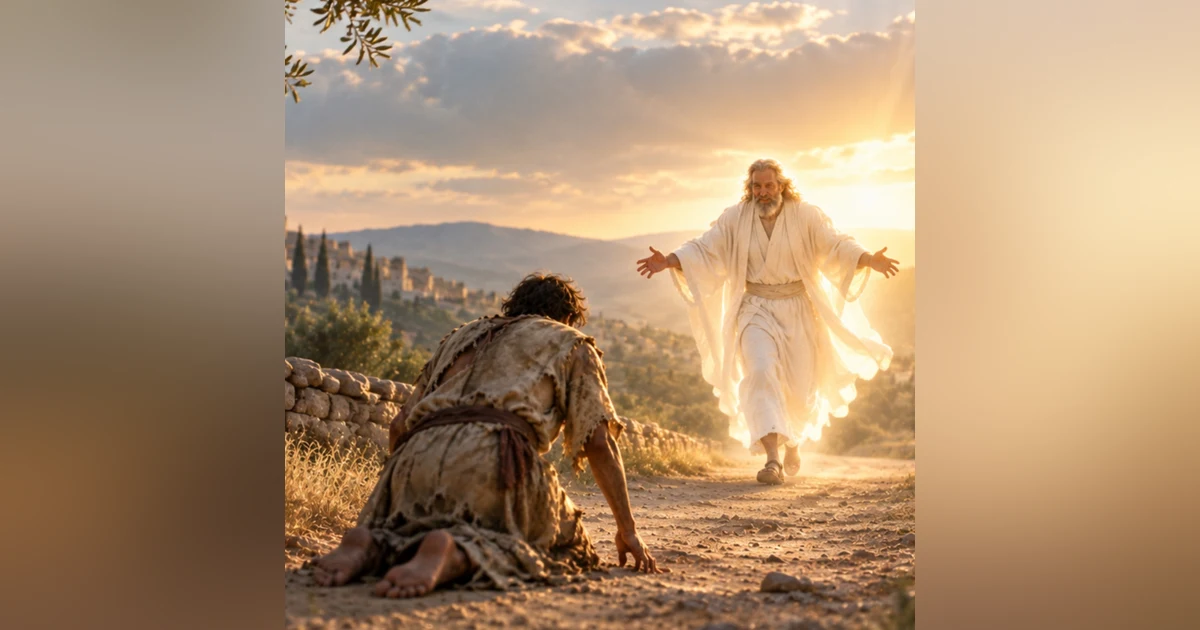



In the previous episode, the Busses discussed the Lord’s Prayer which begins with, “Our Father…” But what does it really mean to have the God of Heaven, the Creator of the Universe, as your Father?
Join Sharon and Philip as they explore what the Scriptures say, and what God says about Himself, as our loving and merciful Father. They’ll discuss the compassionate nature of God that goes far beyond just feelings toward us, and how we can reflect our Father’s heart to the world as we allow Him to pour His love into us. Every human being was raised by an imperfect Father, so you probably have a father-wound of some kind. But here’s the good news—He is not like your earthly father!
Now is the time to let your perfect, compassionate Heavenly Father love you into healing so that you can co-operate with Him in the Spirit and introduce those around you to His love for them too.
*A special note about ethnicities and Kingdom Culture: Revelation 5:9 that says every nation, kindred, and tongue will be worshipping together at the throne. We will be recognizable by our ethnicity, but we will all be one in Kingdom Culture!
EMAIL: feedback@globaloutpouring.org
WEBSITE: https://globaloutpouring.net
Related Links:
Feeling led to give? Partner with us here!
Podcast Episode 334: “The Foundational Prayer to Our Father”
Heaven Encounters by Randy Kay
Battle for Israel by Lance Lambert
CONNECT ON SOCIAL MEDIA
Global Outpouring Facebook Page
Global Outpouring on Instagram
0:00 He understands what you've been through. He's not sitting up there unaware of what you're going through. He is right next to you constantly, constantly. He's as close to you as the oxygen in the air you breathe. So just breathe. God promises in Joel 2 .28 to pour out His Spirit on all humanity. Welcome to Global Outpouring. Were we content for that Thomas outpouring? We equipped for that outpouring so that we may engage in that very outpouring. I'm Philip Buss. And I'm Sharon Buss. Welcome to the podcast today.
0:40 We're so glad that you're with us. We're going to go a little bit deeper in what we touched on in our last episode, where we were talking about the Lord's Prayer or the Our Father. So we want to go a little bit deeper into Our Father. Our compassionate Father. Thanks so much for joining us today. We're really excited to have you with us. And we hope that you're excited to be with us. We want to make sure that we are building community with you. So if you haven't already done so, go to our website, globaloutpouring .net and subscribe to our email list so that we can stay in touch with you, keep you informed of what we're doing and what God has in the vision moving forward for the global outpouring. And if you're feeling led to, we would be so grateful if you would send a donation. There's a donation button there as well. And if you want to help us to cover the costs of this podcast, you know, most of the time we're just having to dip into our general fund to pay for this podcast. So if you would help us, we would be so very grateful to continue to make these. And we feel like we're reaching the nations. The last time we looked at our stats, hardly ever look at our stats.
2:02 We had reached 18 nations in the last 30 days. So we're excited about that. And we know that over time we've reached almost 190 nations, maybe more. We're really all about the outpouring of the Holy Spirit all over the world. So join us in helping to reach the nations with this podcast, because we want to equip you. We want to equip the nations to help people Get the job done as the Holy Spirit is being poured out on all flesh. So today, we're going to talk about our compassionate Father. Last time, we were talking about our Father who art in heaven, and we went right into our Father and talking about Father. But I feel like we kind of missed the word our. That's O -U -R, not H -O -U -R. It's about our father.
3:01 He's our father. He's your father. He's my father. He's the father of everybody on the planet. It sounds funny, but I like to say it, everybody who has a belly button. You know, he's the one, and we talked about this last week, but he's the one that makes sure that when a father and mother come together, And the sperm and the egg come together. He's the one that provides the flash of life, the flash of light. He is our father. He is the one that relates to all of us. So every single one of us, our brothers and sisters, we're related to each other because we have the same father. Every one of us have the same father. And Jeremiah 32 .27 in the ASV.
3:53 Philip, would you read that? I am Jehovah, the God of all flesh. Is there anything too hard for me? No, nothing's too hard for you. But he is the God of all flesh. He is the Father of all flesh. And what does Acts 17 .26 -28 say? And he has made from one blood every nation of men to dwell on all the face of the earth. Yes. And has determined their pre -appointed times and the boundaries of their dwellings, so that they should seek the Lord in the hope that they might grope for him and find him, although he is not far from each one of us. For in him we live and move and have our being, as also some of your own poets have said, for we are also his offspring. That's right. And that is from Paul's sermon. in Athens when he found that all of the Athenians were busy worshiping all kinds of gods, and they even had an altar to the unknown god. And he says, I'm going to tell you about that one. And so he's busy telling them about the unknown god, and he's trying to help them to understand that there is one god. He didn't specify that he's our father, but that's who he is. And I love what it says. In the King James, in the New King James, it says he has made from one blood every nation of men to dwell in all the face of the earth. There are other translations that say he has made from one man, which means
5:26 Adam. And Adam and Eve are one because they started out as one. And when they were joined, they were one anyway. Yeah, it says further on right after they. Made the big bugle that be called burning. Exactly. Exactly. And some translations also, and I think this is the most accurate from the Greek, that he has made from one every nation of men to dwell on all the face of the earth. So he's our father. We relate to every single person on the planet. And we have to realize that. We have to realize that he... wants us to view other people as our brothers and sisters, everybody. It doesn't matter what kind of culture we come from. Too many times our cultures divide us and make walls in between us and ancient hatreds and grudges, those kind of things, divide us.
6:26 And that's what the enemy of God wants to do. He's God's enemy, so that makes him our enemy because he hates God and we're made in his image. Made in God's image, of course. So he wants us to regard other people. as someone that we should be separated from. When God is trying to show us that, you know, he's going to pour out his spirit on all flesh, and all flesh relates to each other, and we're one family. So, you know, when we get to heaven, there will be no cultural diversity. Sorry. We're going to be living by heaven culture. And that's part of the prayer that we were discussing last week about thy kingdom come or your kingdom come. Your will be done on earth as it is in heaven. In heaven, there are no cultural differences between us based on the cultures that we had on the earth. There's no racial differences. And let's get it right.
7:29 There's only one race, and it's the human race. Skin color has nothing to do with race. So all of this push about racial prejudice, it's not really racial prejudice. It's cultural prejudice. And, you know, it's got to be done away with because it's not kingdom culture. In kingdom culture, we are one. We are one flesh. We are one people. on the earth and God made us in his image. So that makes him our father. So, you know, let's erase all that stuff because that needs to go away. We don't need to live with that kind of thing. So I love the fact that people who have been to heaven and come back to tell about it, they all express that they feel like when the Lord is looking at them. You're the only one. Yeah, like they are the only. Yeah, like I'm God's favorite. I'm God's favorite.
8:31 But yet they also know in the same moment that he feels the same way about every single one. Yeah, that's amazing. Yeah. You know, a lot of these, it was out of Manu Kay's book of the testimonies of people who went on, and you hear that on different ones. It's true. It's me. You know, it's me. Yeah, I can hardly wait to have Randy Kay on this podcast. We're looking forward to it. I know it's going to happen, just don't know when. So this is so significant about kingdom culture, about on earth as it is in heaven. And that's what we have to cultivate. And we, you and I, Philip and I, all of us, have a responsibility to find that. place in the presence of God where we are so fellowshipping with him that we're getting kingdom culture infused in us, that it becomes part of our nature. Remember where it talks about that we are partakers of the divine nature. So he's our father, and because he's our father, we need to grow up to be like dad.
9:49 You know, he wants us to grow up and work with him in the family business. So, of course, the family business is all about redeeming the earth and redeeming mankind and destroying the works of the devil. For this purpose was the Son of God manifest to destroy the works of the devil. So the Son of God, Jesus, started that process, but then he gave us authority to cast out devils. So this is part of our job, but we do it through the power of the Holy Spirit, through the leading of the Holy Spirit. Don't just go out there because you've been told you've got the authority. Go out there because he sends you and he's given you instructions and showed you how to do it and showed you what his plan is and how to do it. So, you know, walk with the Spirit of God.
10:43 Because if you do it just out of your head, that's walking in the flesh. And we're supposed to walk in the spirit and not in the flesh. Amen? Amen. So what does Malachi 2 .10a say? Every not all one father has not one God created us. We all have the same father. So there it is, Exodus 33 .19. Then he said, I will make all my goodness pass before you, and I will proclaim the name of Yehovah before you. I will be gracious to whom I will be gracious, and I will have compassion on whom I will have compassion. Yes. And Philip and I have been reading Randy Kaye's book. Oh, dear, I've forgotten the title of it, but we'll put it in the show notes in the description.
11:34 I think it's 140 testimonies of people who have had near -death experiences. What do they call them, Andy? NDEs, yeah, near -death experiences. And so many of them were, and Randy Kay himself, he was an agnostic, and yet he had an experience with God. Yeah, so many of these, I mean, all of a sudden they're... They're before the Father, and they were not what they're supposed to be. Right. That's mercy like we do, not others. We don't get this because, you know, in our minds— You're not saved, you're going to hell. Yeah.
12:18 The moment you die, it's either heaven or hell. Depending on the choices you made, boom, and it's done. But so many of these experiences, they are meeting Jesus. Or they're meeting the Father and he has compassion on whom he will have compassion. And he's gracious to those that he's going to be gracious to. Bottom line is he's trying to get people in. He's not trying to get people to go to hell. He does not want that. He doesn't want anybody to go to hell. It was made for the devil and his angels. So he wants people to come to heaven with him. He's their father. He's our father. And he has compassion.
13:04 That's the point. That's the title of this. We're going to go on and talk some more about his compassion. But he says, I'm going to have compassion on whoever I want to. And one of my dear, dear friends many years ago, Darlene Brown, she said, honey, God do what he want to do. And that says it so well. Yeah, I see it from time to time. Honey, God, do what he want to do. And really, that is the bottom line. His ways are so much higher than our ways. His thoughts are so much higher than our thoughts. We don't get it most of the time. We don't get what it is that he's trying to say. We don't get what it is that he's trying to do. So many things happen. Especially deaths and tragic accidents and diseases and things.
14:03 We don't understand what's going on. And there are some answers that we understand to a degree and some things we just don't get. But God do what he want to do. And so I just embrace that. When I don't understand, many times, many, many, many times, especially in times when I've got mental turmoil, and it happens from time to time. Brain chatter. Brain chatter. All I can think of to say is, Father, I don't understand, but I trust you. Yeah. That seems to settle things down for me quite a lot. I don't understand, but I trust you. So there's lots of things we don't understand. Just learn to trust because you can't go wrong. You can't go wrong. He is faithful, faithful, faithful. You can trust him.
15:07 Yes. Absolutely trust him. So what does Psalm 103, 8 through 14 say? The Lord is merciful and gracious. slow to anger and abounding in steadfast love. He will not always chide, nor will he keep his anger forever. He does not deal with us according to our sins, nor repay us according to our iniquities. For as high as the heavens are above the earth, so great is his steadfast love toward those who fear him. Fear God, you know. As far as the east is from the west, So far does he remove our transgressions from us. Hallelujah. As a father shows compassion to his children, so the Lord shows compassion on those who fear him. For he knows our frame.
15:56 He remembers that we are dust. Yep. Absolutely. I feel like dust sometimes. Yes. I learned that scripture a long time ago in the King James, and it says, As a father pitieth his children. So the Lord pitieth them that fear him, for he knoweth our frame, he remembereth that we are dust. That's a whole lot of eths. But the idea is that it's kind of like pity. You know, when a little child is tired and it's getting to bedtime and they can't keep it together anymore and they start to cry. You know, you can have compassion because you know they're tired. You're not going to spank them for crying. You're just going to pick them up and say, they're, they're, they're.
16:44 Okay. And you're going to put them to bed because that's what they need. And so that's how our father is with us. He knows, he knows what we're going through stuff. He understands. He understands. He understands because he knows he made us. So he knows that we're just a lump of clay. We're dust. And dust can't always keep it together. So, you know, this is where he's compassionate. He understands. He understands what you've been through. He's not sitting up there unaware of what you're going through. He is right next to you constantly, constantly. He's as close to you. As the oxygen in the air you breathe. So just breathe. When you need him, just pause and breathe and recognize that he is there and he's compassionate. He cares about what's going on in your life. He's your father and he really is really tuned in and he knows how to fix it and he knows how to comfort you. In the trauma, he knows how to comfort you in the pain. So let him. Let him comfort you. Just receive him. Receive what it is that he has to offer to help you through this, because that's the whole point. He wants
18:16 you to go through it. It's not that he's excited about what you're going through. But he wants you to go through it and get to the other side. And there will be amazing rewards for the fact that you have gone through it, especially if you're reaching out to him while you're in the process. You have this opportunity to go through this test, go through this pain, go through this trauma, whatever it is, go through this betrayal. Lots of times it's betrayal, and it so hurts you. Oh, my, it hurts. But he wants to give you the grace to forgive. And he wants to help you go on to victory, to be an overcomer. Because if you don't have anything to overcome, you'll never be an overcomer. Bottom line. Okay. So I love Psalm 102, 13. That's just a huge one to me. We'll just take a little quick bunny trail.
19:14 You will arise and have pity on Zion. It is the time to favor her. The appointed time has come. That's right. And that word pity is the same word in the Hebrew that's also translated compassion. So I love Psalm 102 .13 because it's talking about the time. There's a set time that God reaches out and has mercy upon Israel. And we have seen it in the last 150 years, say, about that where where the ingathering of the outcasts of Israel has come, and they're still gathering. And this is a God thing, and people who don't get that, people who think that the church has replaced Israel, have completely missed it, completely missed it. They do not understand that we Gentiles and the church have been grafted into the root of Israel, but we do not replace Israel. And Jesus is still the king of the Jews. And Jesus said to the sheep and the goats, the parable of the sheep and the goats and the ones on the left hand and ones on the right, it has to do with how you treated his brethren. So the tribe of Judah is what we see as the Jews, mostly.
20:41 You'll find other tribes that still know who they are, but most of them have lost their identity. But particularly the Jews, the tribe of Judah. and Jesus is the King of the Jews. It was said over him by the wise man at his birth, and it was said over him by Pilate, and it was written over his head as he died for us, that he's the King of the Jews. So don't ever forget how he relates to the Jewish people. He's their king, and he's coming back to be their king and the king over all the rest of us. So how we treat Jewish people is significant. It's very significant.
21:27 Do we believe that everything that's done in the state of Israel is all... No, of course not. And, you know, you've got squabbling and you've got left wing and right wing and you've got secular and religious. And super religious. Yeah, and super religious. But the bottom line is he's appearing to people. He's showing himself for who he is. When we first started going to Israel. The Messianic community was very small, but we have watched it grow. Hundreds and thousands have come to faith in Jesus. Are they perfect?
22:08 No. Are you perfect? No. Am I perfect? No. So, you know, let's set our preconceived ideas aside and just let God be God and relate to Him and help Him to relate to our brothers and sisters in Him because He's our... And he's a compassionate father. He's had pity on Zion. He's had compassion on Zion. And the time for their ingathering has come. It's significant. That word, the appointed time, is moed. And it means, it literally means an appointment. literally means an appointment. So like the feasts are moedim, they're moed times, and they are appointments for us to meet with God. So this is a time of appointment because he's had compassion on his people, they've gone through enough, and it's time for... this anti -Semitism to stop. And we need to be praying into that. You need to be praying into, you know, whatever's going on in your sphere of influence.
23:12 If there's anybody that's anti -Semitic, it's time for them to repent. Help them to repent. Hallelujah. Think of God as a parent, okay? A parent, a father, father and mother. Okay, a good parent is going to make allowances when they know that their child is like hungry, right? Children get, I already mentioned being tired, but children also get cranky when they're hungry and sometimes adults too, too. So making allowances when having compassion. If somebody is misbehaving and it's before dinner, give them something to eat. chew on. My mother used to say, I'd come into the kitchen, she's cooking dinner. And I'd say, mom, I'm hungry. And she would say, get a glass of milk. And that would satisfy me until supper. So it was a compassionate thing. She had an answer for me that would keep me from being cranky and satisfy me and give me the patience to endure. until dinner was ready. But this idea of compassion, the word compassion in the Hebrew, in most cases, is racham, and it's related to the same root where we get the word in Hebrew for womb. And so it's a deep, loving compassion
24:48 that like a mother has. And God said that about himself on Mount Sinai when he was talking with Moses, showing himself to Moses when Moses says, show me your glory. And we've talked about this before. But the first thing that he says about himself is this word, Raham, that he's talking about his compassion. He's talking about this love and care. And it's not just a feeling. It also has to do with how you handle a child, how you handle a baby, right? So, you know, you're going to touch the baby. The baby needs to be touched. If you're just leaving the baby in the car carrier or in, you know, the swing or whatever, and you never touch the baby, they're not going to get the full... development that they need.
25:42 They need to be touched. They need to be handled. They need to be patted. They need to be stroked. They, you know, that little stroke when you're touching the face. I get that, too. Yes, you do. And, you know, that little touch that kind of makes them smile. It's not just only. a feeling that a parent has. It's a feeling that moves into a touch. It moves into an action. So that's how our father is. He is compassionate, and he's not just going to feel for you. He's going to do something about it. Amen? And my dad was an amazing man when it comes to babies. He loved babies. He always wanted to hold babies. And if somebody was in church and the baby's crying, he would say, can I hold the baby? And he would quiet that baby. He had a gift for quieting children.
26:43 And he would hold the baby up over his shoulder and he'd pat the baby. And he'd say, there, there, there, there, there, there. And if he was trying to put the child to sleep. He tells this about me all the time. He'd say so, he'd walk back and forth, walk on the floor, patting, patting, patting. So tired and so sleepy and so cranky and so tired. And, you know, the droning of his voice would help to put you to sleep. And, you know, he just had that gift. And our Father, our Heavenly Father, is every bit as good, and I'm sure he's better. He knows how to soothe us when we're going through something. When I hear about somebody who has lost a loved one, I always write to them and say, may you feel the embrace of our Father's everlasting arms.
27:52 around you, holding you, holding you up and helping you through this, comforting you. You know, it's his touch. It's not just like a breeze of the Holy Spirit or the weight of his presence. It's his touch, his touch that touches our hearts, that helps us, that comforts us. Because he's compassionate. Amen? So, would you read Psalm 78, 38, please? But the Lord was gracious to them, had compassion on them, and regarded them because of his covenant with Abraham, Isaac, and Jacob, and would not yet destroy them or cast them from his presence. No, he was tempted to. Yeah, I'm sure he was. That was 2 Kings 13, 23. Would you read Psalm 78, 38 in the New King James? But he, being full of compassion, forgave their iniquity and did not destroy them. Yes, many a time he turned his anger away and did not stir up all his wrath. Yes, amen. I can't think of God getting mad in Galatia with shake.
29:07 Universes would rattle. And they will, yet. But I like using the Young's literal translation. because it's word for word, a literal translation. It's not easy to read. The word order is kind of weird because it's Hebrew word order instead of English. But sometimes you get a little bit more meaning out of it. So I put this one in the notes. Phil, could you read that one? And he, the merciful one, pardoneth iniquity, and destroyeth not, and hath often turned back his anger. And waketh not up all his jury. So where it says in the New King James, he being full of compassion, it says he the merciful one. He is the merciful one. He is full of compassion.
29:59 And he's merciful. And he pardons iniquity. You know, there's such a need for us to repent of our iniquity. And this is something we need to pray into as we contend for the outpouring, that God will move on people's hearts to bring them conviction and repentance, because that's what's going to loose the whole outpouring. When people realize, oh, I didn't know you were real. I'm sorry. I'm sorry. I'm sorry. And, you know, so many people have been told that God doesn't exist or that he's far away and he doesn't care. He started it and then he left it up to us. Spirit leaves the body. Yeah. Realize. Yes. They understand the truth in that moment. Very true. Very true.
30:57 Isaiah 14 .1. For the Lord will have mercy on Jacob. and will still choose Israel and settle them in their own land. The strangers will be joined to them, and they will cling to the house of Jacob. That's grafted in. You know, I was praying just days before I began writing these notes, and I said, Lord, I know that you must surely have something in the Hebrew Scriptures, in the Old Testament, That correlates with Romans 11. And I'm just questioning him. Where is that?
31:39 I want to know where it is. And he led me to this scripture. The strangers will be joined with them and they will cling to the house of Jacob. So the house of Jacob is the root and the grafting in is the clinging. We're clinging to him because he is compassionate, and he doesn't want anybody of any of the nations to go to hell. He wants what he established in the house of Jacob to be available to all nations. That's what he promised to Abraham. We talked about it in the last episode, about how God called Abraham. He called him Abraham, the father of a multitude, because you are going to be the father of many nations. And it's this many nations thing that grafts us in. Amen? So this word stranger here, it says the strangers will be joined with them. It just means foreigners. So it's definitely, it's not the same as the word goyim, but it's definitely meaning people of different. cultures, different people groups. So that's how we're grafted in, into the house of Jacob. So I love Isaiah 49, 15. Would you read that, please? Can a woman forget her nursing child and have not compassion on the son of her womb? Surely they may forget, yet I will not forget you. It is.
33:11 And honestly, as a mother, If you get separated from your child, if you're a nursing mother, if you get separated from your child for long enough, you will not forget that baby. Because your body is still producing what that child needs for sustenance, and it can become painful. But God is saying, even if they forget, I'm not going to forget. I will never forget you. Don't ever think that God has forgotten you. Don't listen to that lie. It's a lie. If you're hearing that in your soul, if you're hearing that in your head, it's a lie. Your Heavenly Father has never forgotten you. He is waiting, waiting, waiting for you to turn to Him and say, Oh, Abba, Abba, help me. I need you. Abba, you know, Father.
34:12 Father, I need you. Father, help me. Because, you know, especially if you have had a father problem in your life, if you had an absentee father or an abusive father or even a passive father that just didn't stand up for you, our father is not that. I remember a marvelous psalm about broken men and how broken men break their children and who grow up to be broken men. who will break their children. And it's just this constant repetition cycle that goes generation after generation after generation. I'm not like your father. And that's what he says. I'm not like your father. I'm not like that. I will not do to you what your earthly father did. He is our loving, compassionate father. Our Father.
35:07 And He's doing the same thing for everybody. And as you experience more and more of His compassion, He's going to use you to serve that compassion to others. That's one of the things that happens in heaven is, you know, people greet one another thought to thought, how can I serve you? And, you know, the other person responds and says, how can I serve you? And, you know, if there's some way that you can serve each other, you do. Because that's how heaven is. We are all about serving. And that's how God designed us originally, just like in heaven. He designed it to be that way on earth. So the more we understand that principle, the more we can serve one another, we can serve what God has already worked in us and help people come into freedom, come into deliverance, come into salvation, come into...
36:01 getting free from stuff that has been a problem, to disciple people, bring them into maturity so that they can help others to come in. And I love the testimonies that came out of the Welsh revival and some of the other early revivals of the 20th century, where particularly down in the coal mines, somebody maybe got saved last night in the church, and they've come to work. And somebody down in the coal mine is all, all of a sudden they come under conviction and they're weeping and they're crying and they're moaning. Oh, oh, what a sinner I am. Oh, God have mercy.
36:42 Oh, oh. And the person who just got saved last night comes to help them accept Jesus as their savior and helps them be birthed into the kingdom. We don't have to wait until. We've been to Bible school before we can help other people get saved, you know. Give them what you have. Give them what God has worked in you. Give them your testimony. Your testimony carries a weight because people just need to hear what God has done for you. So don't backpedal. Don't hesitate. to share with people what God has done in your life. Sometimes we feel like kind of a nudge, like maybe I should say something, maybe I should share something.
37:31 And the natural man, the fleshly person, begins to say, oh no, I'm scared or I'm timid. And that scripture, God has not given us a spirit of fear, but of power and love and a sound mind. In the Greek, that word fear is really timidity. Oh, okay. So God hasn't given us timidity. That's not from God. He needs to be bold. Yes, especially with the power of his Holy Spirit. That's what the people in the book of Acts were praying for, boldness. And Jesus said that you shall receive power from on high and be my witnesses. That's what... The power is four, is to be witnesses.
38:15 So as we gather our courage, and maybe you only just have a little bitty bit of courage, share. Once you start, once you start, it becomes easier and easier. Yeah, I remember Tabby, one of our youth, when she first started coming to our youth retreats, she was just so shy and all that. And when she came up to give a testimony or something, she... She couldn't look at the crowd. She turned around and spoke it because she didn't want to look at the people. But now she's just getting bold as a lion. Absolutely. Because she's practicing. And the only way to get bolder is to practice. It's true. And just do it more and more. So what if you get rejected? It's just like Jesus was rejected by the disciples. You know, they didn't stone you like Apostle Paul. Yeah. You know, and the more and more you do that, you know, the more bold and the more chutzpah you start getting in yourself. You know, it's just like start a conversation, you know, talking and say, hey, do you know Jesus? Right. You know, or do you know Jesus loves you? Mm -hmm. And just kind of switch it over and now you're talking to him.
39:25 It's not like walking up to somebody and says, hey, do you know Jesus? Yeah. You know, kind of slap. You know, slap them a little easier, you know. Yeah, start the conversation with something else. Yeah, and I found that works. Yes, yes, it does. You're very good with that. I'm always impressed when you start those conversations. It's hard for me to start a conversation, but I'm getting better. Yeah, no neck of the woods at Walmart. Did the Razorbacks win last week or something like that? You know, there's always something you can start a conversation with. Yes. I love Isaiah 5410. Would you read that one, please? For the mountains shall depart and the hills be removed, but my kindness shall not depart from you, nor shall my covenant of peace be removed, says the Lord, who has mercy on you.
40:14 He has mercy and compassion on you. And, you know, the mountains and the hills are going to go away before his compassion goes away. Yeah. That's pretty strong. It's pretty strong. Jeremiah 42, 12. And I will show you mercy, that ye may have mercy on you and cause you to return to your own land. See, that's another. We have to recognize that Israel came back to their land because of his mercy and compassion. It's because he loves them. It's because he has a covenant with Abraham, Isaac, and Jacob, and he promised. promised that he was going to give that land to those descendants of theirs. And, you know, it's just mind -boggling to me that people don't get it that the very existence of the state of Israel right now is nothing but a miracle. If you follow the history of the modern state of Israel, it's miracle after miracle after miracle.
41:18 You can see the intervention of God's hand. over and over and over. This little, little tiny piece of real estate about the size of New Jersey with a handful of people in it that were mostly immigrants coming from World War II, having been in concentration camps and things like that. Here they are, and when they declare their statehood, you've got all of these thousands and thousands and hundreds of thousands of soldiers that are ready to attack them. And they attack them all the way around from Syria and from Iraq and from Jordan and from Egypt and from, I think, Libya. And all of these different nations arrayed themselves against this little ragtag bunch of people. And if you look at a map, here's little Israel, this little sliver, and all around it are... The land mass looks like 500 to 1, you know? Oh, at least.
42:23 You know. At least. And they had hardly any arms. How are they going to win this? It's an absolute miracle. And we've heard that they study Israel's battles, but they can't use them in their books because there's too much supernatural stuff that goes on that they cannot explain. Right, and the war colleges. The war colleges. Yeah, they'll study different wars. There's no explanation for Israel winning the wars that they've won because it's all divine intervention. Out of 1 ,500 Syrian tanks against, I think it was just a couple hundred Israeli tanks. Yeah. And God gives them the wisdom and they all get taken out. Yeah. And when it came down to the very end of that one tank battle during the Yom Kippur War. I think there's four tanks. Yeah. Something like that. Yeah. Yeah. It's just miracle after miracle after miracle. So you know that it's the compassion of our father that is compassionate on his children, the children of Israel. And if you look out there on Amazon, you can find the book called Battle for Israel. Yes. By Lance Lambert. Lance Lambert. That's a detailed description of the 1973 Yom Kippur War, which was a surprise attack. All the miracles that happened in that war, it's an astounding, because it's all documented with facts. Yes. And it's a real eye -opener.
43:53 I highly recommend it to you. Amen. Amen. So let's move on to talk about our Father's compassion in the New Testament. We've been looking at all these Old Testament scriptures, Hebrew scriptures. So in the New Testament, the word for compassion. From the Blue Letter Bible, they have a part of it that explains the outline of biblical usage. And this one is very interesting, what the word compassion means. It says to be moved as to one's bowels. And we're not talking about a bowel movement. This is to be moved in compassion in your gut, okay? Pardon the use of the word. Some people object to that, but hence to be moved to compassion.
44:40 have compassion for the bowels were thought to be the seat of love and pity. And then the Strong's definition, I'm not going to attempt to pronounce this Greek word. It's pretty long. And it says to have the bowels yearn, figuratively feel sympathy or to pity, to have or be moved with compassion. So it's a feeling in your... your innermost being, okay? You could call it your gut, but it's kind of like having a gut level feeling. Yeah, that's good. Right? So compassion is something that is deep inside of you that God gives you that you can be moved by this, okay? So here's a few examples of how Jesus showed compassion. Matthew 9, 36. When he saw the crowds, he had compassion on them because they were So remember that Jesus is God in the flesh. He is our Father having come to earth in the flesh. Now he's still relating to God the Father to show us what it's like, but he is the fullness of the Godhead bodily.
45:58 So he's having compassion on the crowds because they're like a sheep without a shepherd. And he's their shepherd. Remember Psalm 23, the Lord is my shepherd. Compassion. It's our Father has compassion. He is our shepherd. And then it goes on to say, you know, that Jesus said, I'm the good shepherd. So, Matthew 14, 14. When he went ashore, he saw a great crowd, and he had compassion on them, and healed their sick. Okay. So, he has compassion to bring healing. And if you need healing, he is absolutely compassionate towards you. So remember, he's all around you, just like the oxygen. Just breathe in his compassion. Breathe in his presence. Put your trust in him because he is all around you. If you've made him your savior, he's inside of you and you are in him.
46:58 And so he has you sandwiched. inside of his amazing power to heal. And Jesus himself is still bearing the scars of what he bore. So he's still walking around with those stripes by which you're healed. So if he is inside of you and outside of you, it's kind of like the power to heal is arcing across you. from one power source to the other. It's arcing across you to bring healing into your body. So just receive it right now. Receive that healing because he has compassion on you. Amen? And I remember a minister that was talking about how he was asked to pray for someone. And he said he felt the compassion of the Lord come up inside of him to pray. For whatever this, I mean, it was a serious situation. I don't remember what the healing need was, but it was very serious.
48:02 And he felt the compassion of the Lord, and he knew that because that compassion was there, this person was going to be healed. So as you're praying for people, ask the Lord to give you his compassion that will bring that healing power into the person who needs that healing. So Matthew 15, 32. What does that say? Then Jesus called his disciples to him and said, I have compassion on the crowd because they have been with me now three days and have nothing to eat. I am unwilling to send them away hungry unless they faint in the way. Amen. Amen. So he has compassion even when we're hungry. Yes. He knows these people have stuck with him fasting for three days. And he doesn't want them to stumble and be faint when they're heading back to their home. Yeah, there's no fast food place anywhere. No. No.
49:06 Not on that way. Not on that road. So that's when he multiplies the loaves and the fishes for them. He makes a small thing into enough to feed everyone because of his compassion. His compassion enabled him to do that miracle. Think about the importance of compassion. Our Father has compassion to do miracles. So if you need a miracle, whatever kind of miracle, you need a multiplication of finances. I can't tell you how many people I have heard testimonies of that they counted their money and it was one amount.
49:49 And then they counted it again and it was more. And then they counted it again, and it was more. And they counted it again, and it was more, until they got what they needed to meet the need. Our Father has compassion on all these things, whether they're great or whether they're small. He has compassion on the littlest things and on the biggest things. He is compassionate, and He's our Father, and He's going to see to our needs. You know, if you had a father that was a penny pincher, and he wasn't going to meet your needs in a good way, it makes it a little more difficult for you to think that God is going to meet your needs. But he's not like your father. He's not like your father. He is compassionate, and he is a good father and a good provider. Remember, Yehovah Yireh, Jehovah Jireh. He's the God who...
50:48 sees forward to the need and then sees to it. That's what the word means. Yirei has to do with seeing. When we think of provider, we think of someone who provides. But provision is pro, like ahead, vision. He sees ahead. And he sees ahead to what you need. And he's already got a plan. He's already got the plans there, ready, waiting to take care of the need. So that's who he is and that's what he does because he has compassion. He's our compassionate father, our compassionate father. And he'll do for you what he'll do for me. He'll do for me what he'll do for you. He'll do for everybody, even if we don't trust him.
51:34 He's still providing, right? His word says that he sends rain on the just and on the unjust. So he's everybody's father. Even if they don't even know he exists, he's still their father. He was the one who provided the life for them, the lifelight. And so he's their father. And it's important for us to participate with him in the family business of bringing everybody home to heaven. But even before that, to bring them into the fullness of their purpose while on earth. Let's look at Luke 7, 11 -17. Soon afterward he went to a town called Nain, and his disciples and a great crowd went with him.
52:20 As they drew near to the gate of the town, behold, a man who had died was being carried out, the only son of his mother, and she was a widow. And a considerable crowd from the town was with her. And when the Lord saw her, he had compassion on her and said to her, Do not weep. And he came up and touched the beer, and the bearer stood still, and he said, Young man, I say to you, arise. And the dead man sat up and began to speak, and Jesus gave him to his mother. Fear seized all of them, and they glorified God, saying, A great prophet has arisen among us, and God has visited his people. And this report about him spread to the whole of Judea and all the surrounding country. Oh, wow. Can you picture that happening? Yeah, that was amazing. Now, there's a little bit of a backstory that most folks don't learn, don't know. And I heard it when we were in Israel one time on a tour. And we were looking at this little hill. It's called the Hill of Moray. And Nain is on one side and Shunem is on the other side of this hill. So remember the Shunemite woman? Remember, Elisha was going past and she reached out and said, Come on and have dinner with us. And she saw that he went past that way a lot. And so she
53:51 decided that she's going to make a little room on top of her house so that he will have a place to stay when he's coming past. That's where you get the term we use, the prophet's chamber. The prophet's chamber, precisely. So then he asks his servant, Gehazi, what can we do for this woman? She's done so much for us. And so he says she doesn't have any children. So Elisha prays for her. She gets pregnant. She has a child. And as the child grows up, he's out in the fields with his father. And he has a heat stroke, apparently. And he comes back from the field and he dies in his mother's arms. And so she knows that she's...
54:36 going to go to the prophet, right? She's going to go to Elisha. So she puts him on Elisha's bed. That's a smart woman. She puts him on Elisha's bed where Elisha has laid. And she gets the donkey and she rides towards where she thinks the prophet's going to be. And she tells her husband, it's going to be okay. He doesn't even know that the boy has died. But she speaks words of faith. And she says, it's going to be okay. And she goes and she finds the prophet and she tells him what's gone on. And Elisha gives his staff to Gehazi and says, run on ahead of me and put it on him. And when Elisha gets there, he stretches himself over the child several times and prays.
55:24 And he comes back to life. Yeah. You know, that's amazing because you remember when the dead man was thrown into Elisha's grave. Yes. You know, his bones. He resurrected. Exactly. So, you know, Elisha had some resurrection power in him. Yeah. Yeah. In his bones. Exactly. So what happened in that time, in Shunem, Shunem, by the time Jesus came, Shunem wasn't much of a town or anything, but everybody remembered the story. So when Jesus heals this young man, here's the words that are being spoken that were recorded. By Luke, a great prophet has arisen among us. They're remembering Elisha. Because it was just a mile and a half or two miles away on the other side of the hill where this happened. And they're also saying God has visited his people. So this is a beautiful picture of the compassion of the Lord. Remember, he was moved with compassion to heal this, to raise this young man from the dead. You know, he could have just watched the funeral go by and, you know, waved at him. But he had compassion.
56:42 This compassion moved him. It was the compassion of our Father moving through Jesus. Amen. So Jesus told some parables. And in the parable of the Good Samaritan, you have the story of the man that was beaten till they thought he was dead, and the thieves stole everything that he had. And he's on his way to Jericho, and a priest goes by and doesn't do anything, and a Levite goes by and doesn't do anything. And I think, in all fairness to them, they're thinking they're on the way to the temple if they touch this dead body because they think he's dead. If they touch this dead body, it's going to defile them and they won't be able to do the job. So, you know, have a little compassion on those two guys. But here's the good Samaritan. The Samaritans were a people group that the Jews despised. And I presume that the Samaritans despised the Jews as well. But he was moved with compassion for this poor guy who had been beaten up. Because he's moved with compassion, he pours oil and wine in the man's wounds, puts him on his own donkey, carries him to the inn, pays for the man to be taken care of by the innkeeper. I mean, that's compassion. When you go beyond the call of duty, he had no duty to take care of this
58:14 man. Yeah, but it's because... Our Father. Our Father is compassionate. And it's our Father's compassion that helps us to go past those cultural barriers. So, you know, be a good Samaritan, right? And then we have the prodigal son. This young man, you probably know the story. This young man decides that he wants to go and live a little. And he says to his father, just give me my inheritance that I would get when you die. Just give it to me now and goodbye. I'm off and I'm going to spend your money on riotous living.
58:57 Which he did. And then he was, you know. He didn't have nothing. All of his friends left him then when he was out of money. And so he hired himself out to take care of pigs, which. You know, this is a good Jewish boy. He has nothing. He has no reason to be among pigs, right? But he's so hungry that he's ready to eat the husks that he's feeding to the pigs. And then he remembers. He comes to himself. He says, my father's servants are better taken care of than I am. I'll go back and volunteer to be a servant because I can't be a son anymore because I've already spent the inheritance. And so he... He goes back to his father, and his father sees him coming. And his father is moved with compassion for his son.
59:46 Because he's not going to think of his son as a servant. It's still his son. He's still his own flesh and blood. You can't take that away. And so, you know, the boy's trying to volunteer to be a servant. And the dad says, you know, calls the other servants and says, you know, bring the robe, bring the ring, kill the fatted calf. We're going to have a party. My son, who we thought was dead, has come back. So he was moved with compassion so much that he ran, which you don't just run. A father is not going to pull up his robes and run, but that one did because he's full of compassion. And this is how our father is. He is ready in an instant to be right there for you. He's already there for you. And so he's full of compassion for you. And all of this is a picture of what he designed us to be.
1:00:50 He designed us to be carriers of his compassion. That's one of the fruit of the Spirit. The first fruit of the Spirit that's mentioned is love. And I think compassion fits there, right? That we were made in his image to carry his compassion and to carry it to others and to give it to others freely. And so I just want to encourage you. that you are called to be compassionate. I'm called to be compassionate. That is not to say that we get out of our lane where the Lord has called us to be. But when you feel that compassion of the Lord, you need to act on it. Don't just be moved by what you see in circumstances, okay?
1:01:36 Circumstances can lead you off into human compassion that won't produce spiritual fruit. Okay? There's a difference between human compassion and God's compassion. And if we stay busy pouring out human compassion, we will never fulfill everything that our Father has given us to do. So just a word of caution, walk in the Spirit and not in the flesh. But I want to encourage you to do what the Lord shows you to do and how He shows you to do it. Let's pray. Father, in the name of the Lord Jesus Christ, we thank you for your compassion. We thank you that you are a compassionate Father, and that you are more than we can even imagine or think. Your ways are so much higher than our ways, and your thoughts are higher than our thoughts. Even as high as the heaven is above the earth, Lord, so much higher are your ways than our ways. So, Lord, we're asking you for a download of your compassion. a download of your Spirit. Pour out your Spirit on our listeners today. Pour out your Spirit on us. We need your compassion as well, that we will be led by your Spirit to do your work on the earth as it is in heaven. In the name of Jesus Christ, amen.
1:02:58 If you enjoyed today's podcast, Please subscribe, rate, and review this podcast on Apple Podcasts or wherever you listen to podcasts. Your review helps the podcasting platform suggest this podcast to other listeners who are also looking for a great move of the Holy Spirit. Check out our website at globaloutpouring .org to find out more information, read our blogs, connect with us, and donate. You can also browse our web store for life -changing anointed books. Until next time, this is Sharon Buss. And I'm Philip Bus. God bless you with his overwhelming loving presence.


