“Unleash the Mighty Power of Holy Communion” (333)
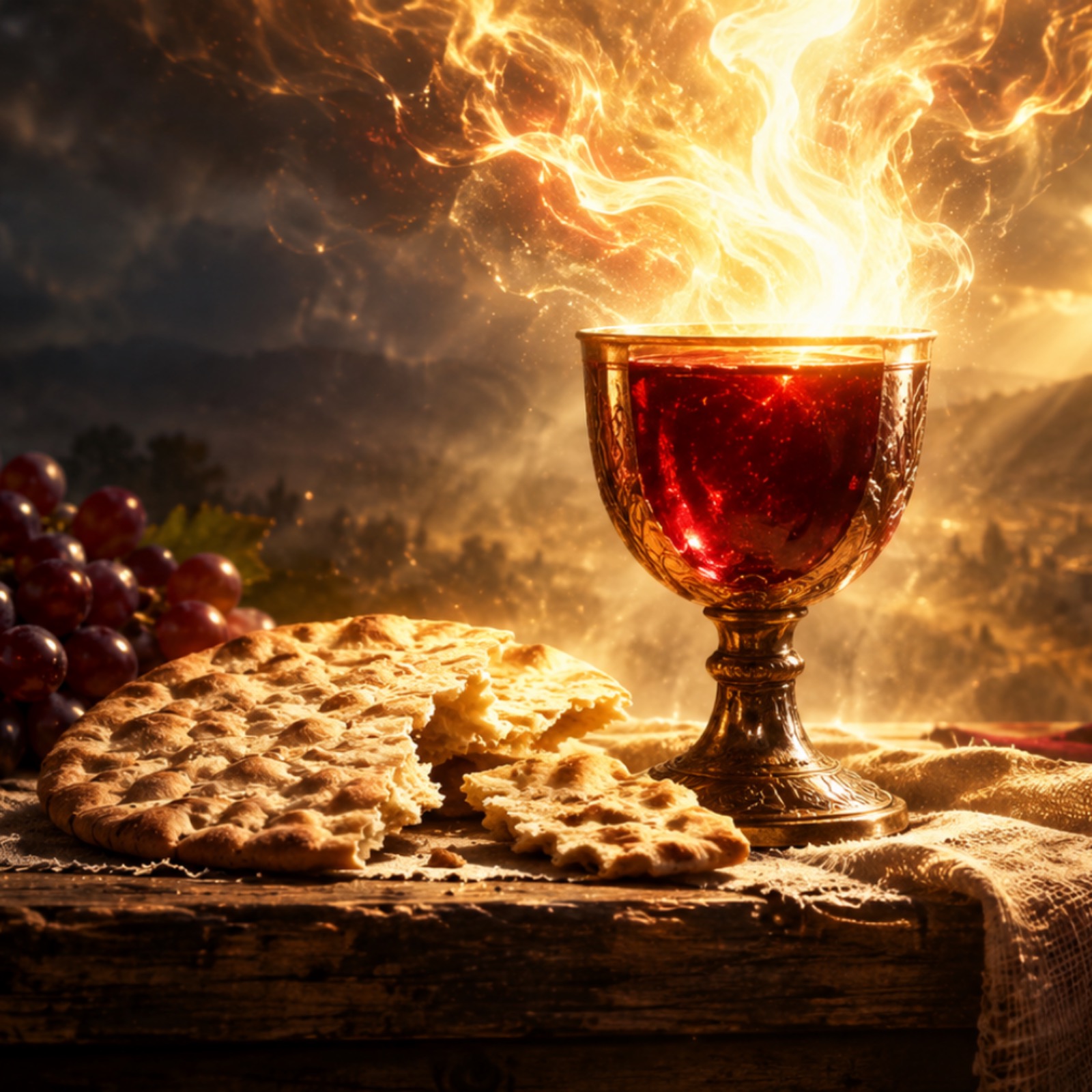


What is the point in taking Holy Communion, and just how powerful can it be? Holy Communion has been practiced for thousands of years as a symbol of the Body and Blood of Jesus given for us at the cross. But it’s so much more than just a symbol!
Join the Busses as they explore the Scriptures to uncover the profound spiritual and physical significance of Holy Communion, its power to heal, and its role in covenant and redemption. They’ll share personal testimonies of healing and deliverance, as well as prophetic insights to deepen your faith and understanding.
There will also be a special time of partaking in Holy Communion together at the end, so gather your elements and join us!
EMAIL: feedback@globaloutpouring.org
WEBSITE: https://globaloutpouring.net
Related Links:
Feeling led to give? Partner with us here!
Podcast Episode 84: “Cancer! The High Cost of Unforgiveness” with Shirley Smith Part 1
Podcast Episode 236: “Jesus Intervened Just Before They Died” with Shirley Smith
The Tribes of Israel by Gwen Shaw
Redeeming the Land by Gwen Shaw (Book)
Redeeming the Land by Gwen Shaw (PDF)
Podcast Episode 302: “Strategies for Defeating Your Enemy” (Part 5)
Jesus Demanded Graham Cooke, "Give Me Back My Stuff!" (YouTube)
CONNECT ON SOCIAL MEDIA
Global Outpouring Facebook Page
Global Outpouring on Instagram
0:00 We're supposed to drink deeply of His love, because that's what this cup is really all about. It's to drink deeply of His love, because that's what He gave for us. God so loved the world that He gave His only begotten Son, that whosoever believes in Him should not perish, but have. everlasting life, and it's everlasting life and the everlasting love of God. God promises in Joel 2 .28 to pour out His Spirit on all humanity. Welcome to Global Outpouring, where we contend for that promised outpouring, we equip for that outpouring, so that we may engage in that very outpouring. I'm Philip Buss. And I'm Sharon Buss. Welcome to the podcast today. We are so glad that you're with us. And we have something that's very exciting today. I don't know if we've ever done it before, but we are going to do it today. And we want to invite you to just push pause and go get the elements of Holy Communion, because we want to talk about the mighty power of the Holy Communion and about unleashing. the mighty power of the Holy Communion. So stop and get the elements, whether you use grape juice or wine or some other kind of juice or, you know, Jesus turned the
1:30 water into wine. Get what you can and get some kind of bread. We like to use, we like to use matzah, but it's not required. And just some kind of bread that you can sanctify before the Lord to be the connection. with the Lord Jesus as we unleash the mighty power of the Holy Communion. Thanks so much for joining us today. We're really excited about sharing this time with you. And thank you for tuning in and sharing your time with us. It means a lot to us. And if you haven't already done so, we encourage you to go to our website, globaloutpouring .net. Make sure that you have subscribed to our email lists. We have several to choose from. The one that goes out, you know, two to three times a week is probably the one you're going to hear from us best on.
2:25 We're still trying to catch up with some of those other ones. Like if you have emergency prayer requests and that kind of thing, we have an emergency prayer request list also. So do connect with us in ways that go beyond this podcast so that we can stay in touch with you and, you know, just you can get to know us better. And we love to get to know you better because you're important to us, listener. Wherever you're listening from in all of the world, you are important to us because you're important to our Heavenly Father. And so we'd love to hear back from you if you want to send us an email at feedback at globaloutpouring .org, or you can go to that page, globaloutpouring .net. and fill in the feedback form there and let us hear from you. Tell us where you're listening from. Tell us what's on your heart, if you have prayer requests, or if you want to invite us to come to minister where you are, or if you have an idea for us to do a podcast about, we'd love to take that to the Holy Spirit and see what He shows us. to bring for our podcast that will help to answer questions for you, help you to grow, help you to contend for the outpouring where you are and the thing that God has called you to do because we want to help to equip you.
3:42 That's what this is all about because the outpouring has begun already around the world, and it's going to continue to increase and increase and increase and increase like Niagara Falls, or more so, actually, more than that. So let's get into it. As we were having our devotion time this morning after breakfast, we were having communion. We try to do that every day. We don't always manage to, but it's our heart to do so. And as we were having communion and praying over the communion, it suddenly occurred to me, oh, this is something we need to do with our listeners and just enjoy the fellowship. I mean, communion It was a word that was coined by one of the early church fathers, and it means co or together and union. So it's to create a union together. And that's what it does for us as believers. We find each other more closely in the body of Christ.
4:44 And of course, we're having union with the one who gave his life for us. So we're going to go a little bit deeper in some things that maybe, you know, or... Maybe you don't know. We're going to hit a lot of scriptures, and we're going to talk about people's experiences with Holy Communion and all the ways that it can make a difference in your life, in the life of your family, and in your community. It's very, very powerful. So let's get into it. So one of the first principles that we learn in the scripture after the fall of man, after the fall of Adam. And Adam means mankind. It means male and female. I mean, it's both male and female. God called their name Adam.
5:31 Called their name Adam. That's interesting. And that was after the incident in the garden. Yeah, yeah. He called their name Adam. Called their name Adam. Yeah, if you go back into the source of the word, you find that... Adam, or Adam, comes from the word adamah, which means ground, out of which Adam was formed. And the word adamah, and I love this, as I was meditating about this podcast, this idea came to me, that adamah comes from the word a dome, I think it is. I didn't write it down, so I don't know the exact pronunciation from the Hebrew, but it means red. Okay. So you can think of the ground as being red, like made from red clay or red dust. And it is pretty red in the Middle East. It's kind of orangish in lots of places. But it also gave me the idea that, okay, we're going back to the ground out of which we were formed, you know, because of sin, our bodies go back to the ground, but it's the red stuff that makes the difference. Okay?
6:52 So our blood is red. And I remember hearing that during the days of slavery, that there were people that had this doctrine and teaching about People with dark skin didn't qualify as humans because this word Adam has this meaning of red. So if it's not obvious that you can blush, then you don't qualify. Well, that's nonsense. Yeah, pretty much. Because the Word of God says, I think it's an act, that he made all humankind of one blood. Yeah, there's different blood types, but there's one blood. There's one kind of red blood, and everybody who gets cut bleeds red. Yeah. Okay?
7:40 So this is a picture already at the very beginning of, you know, he didn't make us out of the green grass. He didn't make us out of, you know, black volcanic rock. You have to turn green, you know, you got a problem. Yeah, that's for sure. Because the person next to you. And he didn't make us out of some kind of purple plant. He made us out of red soil because he was looking ahead to where he would need to shed his blood for us because he's the lamb slain from the foundation of the world. So already you're seeing the power of his blood showing up right from the beginning, from creation, right from creation of man. The formation of man on the sixth day, right? He was made on the sixth day, and that's why we consider that six is the number of man, okay?
8:37 God just had to rest after him. Yeah. I don't think it's because he was worn out. I think it's because he was complete. I think he'd finished the job, and it's like, that was good. Let's just sit and think about this. But right at the beginning. We see after they fell and they realized they were naked and they found that, this is my interpretation of it, they found probably that the fig leaves had dried up and were itchy, that God made them coats of skins. Now, there are some people that interpret that, that our skin, this skin, And it could be that that's true. But it seems that there must have been some kind of sacrifice to cover for that sin.
9:30 and that he would have used animals to use their skins to cover Adam and Eve. So that's a principle of substitution right from the beginning, that God used this substitution. And we know, and we've said this fairly recently, but I think it's important to say that when God told Adam, the day that you eat of that fruit, most of the English translations say that you shall surely die if you eat that. But the Hebrew says, dying you shall die. And so that indicates that here is the beginning of the end. As Dean Braxton, who went to heaven for an hour and 45 minutes and learned lots of things while he was there, as he indicates that this in the beginning is the beginning of time. And it has to do with the judgment of the devil who was thrown out of heaven and it has to do with you know he's got a certain amount of time and that time that adam adam and eve were not made in time they were still connected to the eternal until they ate the fruit and dean says it's like adam clocked us in You know, like the old time clock. I don't know if they use those things anymore, but in our day they did. That when you go to work, you clock in and you clock the time that you begin
11:03 your work and then you clock out when you're done. And Adam clocked us in as human beings and we have had this dying you shall die business going on for all these generations. But we still have this principle of substitution. And, you know, God showed it to us at the beginning, and it was a picture of what Jesus would be doing for us because he was the lamb slain from the foundation of the world. So we have that beautiful picture in when God told Abraham to sacrifice his son, right? What did God give for a substitute there? It was a ram. Exactly. Out in a thicket.
11:44 Exactly, by its horns. By its horns, the shofars. Yes, yes. And that's the first occasion where we see the shofar. And something had to die in order for us to have the shofar. And so it's a picture of something else dying for us. Something else died for Isaac. And it took place on Mount Moriah, which that was the place where the temple was built. And I believe it was the place where Jesus gave his life because I believe that Calvary was somewhere there in the quarries. that the temple stone was taken from. So wherever it was that Abraham bound his son and was ready to sacrifice him, that's the place where our father sent his son to be the sacrifice, and he sacrificed his life for us. So that's a part of this Holy Communion.
12:41 And then, I think we brought this up not too long ago, but it's so significant to me that when David committed the sin with Bathsheba. First of all, he committed adultery, and then he committed murder using the enemy armies when he had Bathsheba's husband sent into battle, get him up close, and then pull back from him so that he'll surely be killed. And he surely was. So he was murdered. So David had Adultery. And he had blood on his hands. Murder. Now, there's a difference between having blood on your hands from war when God sent you to war to deal with his enemies. That's different. God makes that very clear. But it was really murder of Bathsheba's husband. And the prophet Nathan came to David and said, you will not die from this. But the child will die. And so the son of David gave his life for David. And that just is amazing to me that here is another prefigure of Jesus, the son of David, would give his life as a sacrifice.
14:01 And it's not like the baby chose to do this. The child himself was innocent. But God used that as yet another picture. of the principle of substitution where the son of David gave his life for David. I just love that. So we know that Jesus came even as it's prophesied when God was speaking to Adam and Eve and the serpent after the fall. God said that he was going to take the seed of the woman to crush the head of the serpent. Which is exactly what happened.
14:42 And it says that the seed of the serpent would bruise his heel. And I'm sure that we saw that in, you know, the treatment that Jesus received, whether he was nailed to the cross through his heels, which is sometimes the case, or whether it was, you know, somehow in the beating that he received from the Romans. He was bruised all over. All over. So I'm sure his heels were bruised in that as well. He was the one that came as the seed of the woman, as a human, absolutely human. And who was it that ate the fruit first? The woman, okay? So it was her seed that God chose. It was the seed of the female. And if you understand anything about DNA, there is a kind of DNA that is in your mitochondria, which is a part of... All of your living cells have mitochondria, and the DNA that's in there shows your mother's line all the way back to Eve. It's just amazing. You can test the father's line by other DNA, but the mother's line is shown by the DNA in the mitochondria. So it's just amazing to me that God designed all of this.
16:05 designed all these little details that would bring us to the place where the seed of the woman would be there for God to inhabit. His Holy Spirit came over Mary to make this baby, and this baby was a sinless one, and he was filled with the Holy Spirit and did everything that his father said to do. He kept everything according to the plan of the father. And he was going about doing good and healing all that were oppressed of the devil, which is what Adam was supposed to do.
16:49 He was supposed to deal with the devil that was lurking, and he should have dealt with the serpent to begin with. But, you know, I don't know what happened that he didn't, but Jesus did. Jesus did take all of that punishment for us. So he gave us this Holy Communion as a physical point of contact to connect it to his sacrifice. And this Holy Communion is connecting us physically by eating something to undo the sin that was caused by eating something. Isn't that amazing?
17:32 Yeah, that is amazing. I mean, he didn't make it so that you would have to stand on your left foot and wave your right hand in a circle or something like that to make it work. He provided things that fit together so that we could see this. And one of the beautiful things that we learned from Dean is that when people ask him, what does it feel like to die? What's his answer? Yes. I don't know. I wasn't there. Exactly. They were working on me and I left. Yeah, because Jesus died our death for us. He was the substitute, principle of substitution. He was the substitute that died on our behalf in our place. And Dean talked about it in the Q &A that we had at convention that we have presented now in one of our episodes recently. And you can go back and watch it again if you missed it. But he got together with several other people who had had this kind of a death experience. And they all had the same experience.
18:40 They were outside their bodies before the death happened. For one, it was a plane crash. Another one, it was a car crash. Another guy was being stabbed to death. And he was outside of his body. He did not feel any of those stab wounds. You would think that you would feel that, but he didn't. He says, I didn't feel any of it because Jesus took that for us. He is the substitute. He's the one who modeled substitution for us. So he gives us this Holy Communion to pay our debt. And to connect us physically. Remember he said to his disciples, unless you eat my flesh and drink my blood, you have no part in me. And I remember one of the ladies in our little Methodist church we used to go to. She would come and sit on the back row and attend the service. And once a month when we had communion, when it was time for communion, she would slip out. She was not about to come to the altar and have communion.
19:55 I don't know what she was thinking, but I think it was perhaps a bit like Shirley Smith. And we'll put a link to Shirley's testimony about it, that she was afraid to take communion, afraid that she had already sinned so badly that she was going to die if she took it. Because if you take it unworthily, you know, you could cut your life short. I think she didn't feel worthy. And at one point, our pastor took the elements and went back to where she was sitting. She hadn't slipped out yet. And she handed them to her. And she said, this is my body broken for you.
20:37 And this is my blood shed for you. And the woman looked at her and said, I guess I have to do this, don't I? And she said, yes, you need to do this. I think that's what the conversation was. I don't know exactly, but I think that's something like what the conversation was. And the woman received it. And it wasn't long after that, that she went home to be with the Lord. She had her, probably her first communion in a long, long, long, long time, if ever. I don't know if she ever had it before. But the Lord said, you must eat my flesh and drink my blood. At that point, a whole lot of people said, what?
21:18 No way. And they were offended and left and stopped following him, even though he was doing great works and wonders and preaching in parables that most of them didn't get. But he did this for us. You know, he gave his life and he gave this physical thing to connect our bodies. with what he did for us. Isn't that amazing? Now, I did a little bit of study on this, and I'd never seen this scripture connected with communion before, but I got it today. And it's Genesis 49, 9 -12. Would you like to read that, Philip?
22:03 Judah is a lion's wolf. From the prey, my son, you have gone up. He bows down, he lies down as a lion. and as a lion who shall arouse him. His scepter shall not depart from Judah, nor a lawgiver from between his feet, until Shiloh come, and to him shall be the obedience of the people. Binding his donkey to the vine, and his donkey's colt to the choice wine, he washed his garments in wine, and his clothes in the blood of grapes. His eyes are darker than wine, and his teeth whiter than milk. So this is a prophecy of Jacob to his son Judah. When Jacob was on his deathbed, he called all of his sons around him. And in Genesis 49, he prophesied over each of them. And I'll just put a little plug in here for Sister Gwen Shaw's book, The Tribes of Israel.
23:00 We have just completed. the 21st century edition of it. And it's glorious. We completely retypeset it. It's nice and clean and crisp and not a copy of a copy like we had before. And everything that was in black and white is now in color. And we've added just a few little touches to it. And it's beautiful. And she explains. Lots of things about the tribes of Israel, including all of these prophecies for all the different tribes and the different sons of Jacob. But this is interesting. You know, back to the principle of substitution. I caught it years and years ago that the blood of grapes is what substitutes for Jesus' blood. But I hadn't realized where the context was. I thought it was maybe... I don't know, one of the characters in the Bible was the butler for some king or something. He was squeezing the blood of grapes for them. It wasn't fresh in my mind. So I went looking for it today and found that this is the context.
24:07 Well, that opens up a whole lot of stuff. Well, who is the lion of the tribe of Judah? He's the lion of the tribe of Judah. Jesus. Exactly. Exactly. So this is spelling out who is this lion of the tribe of Judah. Judah is a lion's whelp. And he talks about the lion in several places. And it actually uses more than one word for lion in the Hebrew. Then it goes on to say the scepter shall not depart from Judah. So what does that mean? This is the government authority. Exactly. The government authority. This is before Israel was a nation. This is when 75 people came from Canaan's land down into Egypt because Joseph was now the viceroy there, and he was taking care of his family, and he had provision for everybody, right? So 75 people. This is not a nation yet. In Egypt, after 400 years plus, there they were becoming a nation. And the sons became tribes. And it wasn't until David's time that the first king from Judah came out. The very first king that they were asking for came from the tribe of Benjamin. Okay, Saul. Right. So David was the first king of the dynasty that
25:40 is known as the house of David, right? And David means beloved. So anytime you see the name David in the scripture or the son of David, you could put that into English. Yeah. That David is the beloved. King Beloved. Okay, King Beloved. And the son of the Beloved is, you know, that's who Jesus is. He's the son of the Beloved. And the other Beloved is our Heavenly Father, right? So you've got this picture of the kingly line is prophesied here for the first time. For the first time. But it's 400 years in Egypt. Another 400 years. Before David shows up on the scene.
26:35 Yeah. At least. No, I think it's 400 years maybe before Saul. Something like that. In that vicinity. And then another 400 years before they go into Babylon. And another 400 years before Jesus comes. So you've got these kind of 400 year cycles. Yeah. More or less. It's not exactly 400. Maybe it is. Maybe it's 420. Maybe it's 430. But you've got this kingly line that once it's prophesied by Jacob at the very beginning of the tribes, you know, here's Judah and his sons, and he's probably got grandkids by then. By the time Jacob is going home, he's probably got grandchildren.
27:20 But it's not a whole tribe. It's a family. And that's what Dean Braxton keeps emphasizing is the tribes are families. And so we have this royal family that is showing up in the tribe of Judah. And there's this kingly line that's showing up. And so it goes on to say, And to him shall be the obedience of the people. Now, I remember in the King James, it says, unto him shall the gathering of the people be. And it's not just, I thought maybe it was going to be the goyim, the nations, but it's the peoples.
28:00 It's not just the Jews. It's the peoples. If you know anything about modern Hebrew, you might have heard. Then heard the people say, Am Yisrael Chai, the people of Israel live. Yeah, okay. But this is the word Am in the plural, Amim. So unto him shall the gathering or the obedience of all the peoples of the earth be. And that's that messianic part that's coming, right? Yeah. And then binding his donkey to the vine. And his donkey's colt, well, Jesus rode the colt of a donkey, right? Binding them to the choice vine, okay? Remember, where do the grapes come from? They come from a vine. And he washed his garments in wine. And I think there's a scripture in the prophets that talks about him coming up from Basra with his garments soaked. And I think that it's talking about his garments being soaked with blood or being soaked with wine. I don't remember exactly. In the book of Revelation, his garments are soaked with blood. So there's this foreshadowing of the things that are coming from the Messiah. And then his clothes in the blood of grapes. So here's where we have this expression of the substitution for the blood of the Messiah is the blood of grapes. It's the
29:31 only place. In the scripture where you see the blood of grapes, it's the juice. It's what's been squeezed out. What came out from the squeezing. And when they make wine, they get the grapes and they tread on them with their feet. Okay, to this day, good wine is made that way because if you crush it with anything harder than your feet, it's going to crush the seeds. And what does that do to it? It'll give it a bitter taste. Exactly. So the blood of grapes is produced by treading, by walking. And the fruit that comes in our lives, when we're filled with the Holy Spirit and the Holy Spirit is working in us to produce fruit, it's very often that we get tested in our fruit production. And it's often like being trampled under feet. You know, are we going to exhibit patience? Are we going to exhibit love? Are we going to exhibit peace? Are we going to exhibit joy? Do we let out a little W -I -N -E or W -H -I -N? Yes, exactly. Very good. Very good. So this one that is being prophesied about.
30:57 He washes his garments in wine and his clothes in the blood of grapes. So we have this picture of the substitution of the blood of grapes for blood. The juice of grapes is for blood. And his eyes are darker than wine. Now, I chose the New King James for this because it says darker than wine. In other places, it says his eyes are red with wine like he's drunk. And as I studied that, I found that there are other places that talk about that his eyes are flashing or brilliant like wine or that the color is deep like wine.
31:39 And it's comparing the deepness of the color of wine with the color of milk. His teeth are white like milk and his eyes are... dark like wine. And you see this in Revelation chapter 1, where it talks about his eyes are like a flame of fire. Okay, so there's that brilliance. There's that brilliance. It's the same person we're talking about. Jacob prophesied it in Genesis, and he shows up in Revelation with flaming eyes. That's just amazing. It's just amazing. And then verse 10, I wanted to bring this out from the Young's literal translation. Verse 10 says, The scepter turneth not aside from Judah, and a lawgiver from between his feet till his seed come. This word Shiloh that we see in most translations, this is the only place where that word Shiloh is found. So it could mean Shiloh. It could mean peace. It could mean his seed. His seed. And his is the obedience of peoples. So it's just another picture. Another way of looking at it.
32:56 It's his seed that's coming. And of course, we know that he came and he's coming again. Hallelujah. Then in the Song of Solomon, chapter 5 and verse 1, what does that say? I have come to my garden. And it's the beloved that's speaking. I do. Yeah. I have come to my garden, my sister, my spouse. I have gathered my myrrh with my spice. I have eaten my honeycomb with my honey. I have drunk my wine with my milk. To his friends, eat, O friends, drink. Yes, drink deeply, O beloved ones. So there's something about the beloved.
33:36 Mm -hmm. that he's gathered as Mer. Now Mer is... Suffering. Yeah, it's a word that means bitterness or suffering. Actually, the name Miriam comes from that. And we know that Miriam, the sister of Moses, would have been living during a time of great suffering and their slavery in Egypt. So it was a good name. In those days, you know, we're suffering here. Look at this. We're suffering. And then you have Miriam, the mother of Jesus. And didn't she suffer? I mean, it was even prophesied to her when she and Joseph brought the baby Jesus to the temple in Simeon. A sword shall pierce you. Exactly. A sword shall pierce your heart also. So she suffered. There's suffering. incense.
34:36 So there's something beautiful about the burning of myrrh that is a sweet smell to the Lord and to us. I have gathered my myrrh with my spice. I've eaten my honeycomb with my honey. So there's a sweetness to the beloved. And I have drunk my wine with my milk. Now, I don't know anything about mixing wine and milk. It doesn't make sense to me. I think I would make cheese. Oh, now there you go. That's kind of nice, but I don't think that's what it means either. And then the ESV says, as Heath is speaking, I came to my garden, my sister, my bride. I gathered my myrrh with my spice. I ate my honeycomb with my honey. I drank my wine with my milk. And others say, eat, friends, drink, and be drunk with love. Now that's really what the whole wine picture is about, is the blood of grapes. I mean, you can get intoxicated from it. And, you know, sometimes people use it to help them get some agreement with their spouse or someone else to engage sexually. There's something about the inebriating effect of wine
36:08 that can cause that, you know, kind of causes you to loosen your guard a bit. But here's the deal. We're supposed to drink deeply of his love. Drink of his love because that's what this cup is really all about. It's to drink deeply of his love. because that's what he gave for us. God so loved the world that he gave his only begotten son, that whosoever believes in him should not perish, but have everlasting life. And it's everlasting life and the everlasting love of God. And as Dean Braxton says, every moment God is creating new love for you. So drink deeply of his love as we're as we're preparing our hearts to receive this Holy Communion, prepare your heart to receive a brand new love that you've never seen or experienced before. Every time you take it, it is there for you to have more love. Hallelujah. So just to go on, and we've talked about this before, but whenever I'm talking about Holy Communion, I love to bring this in.
37:30 From Isaiah 52, 13 through 15. Philip, would you please read that from the ESV? Behold, my servant shall act wisely. He shall be high and lifted up, and shall be exalted. As many were astonished at you, his appearance was so marred beyond human semblance, and his form beyond that of the children of mankind. So shall he sprinkle many nations. Kings shall shut their mouths because of him. For that which has not been told them, they see, and that which they have not heard, they understand. So one of the things that Dean Braxton talks about when he was in heaven, Jesus appeared to him, and he brought this out in a way that we hadn't heard before. In one of our recent episodes, there was a Q &A from the convention.
38:25 He brought this out that Jesus stood there before him. And not only did he see the wounds in his hands and his feet, he saw all his wounds. And he saw how he had been shredded. And he saw how he had been marred so much that he didn't even look human. And he talks about how he was shredded, that his flesh was shredded. Now, he explained that to us in that, as I was picturing it, the way he explained it to us before. That he saw Jesus and he saw him, his feet loving him, and he saw his legs loving him. And as he looked up, he just saw all of him loving him. And then he saw him on the cross and that's where he saw him shredded. I didn't realize until this time that when Jesus appeared to him in that moment, he saw him in that shredded form. And that's when he said, you did this for me? And we have to get that. We have to understand that that is how he loved us and how he loves us, current, in the past, now, and in the future. That's how he loves us, that he was willing to lay down his life for us. And I'm reminded, too, of the message that Graham Cook... talked about. And Tony Kemp mentioned it, and I think we even mentioned it on a podcast recently, of how Jesus came to
39:57 him in a dream. This was a dream. And he was kind of stomping towards him with a look on his face like he had swallowed a wasp. Can't imagine what that looked like. And he says, give me back my stuff. Give me back my stuff. And he's like, what did I take? Well, I don't know what you're talking about. And of this going back and forth of, Give me back my stuff. And he's bewildered. Graham is bewildered. I don't know what you're talking about. He said, all of those things that I died for, I died for your negativity. I died for your worry. I died for your fear. All of those things that I died for, you took them back.
40:42 I stole them from you. And I endured the cross because I was looking forward to robbing them from you. And now you've taken them back. Now give me back my stuff. It belongs to him. All of our sins belong to him. He paid for them. And if you're holding on to something that he paid for, it's time to give him back his stuff. Let it go and repent. Oh, Lord, I'm sorry. I didn't mean to do that. And, you know, I've been doing some of that lately, just humbling myself to make sure that I am not carrying anything that he already paid for. And I'm seeing him more and more as that shredded one that was shredded for me, that as I see him indwelling me. I'm not only just, you know, usually you see him like sitting on the throne of your heart as the king. At least you want him to be there doing that. But I've been seeing him in terms of healing.
41:56 I've been seeing him as being inside of me as that shredded one who was bruised for us, who was wounded for our transgressions and bruised for our iniquities. And the chastisement of our peace, our shalom was upon him. And with his stripes, with his shreddedness, we are healed. And I hold that shreddedness over myself as I'm believing God for healing. And then, you know, he's in us and we are in. Him. And so when we're being attacked by the enemy of our soul who's trying to accuse us, when we see that Jesus is on the outside of us, that accuser has nothing.
42:41 He's got nothing on Jesus. You know, that's what Jesus said. He's got nothing on me. And so that's how we overcome by the blood of the Lamb and by the word of our testimony. Jesus paid it all. It was all nailed to his cross. Hallelujah. So back to Isaiah 52, it says that he was so marred beyond human semblance or resemblance, his form beyond that of the children of mankind, and so the children of Adam. He was so smashed up. He was so shredded. You know, they say that that part of the Roman flogging was so devastating that they would start with this thing called a phlegm that was tipped with lead pieces that would inflict bruising, and then they would switch to another one that had, like, sharp thorns or hooks or bones, things that would literally shred a person. And that lots of people would die from that before they ever got crucified. But they were trying to bring them like halfway dead, at least. So that probably they wouldn't last so long on the cross. Die quicker. Die quicker.
44:04 So this shredding, he was shredded like this. And then it says in verse 15, so shall he sprinkle many nations. And one of the things that Dean saw was that every time Jesus' heart would beat, the lacerations that he had received that had punctured, slightly punctured his arteries. that every time his heart would beat, the blood would spurt out. It would spurt, it would sprinkle. And that's what this word means in the Hebrew, so shall he sprinkle many nations. And that same word sprinkle, it's actually nazah in the Hebrew, and it means to cause to spurt or to sprinkle upon. And that same word is used in Exodus 29, 21. Would you like to read that? Then you shall take part of the blood that is on the altar and of the anointing oil, and sprinkle it on Aaron and his garments, and on his sons and his sons' garments with them. He and his garments shall be whole, and his sons' garments with him. So that word holy means set apart, sanctified, dedicated.
45:17 So this was a part of dedicating them as priests. So when Jesus' blood was sprinkling, spurting out in a mist, he said it was like a mist, that it was spurting in a mist, this was the sprinkling that was to sanctify us and to set us apart to be that kingdom of priests. that he foretold to Moses, I want this to be a kingdom of priests. And in Revelation, it talks about being kings and priests before him. So it was this shedding of the blood that did that. And then it says, kings shall shut their mouths because of him, for that which has not been told them they see, and that which they have not heard they understand.
46:04 And so this word kings can mean demonic kings as well as other earthly kings. And so it's like these demons that thought they won by shredding him and crucifying him, and he's going to die. Ha, ha, ha, ha, ha. Then they see the sprinkling, and it was like, uh -oh, we're in trouble now. That which had not been told them, they see. And that which they've not heard now, they get it. They see it. And then there's another place in Exodus 24, 8, that talks about the blood of the covenant. Moses took the blood and sprinkled it on the people and said, this is the blood of the covenant, which the Lord. or Yehovah, has made with you according to all these words.
46:52 So there's something about sprinkling the blood that brings us into covenant. So when we take this Holy Communion, we are taking of that power of the blood. So one of the things also that Dean said recently that I don't remember him saying before, is that when Jesus, we see in the scripture that Jesus is interceding before the Father. It's not that he's speaking words. He's just showing up there and showing his wounds. And his wounds are speaking for us. His wounds are interceding for us. And what happened, Philip? You remember the story when Dean first got to heaven and Jesus met him? It says when Jesus saw himself in him, he knew he was in. Yep, he was in. So just look for Jesus inside of you.
47:45 And look for that shredded Jesus inside of you when you need healing. So see yourself clothed in him for your protection. So in Luke 22, verses 19 and 20, it says that he took bread and gave thanks and broke it and gave to them saying, this is my body, which is given for you. Do this in remembrance of me. Likewise also took the cup after supper, saying, This cup is the new covenant in my blood, which is shed for you. So what does that new covenant mean? Where's that found? That's in Jeremiah 31, 31. Go ahead and read it. Yeah. It's 31 and 33 of 34. Behold, the days are coming, says the Lord, when I will make a new covenant with the house of Israel and with the house of Judah. But this is the covenant that I will make with the house of Israel after those days, says the Lord. I will put my law in their minds and write it on their hearts, and I will be their God, and they shall be my people. No more shall every man teach his neighbor, and every man his brother, saying, Know the Lord.
48:57 For they all shall know me from the least of them to the greatest of them, says the Lord. For I will forgive their iniquity and their sin. I will remember no more. So that's four great pillars to the new covenant. God's going to put his law in our hearts and our minds. He's going to be our God and we'll be his people. Nobody's going to have to say, you need to know the Lord because we'll all know him. Because he's going to erase our iniquities. And how did he do it? With his blood. Glory to God. To bring this to a close and bring this to the place where we're going to have communion together, I just wanted to share a few testimonies of things that happen when you take the Holy Communion. So sometimes people get healed. It's not unusual. We've heard lots of stories. But I remember one in particular where my pastor, Robert Dorn, had some kind of desperately difficult disease. I think it was life -threatening. And he was going to take the Holy Communion. And he said, Lord, I take this for my healing. And he took it and he received his healing. So the healing comes with it. And as I mentioned before, Shirley Smith was talking about how she received healing through the Holy Communion. And she had two episodes, episode 84 and 85, where she was talking about. her struggle with cancer and how Jesus said to her, when the
50:27 devil came to me, he had nothing in me. He came to you and he found something in you. And here's how you deal with it. Deal with it with the Holy Communion. And so I highly encourage you to go and listen to those if you haven't heard them before. They're very, very powerful. So we did a podcast a while back about redeeming the land. And just like because we're made of the ground, right? Just like we can be healed by receiving Holy Communion, we can share that Holy Communion with the land and break curses off of the land that have come because of sin. And we can intercede to remove those curses. So I encourage you to go back and listen to that episode and get Gwen Shaw's book, Redeeming the Land, because she really goes into details about how the curses get there in the first place. And how the Holy Communion will break those curses and establish the blessings of God. Because the blessings of God come with obedience, and taking His Holy Communion is an act of obedience. Then there's also the principle of redeeming your family line.
51:38 You can deal with your own DNA, dealing with your own sins, but you can also deal with the sins that have come down from your forefathers. cancel them out for the sake of your family. It's an intercession thing. Okay. So you can ask God to forgive the sins of your forefathers. And I think we could even recommend that you listen to the episode that Shirley Smith talked about how Jesus came into people's lives just before they died. Because she talks about how She was able to get her mother to talk about the pains and the wounds that she received in her life and how the Lord led her, Bud Shirley, to intercede on behalf of her mother. To give her the grace to forgive, even though she didn't have it within herself to forgive. And that comes, we're forgiven by the blood of Jesus, right?
52:37 We overcome by the blood of the Lamb. And then you have intercession like Daniel, in Daniel chapter 9, where he realized, oh. it's been 70 years that we've been in captivity, according to the book of Jeremiah. So he begins to intercede to ask God to forgive the sins of his forefathers as though he's the sinner. And the Bible says that he was one of the most holy people there ever was. So it wasn't like he was the big sinner, but he stepped in to intercede on behalf of the sinners in his whole nation. He's a part of that nation, and we can do the same. Now, here we are in the United States of America, right at our 250th anniversary, and we need to be interceding and asking God to forgive the sins of our land.
53:32 So we can do that as we take the Holy Communion. We can ask Him to cover all of these things. So let's unleash this mighty power of the Holy Communion by receiving the Holy Communion. Philip, you want to bless the bread? Oh, can I just make a comment about the bread? One of the reasons why we love to use the matzo is because it is so a picture of what Jesus went through for us. It's unleavened, not like you can't use leavened bread, but when Jesus laid down his life, it was during the time of the Feast of the Unleavened Bread. And leaven is a type of sin. It's a picture of sin. And so Jesus became the bread of life.
54:23 He said that. And he was born in Bethlehem, the house of bread. So he came as the sinless sacrifice. the unleavened bread. And so it looks like it's got bruises. It looks like it's got piercings. And so I just, I love to use it. It's such a good picture. And it's not like that's the only thing you can use. Use the bread you have and just sanctify it to the Lord. So go ahead and sanctify this to the Lord. Well, Father, we thank you, Lord, for this bread representing your body. Oh, God, Lord, and even as the high priest, Lord, the bread when it was in the holy place was called the bread of the face. Yes. And it sat in your presence for like seven days, and that was the priest's food. And Lord, and we thank you, Lord, this is the food of healing. Oh, yes. We thank you, Father, as we partake of your body, Lord, which you gave to us, Lord, the piercings you took for us from the crown of thorns, from the beatings on the back and the shredding, oh God.
55:31 And that, Father, that you took it for us. So, Father, even right now, Lord, we give you back everything that maybe we're carrying that we shouldn't carry. Because you paid for it. You paid for our salvation. And you paid for our healing. So, Father, we receive your body and our body. In your name, Lord Jesus. Thank you. Hallelujah. Thank you, Father. We receive. Thank you, Lord. We receive the healing, Lord, that comes with that. Yes, Father. Thank you, Father. Thank you, Father. And Lord Jesus, we thank you that this is the cup of the new covenant in your blood. The new covenant where we can know you and you'll write your word in our hearts and our minds. You forgive us of our sins and you are our God. and we are your people. It makes us one. It's the co -union, the coming together to have union with you. Lord, we receive this as the cup of life, because the life of the flesh is in the blood. Lord, we receive that every bit of power that was in the blood that you shed for us is in this cup. And we declare the mighty
57:01 power for our sins, our souls, our bodies, all of us, Lord, spirit, soul, and body. And we hold it over our family members, near and far. And we hold it over those that are believers and those that are yet to be believers, Lord, because we're expecting. the coming of a mighty outpouring. And we hold the power of this cup and the power of your broken body over all of the earth, Lord, and all of the sins that have taken place on the earth, Lord, that are trying to keep you from coming. And they can't keep you from coming because you are coming and you're going to deal with them. And Lord, we just thank you for that.
57:47 And we thank you for the release of your outpouring. worldwide, even as we come in this act of obedience to receive the life of your blood in this cup. In Jesus' name. And Lord, we pray for those who are listening. Lord, that you will minister to each and every one. Minister to their families. Minister to their loved ones. Minister to everything that is a concern of their hearts. Lord, that you will pour out your spirit of life, life, abundant life, giving them abundant, abundant life. Lord, abundant life in every area of their lives. We bless them. In everything economically, in relationships, in their bodies, in their health.
58:42 Lord, that all of the things that you paid for on the cross, that they get them, that you paid for. And that they give you everything that you paid for. That we don't hang on to those things. And especially anyone who has received a wound that they're having trouble forgiving. We just hold the power of the words that you spoke from the cross when you were sprinkling and spurting your blood. You were physically choosing to shed your blood, to spurt your blood, to sprinkle your blood with every beat of your loving heart. And you said from the cross, Father, forgive them. They know not what they do. Lord, we ask you to give grace. to all of our listeners, to forgive those who have hurt them so that they will begin to intercede for those people and bring them into healing and bring them into right relationship, Father, that your name will be glorified because you heal breaches. You are the repairer of the breach. And we ask you to do this for our listeners and bring healing in everything that they need in the name of Jesus.
59:57 Amen. Amen. Check out our website at globaloutpouring .org to find out more information, read our blogs, connect with us, and donate. You can also browse our web store for life -changing anointed books. Until next time, this is Sharon Buss. And I'm Philip Buss. God bless you with His overwhelming, loving presence.


